
January is one of the best months to travel in India because most of the country sits comfortably in its “winter sweet spot.” You’ll find clearer skies, lower humidity, fewer weather disruptions, and far more pleasant sightseeing conditions than peak summer or monsoon. Whether you want forts and bazaars in Rajasthan, beach days in Goa, surreal salt-desert sunsets in Gujarat, or tea-country mornings in the Western Ghats, January 2026 is ideal for building an itinerary that balances culture, nature, food, and festivals.
It’s also a month when India feels especially alive: Makar Sankranti and regional harvest celebrations, Republic Day events, ongoing winter fairs, and seasonal cultural programs mean you can combine classic sightseeing with local experiences that are hard to replicate at other times of year.
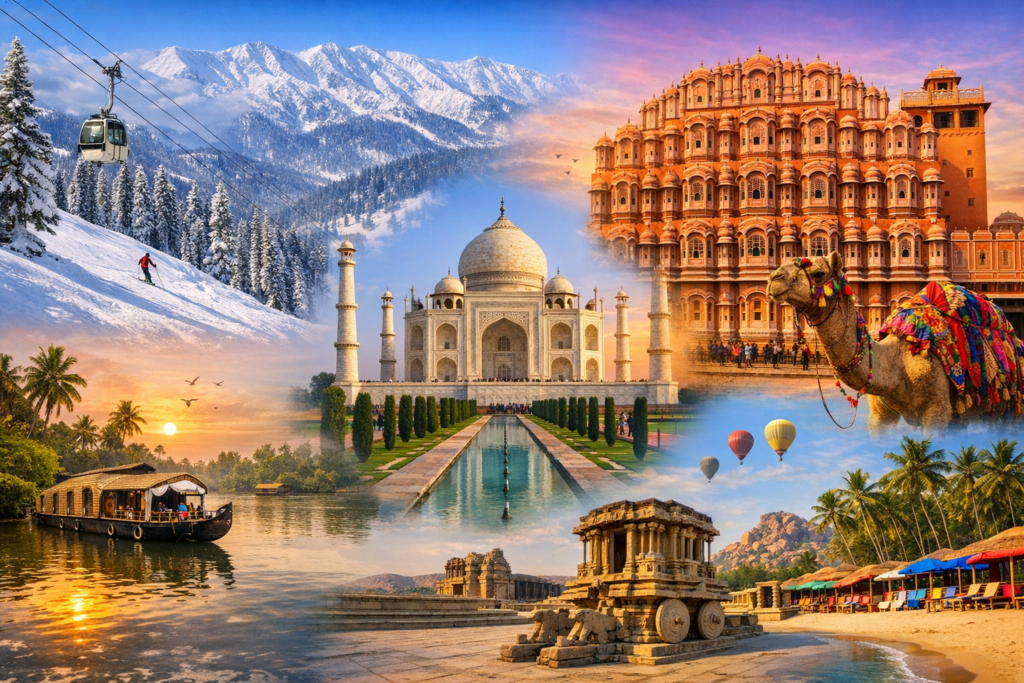
1) Jaipur, Rajasthan (The Pink City)
Brief overview
Jaipur is a top winter destination for a reason: grand palaces, massive forts, and vibrant markets are far easier to enjoy when days are mild and evenings are cool. In January, the light is soft and golden, which makes Jaipur exceptionally photogenic. It also works well as a short standalone break or as part of a longer Rajasthan circuit with Agra, Delhi, Udaipur, Jodhpur, or Ranthambore.
Things to do
- Explore Amber Fort early, then stop at Panna Meena ka Kund for stepwell photos.
- Visit City Palace and the museum complex for royal history and textiles.
- See Jantar Mantar (a UNESCO-listed observatory) for architecture and astronomy.
- Photograph Hawa Mahal from street-level viewpoints and rooftop cafes.
- Shop for block-printed textiles, blue pottery, lac bangles, and silver jewelry in Johari Bazaar and Bapu Bazaar.
- Take an evening food walk: try kachori, ghewar (seasonal), and lassi.
Best weather and photo spots
January days are typically pleasant, while nights can be chilly. Aim for sightseeing from late morning to sunset, then enjoy indoor cultural shows or rooftop dinners. Best photo spots include Amber Fort at opening time, Nahargarh Fort at sunset, Hawa Mahal viewpoints across the road, and the reflective pools at Jal Mahal (best in early light).
Suggested itinerary (1-3 days)
- Day 1: City Palace, Jantar Mantar, Hawa Mahal, evening market stroll and dinner in the old city.
- Day 2: Amber Fort at opening, Panna Meena ka Kund, Jaigarh Fort, sunset at Nahargarh Fort.
- Day 3 (optional): Albert Hall Museum, a block-printing or cooking workshop, and a relaxed café-hopping afternoon.
Travel tips (budgets, bookings, food, festivals)
Budget: Budget travellers can manage roughly INR 1,800-3,500 per day (hostel, local transport, street food, a few paid sights). Mid-range couples often spend INR 5,000-9,000 per day. Heritage stays and private drivers can push it higher.
Best time to book: For January travel, book flights 6-10 weeks in advance, and book popular heritage hotels 4-8 weeks ahead. Compare prices on Skyscanner or Google Flights, and shortlist stays via Booking.com or Airbnb.
Local food to try: Dal baati churma, laal maas (non-veg), pyaaz kachori, mirchi vada, ghewar, and saffron lassi.
Festivals and events nearby: Jaipur often hosts major cultural gatherings in winter, and many years include the Jaipur Literature Festival around late January. Dates vary annually, so confirm closer to your trip.
2) Udaipur, Rajasthan (Lakes, palaces, and winter sunsets)
Brief overview
Udaipur is a strong January pick if you want romantic lake views, mellow weather, and a slower pace than Jaipur. The city’s white marble architecture, calm waters, and hilltop viewpoints create postcard-perfect winter scenes. January is also comfortable for walking the old lanes, exploring palaces, and taking day trips.
Things to do
- Tour City Palace and its courtyards, balconies, and museums.
- Take a boat ride on Lake Pichola (timings depend on weather and lake conditions).
- Visit Jagdish Temple and wander nearby lanes for crafts and miniature paintings.
- Sunset at Sajjangarh (Monsoon Palace) for panoramic views.
- Day trip to Kumbhalgarh Fort or Ranakpur Jain Temple for architecture and history.
Best weather and photo spots
Udaipur in January is typically crisp in the morning and evening, with comfortable daytime temperatures. Top photo spots include the City Palace lake-facing terraces, Gangaur Ghat at sunrise, the Ambrai Ghat area in soft evening light, and Sajjangarh for sunset silhouettes. For a classic “Udaipur postcard,” capture the Lake Palace from a lakeside viewpoint after sunrise.
Suggested itinerary (1-3 days)
- Day 1: City Palace, Jagdish Temple, old city walk, sunset at Ambrai Ghat, dinner with a lake view.
- Day 2: Morning boat ride (if operating), Saheliyon ki Bari, a craft studio visit, sunset at Sajjangarh.
- Day 3 (optional): Day trip to Kumbhalgarh or Ranakpur; return for a relaxed café evening.
Travel tips (budgets, bookings, food, festivals)
Budget: Udaipur can be done on INR 1,800-3,500 per day (budget stays and simple eateries). Mid-range is often INR 5,500-10,000 per day, especially if you want a balcony room near the lake.
Best time to book: Lake-facing rooms sell out quickly in winter. If you’re traveling in January 2026, book lake-area hotels 6-10 weeks in advance. If you plan a weekend trip, book even earlier.
Local food to try: Rajasthani thali, gatte ki sabzi, ker sangri, and for dessert, malpua or rabri (availability varies).
Festivals and events nearby: Makar Sankranti is widely celebrated across Rajasthan in mid-January, and winter months often bring local fairs and cultural nights at heritage venues.
3) Goa (Beaches, heritage lanes, and winter nightlife)
Brief overview
Goa is at its best in January: dry weather, warm daytime sun, and breezy evenings. It’s perfect for a mix of beach time, water activities, cafe-hopping, Portuguese-influenced heritage neighborhoods, and sunset chasing. January is peak season, so planning ahead matters.
Things to do
- Beach-hop: calmer vibes in South Goa, livelier scenes in North Goa.
- Try water sports (availability depends on sea conditions): kayaking, paddleboarding, or parasailing.
- Explore Old Goa churches (a UNESCO-listed heritage area) and nearby museums.
- Spend an evening in Panaji’s Fontainhas Latin Quarter for colorful lanes and photography.
- Do a spice plantation visit or a short hike to hidden waterfalls (water flow varies in winter).
Best weather and photo spots
Expect sunny days and comfortable evenings in January, with minimal rainfall. Best photo spots include sunset at Vagator or Ashwem, morning light in Fontainhas, and blue-hour shots around Chapora Fort. For a calm, cinematic look, shoot early morning on quieter beaches before crowds build up.
Suggested itinerary (1–3 days)
- Day 1: Arrive, beach time, sunset viewpoint (fort or beach), dinner at a coastal restaurant.
- Day 2: Old Goa churches, Panaji and Fontainhas walk, evening at a night market or live music venue.
- Day 3 (optional): South Goa beach day (Palolem area) or a relaxed cafe-hopping and shopping day.
Travel tips (budgets, bookings, food, festivals)
Budget: Goa can be budget-friendly if you avoid peak weekend pricing: INR 2,000-4,000 per day (guesthouses, scooters, local eateries). Mid-range is often INR 6,000-12,000 per day. Beachfront resorts and boutique stays can go much higher in January.
Best time to book: For January 2026, book flights 8-12 weeks in advance if you want good timings and prices. Book stays 6-10 weeks ahead, especially near popular beaches. Compare flight fares on Google Flights and hotels on Booking.com.
Getting around: Scooters are common, but drive carefully and carry a valid license. Taxis can be pricey; agree on fares upfront where meters aren’t used.
Local food to try: Goan fish curry rice, pork vindaloo, xacuti, bebinca, and poi bread; also try local cashew-based drinks where available.
Festivals and events nearby: January often features seasonal music nights and cultural programs, but schedules vary. If you want a festival-led trip, confirm dates closer to travel time.
4) Rann of Kutch, Gujarat (Salt desert landscapes and stargazing)
Brief overview
If you want a destination that feels unlike anywhere else in India, the Rann of Kutch delivers: a vast white salt desert, fiery sunsets, folk crafts, and some of the best open-sky stargazing in the country. January is prime time because the weather is cool and the salt flats are accessible.
Things to do
- Visit the White Rann for sunset and moonlit views (entry rules can apply).
- Experience Kutchi handicrafts: embroidery, ajrakh prints, bandhani, and bell metal work.
- Explore nearby villages (often via guided trips) to understand local culture and artisan traditions.
- Take a day trip to Dholavira (Indus Valley Civilization site) if time and permits/logistics allow.
- Enjoy cultural performances, local food stalls, and desert photography.
Best weather and photo spots
January nights can be very cold in the desert, but daytime is usually pleasant. For photos, aim for golden hour on the salt flats, silhouettes at sunset, and wide-angle shots after dark for stars. Early morning can also produce dreamy minimalistic frames with long shadows.
Suggested itinerary (1–3 days)
- Day 1: Arrive in Bhuj, explore local markets and a museum, evening cultural program if available.
- Day 2: White Rann trip for sunset, stay late for stargazing, return to base.
- Day 3 (optional): Village craft trail or Dholavira day trip; shop for authentic textiles before departure.
Travel tips (budgets, bookings, food, festivals)
Budget: Costs vary depending on whether you choose a tented cultural experience or stay in Bhuj. Budget travelers may spend INR 2,500-5,000 per day; curated tent stays and packaged programs can be significantly higher depending on inclusions.
Best time to book: Winter desert stays can sell out early. For January 2026, book accommodation and any packaged experiences 8-12 weeks ahead. If you’re taking trains, confirm schedules and book via IRCTC as soon as bookings open for your dates.
Local food to try: Kutchi dabeli, bajra rotla with garlic chutney, and regional Gujarati thalis (offerings vary by location).
Festivals and events nearby: The Rann Utsav season typically runs through winter months, often including January. Dates and programming can change, so check official updates before locking plans.
5) Munnar, Kerala (Tea hills, cool mornings, and scenic drives)
Brief overview
Munnar is a January favorite in South India for travelers who want cool mountain air, green landscapes, and gentle adventure. Tea plantations roll across hills, viewpoints open up after early-morning mist, and the overall vibe is calm and restorative. It’s also a great add-on to a Kerala trip that includes Kochi and the backwaters.
Things to do
- Walk through tea estates and visit a tea museum or factory (where open).
- Catch sunrise from a viewpoint like Top Station (start early for the best light).
- Visit Eravikulam National Park (home to the Nilgiri tahr; closures can be seasonal).
- Do short hikes to waterfalls and viewpoints, choosing routes suited to your fitness level.
- Enjoy a slow day of cafés, local chocolates, and spice shopping.
Best weather and photo spots
January is typically cool and pleasant in Munnar, with crisp mornings and comfortable afternoons. Photo highlights include tea garden curves in soft morning light, mist layers from higher viewpoints, and sunset panoramas along scenic roads. For the most cinematic frames, step out early: mornings often deliver fog-and-sunbeams conditions that disappear by midday.
Suggested itinerary (1–3 days)
- Day 1: Arrive, tea estate walk, relaxed evening viewpoint and dinner.
- Day 2: Sunrise viewpoint, Eravikulam National Park (if open), tea museum visit, cafe evening.
- Day 3 (optional): Day trip toward Top Station and nearby stops; return for shopping and a final scenic drive.
Travel tips (budgets, bookings, food, festivals)
Budget: Munnar can be good value. Budget travellers often manage INR 2,000-4,000 per day. Mid-range couples typically spend INR 5,500-10,000 per day depending on views and transport. Private cars increase costs but can save time.
Best time to book: January is popular for honeymoon and family travel, so book stays 6-10 weeks ahead for view rooms. For flights into Kochi, booking 6-10 weeks out often helps; check fares on Skyscanner and consider bundling transport and stays via MakeMyTrip if it reduces costs.
Local food to try: Kerala meals on banana leaf, appam with stew, puttu with kadala curry, and fresh cardamom tea. Look for local pepper, cardamom, and homemade chocolates to take back.
Festivals and events nearby: Kerala’s cultural calendar is active through winter, and Theyyam performances (in parts of North Kerala) typically occur in the broader winter season. Exact events depend on location and dates, so verify with local listings.
Also Consider (Bonus Options for January 2026)
- Varanasi, Uttar Pradesh: Cool mornings, atmospheric riverfront walks, and sunrise boat rides make January especially striking. Fog can add drama but may affect visibility and flights.
- Jaisalmer, Rajasthan: Desert camps, fort lanes, and dune sunsets are at their best in winter. Nights can be very cold, so pack layers.
- Ranthambore, Rajasthan: January is a popular time for tiger safaris due to comfortable temperatures and good wildlife viewing conditions (subject to luck).
- Pondicherry: Pleasant coastal weather, French Quarter walks, cafés, and nearby beaches. Great for a slower weekend trip.
- Delhi and Agra (Golden Triangle add-on): Iconic monuments and food scenes, but expect chilly mornings and occasional fog that can impact trains and flights.

Leave a Reply to Happy Cancel reply