Author: Kartik

  • Da Nang vs Chiang Mai: Which is Better for Digital Nomads

    Da Nang vs Chiang Mai: Which is Better for Digital Nomads?

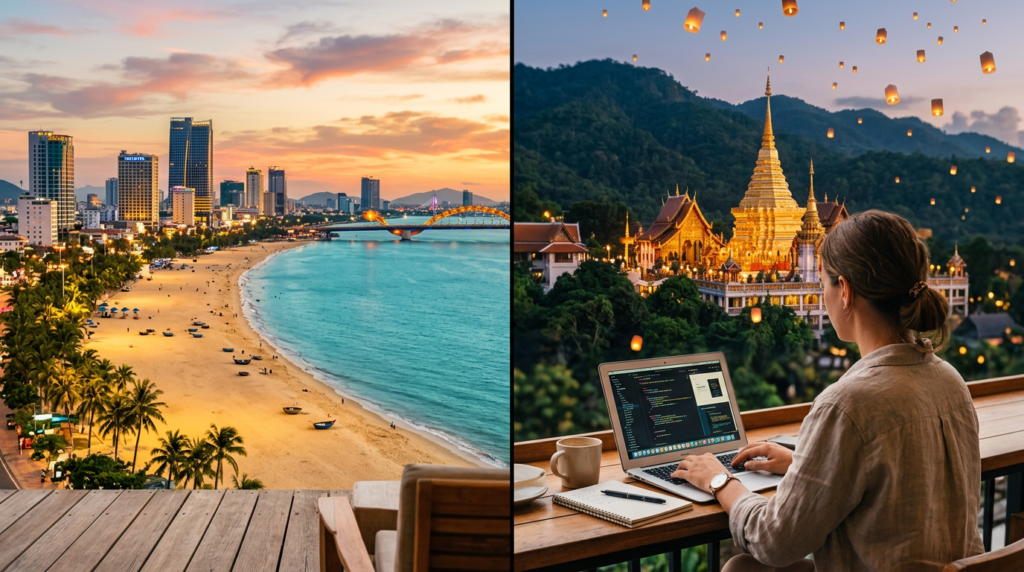
    Southeast Asia has long been the promised land for location-independent workers. Two cities dominate nearly every conversation: Da Nang, Vietnam’s breezy coastal gem, and Chiang Mai, Thailand’s northern cultural capital. Both offer cheap living, strong internet, and a thriving nomad scene. But they are fundamentally different places, and the right choice depends entirely on your priorities.

    This guide cuts through the noise with real numbers, side-by-side comparisons, and honest verdicts across eight categories that matter most to remote workers.

    $700
    Avg. monthly budget, Da Nang
    $800
    Avg. monthly budget, Chiang Mai
    50+
    Coworking spaces across both cities

    Cost of Living: The Numbers Side by Side

    Cost is usually the first factor nomads check. Both cities are affordable by Western standards, but there are meaningful differences worth understanding before you book a one-way ticket.

    Monthly cost comparison (USD)
    Da Nang Chiang Mai

    Sources: Numbeo cost of living index Q1 2025, Nomad List community data. Figures represent mid-range budget including coworking membership.

    Expense Da Nang (USD) Chiang Mai (USD) Winner
    Studio apartment (city centre)$250$300Da Nang
    1-bed apartment (city centre)$380$430Da Nang
    Street food meal$1.50$1.80Da Nang
    Restaurant meal (mid-range)$5$6Da Nang
    Monthly coworking desk$80$90Da Nang
    Monthly gym membership$25$30Da Nang
    International school (annual)$8,000$6,500Chiang Mai
    Beer at local bar$1$1.50Da Nang
    Monthly transport (scooter rental)$90$80Chiang Mai

    Verdict on cost: Da Nang edges out Chiang Mai by roughly 10 to 15 percent on most daily expenses. A comfortable mid-range lifestyle in Da Nang runs around $700 per month versus around $800 in Chiang Mai. That said, Chiang Mai offers slightly better value for families with children, thanks to more established international schooling options at lower price points.


    Internet and Infrastructure

    For anyone working remotely, internet reliability is not a nice-to-have. It is the job. Both cities have invested heavily in digital infrastructure over the past five years.

    Average internet speed (Mbps) by provider type
    Da Nang Chiang Mai

    Speedtest.net Global Index, Ookla, 2024 annual average. Fixed broadband and mobile 4G measured separately.

    Da Nang’s fixed broadband speeds have improved dramatically since 2022. Providers VNPT and Viettel now offer fibre packages exceeding 100 Mbps for around $15 per month. Chiang Mai’s infrastructure, while excellent by regional standards, is older in parts of the old city, and speeds in some apartment buildings lag behind newer developments. Mobile 4G is strong in both cities, with True Move H and AIS giving Chiang Mai a slight mobile edge.

    “In Da Nang I was hitting 180 Mbps in my apartment on a $12 plan. In Chiang Mai I pay twice that and get half the speed in the old city area.” Digital nomad survey respondent, 2024.

    Power outages are rare in both cities but slightly more common during storm season in Da Nang (September through November). Coworking spaces in both cities universally have backup power and ethernet connections.


    Coworking Scene

    The coworking ecosystem in both cities has matured into something genuinely impressive. Chiang Mai was among the earliest cities in Southeast Asia to develop a dedicated nomad coworking culture, and that head start shows. Da Nang’s scene is younger but has grown fast in the post-2020 remote work boom.

    Coworking spaces: key metrics comparison

    Data compiled from Coworker.com listings, Deskmag Global Coworking Survey 2024, and direct operator surveys.

    Chiang Mai has over 60 registered coworking venues compared to around 30 in Da Nang. The concentration of spaces near Nimman Road in Chiang Mai means you can walk between venues in under ten minutes. In Da Nang, the coworking hub is concentrated around My Khe Beach and the Han River area, giving most spaces stunning views as a free bonus.

    Average day pass pricing in Chiang Mai sits around $7, while Da Nang averages $6. Monthly hot-desk memberships range from $70 to $120 in Da Nang and $80 to $140 in Chiang Mai depending on amenities.


    Visa Options and Bureaucracy

    Visa access is where the two cities diverge most significantly, and this factor alone can be a dealbreaker for long-term nomads.

    Visa Type Da Nang (Vietnam) Chiang Mai (Thailand)
    Visa-free entry (most Western passports)45 days60 days
    Digital Nomad VisaNone (as of 2025)LTR Visa (5-year)
    Tourist visa extensionAvailableAvailable (30 days)
    Business visa (1 year)Multiple entry availableNon-B visa available
    Border run requiredYes (after ~90 days)Yes (tourist visa)
    LTR / Long-stay programNoYes (earn $80K+ pa)

    Thailand’s Long-Term Resident (LTR) visa is a genuine advantage for established remote workers. It offers a five-year renewable stay, work permit exemption, and fast-track immigration. Eligibility requires proven remote income of at least $80,000 per year. Vietnam has discussed a digital nomad visa but had not launched one as of early 2025. For shorter stays under three months, both countries offer comparable flexibility.


    Weather and Livability

    Both cities are tropical, but their climates are quite different. Getting this wrong can make several months of the year miserable.

    Monthly rainfall comparison (mm)
    Da Nang Chiang Mai

    World Meteorological Organization 30-year climate normals (1991 to 2020).

    Da Nang sits on the South China Sea and experiences a distinct monsoon season running from September through December. October is the wettest month, with average rainfall exceeding 600mm. Typhoons occasionally make landfall near Da Nang, disrupting travel. The dry season from January through July offers glorious beach weather with temperatures between 25 and 34 degrees Celsius.

    Chiang Mai sits at 310 metres elevation in a mountain valley. Its most significant drawback is air quality: agricultural burning and forest fires from February through April can push the Air Quality Index above 200, making outdoor activity inadvisable. Outside of burning season, Chiang Mai has arguably the most pleasant climate in mainland Southeast Asia, with cool evenings from November through January.

    Burning season is Chiang Mai’s dirty secret. If you visit in April and the AQI hits 250, you will understand why many nomads leave for Da Nang or Bali during those months.

    Nomad Community and Social Life

    Working alone is productive. Working alongside motivated people is energising. Both cities have active nomad communities, but the texture is different.

    Community and lifestyle scores (out of 10)

    Aggregated from Nomad List community scores, TripAdvisor food ratings, and Meetup.com event frequency data for 2024.

    Chiang Mai has over two decades of nomad history. Regular Nomad events, dedicated Facebook groups with tens of thousands of members, a dense yoga and wellness scene, a world-class night bazaar food culture, and deep connections to Thai Buddhism make it one of the richest lifestyle destinations in the region. The community is large enough that you can specialise: there are tech founders, writers, wellness professionals, and crypto traders all operating in distinct but overlapping social circles.

    Da Nang’s community is smaller and newer but growing at a faster rate. The beach lifestyle attracts surfers, divers, and outdoor-focused nomads. The city is less tourist-saturated than Chiang Mai’s old town, giving it a more authentic, local feel. Food is genuinely exceptional: Mi Quang noodles, Banh Mi Phuong, and fresh seafood from the Han Market are among the best meals in Southeast Asia at any price point.


    Safety, Healthcare, and Practical Considerations

    Both cities rank among the safest in Southeast Asia for foreigners. Violent crime is extremely rare. Petty theft (primarily motorbike-related bag snatching) occurs more frequently in Chiang Mai’s tourist-heavy old city than in Da Nang.

    Category Da Nang Chiang Mai Edge
    Safety index (Numbeo 2024)72.4 / 10068.9 / 100Da Nang
    International hospitals2 major4 majorChiang Mai
    English-speaking doctorsLimitedWidespreadChiang Mai
    Dental care (filling cost)$30$40Da Nang
    Pharmacy availabilityGoodExcellentChiang Mai
    Airport connectionsRegional hubRegional hubTie
    English proficiency (locals)ModerateHigh (tourist areas)Chiang Mai
    Traffic and pollutionModerateSeasonal (burning)Tie

    Chiang Mai has a clear advantage in healthcare infrastructure. Bumrungrad and Bangkok Hospital both have facilities in the city, and Thailand’s medical tourism reputation means English-language care is routine rather than exceptional. Da Nang has improved significantly but remains more limited in specialist care. Serious medical situations will likely require travel to Hanoi or Ho Chi Minh City.


    The Final Verdict

    There is no universally correct answer, but there is a right answer for your situation. Here is how to think about it:

    Da Nang
    7.8
    Overall nomad score / 10
    Chiang Mai
    8.3
    Overall nomad score / 10

    Choose Da Nang if:

    You prioritise the lowest possible cost of living, want beach access as part of daily life, prefer a quieter and less touristy atmosphere, have no long-stay visa requirements, or are planning a stay under three months during Da Nang’s dry season (January through August).

    Choose Chiang Mai if:

    You need a long-term visa solution (the LTR visa is a genuine game-changer), want access to a larger and more established nomad community, prioritise healthcare quality, are travelling with family, or value the richness of a city with temples, trekking, and one of the world’s best street food scenes. Avoid February through April if air quality is a concern.

    The smartest nomads often do both: spending the beach months (February through August) in Da Nang and the cooler months (November through January) in Chiang Mai, avoiding each city’s seasonal low point. With both cities easily connected via a two-hour flight, treating them as complementary bases rather than competitors is an increasingly popular strategy.

    Either way, you have already made the best decision: leaving the expensive, grey cities behind in favour of somewhere warm, affordable, and genuinely alive. The difference between Da Nang and Chiang Mai matters far less than the decision to go.

    Meta description: Da Nang vs Chiang Mai for digital nomads: compare cost, internet, visas, weather, and community with real data to find your ideal Southeast Asia base.

  • Thailand DTV Visa Requirements 2026: The Complete Guide

    Thailand DTV Visa Requirements 2026: The Complete Guide

    DTV Visa at a Glance

    Validity
    5 Years
    Multiple Entry
    Stay Per Entry
    180 Days
    Extendable once
    Extension
    +180 Days
    1,900 THB fee
    Visa Cost
    10,000 THB
    ~$285 or ~₹24,000
    Financial Proof
    500,000 THB
    ~$14,200 or ~₹11.8 Lakhs
    Tax Residency
    180 Day Rule
    On remitted income only

    Thailand’s Destination Thailand Visa, widely known as the DTV, has quietly become one of the most powerful long stay options for location independent workers in 2026. Unlike the old Tourist Visa treadmill of border runs every two months, the DTV offers a five year multiple entry framework that genuinely fits the lifestyle of a modern remote worker. This guide breaks down every requirement, rule, and nuance you need before you apply.


    01

    Who Is Eligible for the DTV in 2026?

    Thailand has deliberately broadened the DTV’s scope beyond pure tech workers. In 2026, the Soft Power categories were expanded significantly, meaning a far wider range of applicants now qualify. You need to fall into one of three groups:

    💻

    Digital Nomads and Freelancers

    Remote workers who have an employment contract or a verifiable portfolio of clients located outside Thailand. Independent contractors and consultants also qualify under this category.

    🏝

    Soft Power Participants

    Those arriving for Muay Thai training, Thai cooking courses, sports training camps, medical treatments, seminars, or cultural events. A letter of acceptance from a registered institution is required.

    👪

    Spouses and Dependents

    Legal spouses and children under the age of 20 of an approved DTV holder are eligible to apply as dependents on the same visa framework.

    One important note: you must apply from a country where you have legal residency. If you hold an Indian passport, for instance, you apply via the Thai Embassy in New Delhi or Chennai, not from a third country.


    02

    The 2026 Financial Requirement. The 500,000 THB Rule

    The single most scrutinized part of any DTV application is the bank balance requirement. Here is how it breaks down in plain terms:

    500,000 THB Equivalent Across Currencies
    Thai Baht
    500,000 THB
    US Dollar
    ~$14,200 USD
    Indian Rupee
    ~₹11.85 Lakhs
    • Required Amount: 500,000 Thai Baht as a lump sum in your bank account.
    • Statement Duration: Six months of bank statements is the recommended standard for 2026, though some embassies may accept a current balance certificate. Play it safe and prepare six months.
    • Bank Location: The funds do not need to sit in a Thai bank. A bank account in your home country, whether in India, the US, Germany, or anywhere else, is fully accepted.
    • No Monthly Salary Threshold: Unlike the Long Term Resident visa which demands $80,000 per year in income, the DTV has no minimum monthly salary requirement. The lump sum is the only financial bar you need to clear.
    Pro Tip: If your savings are spread across multiple accounts, consolidate them into a single account well before applying. Immigration officers prefer a single, clean statement over multiple accounts combined.

    03

    Required Documents for Your DTV Application

    Applications are submitted via the Official Thai E Visa portal or directly at a Thai Embassy in your country of residence. Prepare the following before you begin:

    # Document Specification Category
    1 Passport Minimum 6 months validity remaining at time of application All
    2 Bank Statements Last 6 months showing 500,000 THB equivalent balance All
    3 Employment Contract Contract with a company headquartered outside Thailand Nomads
    4 Freelance Portfolio Proof of client relationships and income outside Thailand Freelancers
    5 Acceptance Letter From a Thai government registered Muay Thai gym, hospital, or school Soft Power
    6 Proof of Residency Document confirming you are applying from your country of legal residence All
    7 Passport Photo Recent photo meeting Thai Embassy specifications All

    For Soft Power applicants, the acceptance letter is the document most commonly overlooked. The issuing institution must be registered with the Thai government, so confirm this before requesting your letter.


    04

    How the 180 Plus 180 Stay Rule Works

    This is the most misunderstood aspect of the DTV, and getting it wrong can mean an overstay fine or worse. Here is a step by step breakdown of how your time actually works inside Thailand:

    Step 1
    180
    Days granted on entry stamp at any Thai border or airport
    Step 2
    +180
    Extension at local Thai Immigration office for 1,900 THB
    Step 3
    360
    Total days before mandatory departure from Thailand
    Step 4
    Day 1
    Re-enter from a neighboring country and your 180 day clock resets

    Because the DTV is a multiple entry visa, the “border hop” reset is completely legal and by design. A short trip to Vietnam, Malaysia, or Singapore is all it takes to begin a fresh 180 day cycle. Many DTV holders structure these trips as mini vacations rather than pure logistics runs.

    1. Enter Thailand: 180 day stamp issued at immigration.
    2. Before day 180 expires. Visit any Thai Immigration office and pay 1,900 THB for the extension stamp.
    3. On or before day 360. Depart Thailand. This can be a single day trip to a neighboring country.
    4. Re-enter Thailand. A new 180 day entry stamp is issued. The cycle begins again for the remaining years of your 5 year visa.

    05

    The 2026 Tax Update Every DTV Holder Must Know

    Thailand revised its personal income tax rules in 2024 and 2025, and the implications carry forward into 2026 in a meaningful way for long stay visitors.

    When Does Thai Tax Apply to You?

    If you spend more than 180 days in a calendar year inside Thailand, you become a tax resident under Thai law. However, this does not automatically mean you owe Thai tax on your global income.

    Thai tax liability applies only to foreign income that is brought into Thailand during the same tax year in which it was earned. Money earned and kept offshore is not taxed.

    Practical Strategy: Many experienced DTV holders cover their daily Thailand living costs using prior year savings already held in their Thai account, while keeping the current year’s earnings in an offshore account. This arrangement is widely used but consulting a qualified tax professional for your specific country and income structure is strongly advised before implementing any strategy.

    The key takeaway is straightforward: staying under 180 days per calendar year keeps you outside Thai tax residency entirely. Staying longer requires thoughtful management of where and when you bring money into the country.


    06

    DTV vs Tourist Visa. The Real Cost Comparison

    If you plan to spend more than three months per year in Thailand, the numbers tell a clear story. The Tourist Visa route becomes progressively more expensive and logistically burdensome, while the DTV is a single cost covering five years of flexible access.

    DTV Visa

    Upfront Cost~$285
    Valid For5 Years
    Stay Per Entry180 Days
    Border Runs NeededOptional trips
    Extension AvailableYes, plus 180 Days
    Best For3+ months/year

    Tourist Visa (TR)

    Upfront Cost~$40 each time
    Valid For60 Days
    Stay Per Entry60 Days
    Border Runs NeededEvery 2 months
    Extension AvailablePlus 30 Days only
    Best ForShort holidays

    In 2026, Thai immigration has also tightened scrutiny on repeated Tourist Visa applications from the same applicant. Back-to-back tourist visas with minimal time outside the country are now flagged more frequently at entry. The DTV sidesteps this concern entirely as it is specifically designed for extended stays.

    Cost Over 5 Years. DTV vs Repeated Tourist Visas

    Estimated Total Cost Over 5 Years (spending 6+ months per year in Thailand)
    DTV (once)
    ~$285
    Tourist Visa
    ~$1,200 plus travel costs
    10,000
    THB one time fee
    Full 5 year DTV access
    1,900
    THB per extension
    In-country 180 day renewal
    $0
    Mandatory border run cost
    Re-entry resets automatically

    Final Thoughts. Is the DTV Right for You in 2026?

    The Destination Thailand Visa is one of the most pragmatic long stay options available to remote workers globally in 2026. It rewards preparation over spontaneity. The 500,000 THB financial requirement is a meaningful bar, and the documentation must be complete and properly sourced from a country where you hold legal residency.

    For anyone planning to spend three months or more per year in Thailand, whether for work, wellness, training, or a lifestyle change, the DTV delivers far more value and flexibility than the Tourist Visa route. The math, the logistics, and the legal framework all point in the same direction.

    Begin assembling your six months of bank statements and professional documentation well in advance. Embassy processing times vary by location, and starting early gives you room to address any gaps without delaying your travel plans.

    Key Takeaway: The DTV is not a shortcut; it is a structured, legitimate framework for people serious about spending extended time in Thailand. Prepare thoroughly, consult professionals on tax matters, and you will find it one of the most generous long stay visas available anywhere in Southeast Asia.

    This guide is for informational purposes only and does not constitute legal or tax advice. Visa regulations change frequently. Always verify current requirements with the Royal Thai Embassy or official Thai immigration authorities before applying.

    Meta description: Thailand DTV Visa 2026 guide covering eligibility, 500k THB financial proof, required documents, 180 day stay rules, tax updates, and DTV vs Tourist Visa comparison.

  • The 1-Bag Nomad Setup: My Minimalist Tech Backpack for Slow Travel

    The 1-Bag Nomad Setup: My Minimalist Tech Backpack for Slow Travel

    After three years of slow travel across 24 countries with a single 26-litre backpack, I’ve learned that the best gear setup is the one you can forget about and that every gram you eliminate creates space for the experiences that actually matter.

    The global digital nomad population reached an estimated 35 million people in 2023, according to MBO Partners research, and projections suggest that number will approach 60 million by 2030. As remote work normalises and visa frameworks expand, the one-bag philosophy has shifted from countercultural quirk to a quietly dominant travel strategy particularly among slow travellers who stay in each destination for weeks or months rather than hopping between cities every other day.

    This post isn’t a gear haul video. It’s a deliberately curated, weight-audited system. Every item earns its place by serving multiple functions, lasting under demanding conditions, and fitting comfortably into carry-on limits enforced by budget carriers from Kuala Lumpur to Lisbon.

    35M Digital nomads globally (2023)
    7.2kg My total pack weight (with tech)
    26L Bag volume fits all cabin limits

    Why One Bag Changes Everything

    Traditional travel logic says pack for every scenario. One-bag philosophy inverts that: pack for your most common scenario and solve edge cases cheaply on the road. The cognitive and physical dividends are enormous. You never check luggage, never wait at carousels, never pay overweight fees. You move with the fluidity of a local rather than the lumbering gait of someone with a 65-litre expedition pack.

    For slow travellers in particular, the benefits compound. When you stay somewhere for three weeks, you do laundry. You don’t need seven changes of clothes. You don’t need a separate “going out” bag. Your laptop bag is your day bag, your weekend bag, and your primary luggage.

    “The secret to travelling light isn’t owning fewer things it’s being deliberate about which problems you’re willing to solve at the destination.” A philosophy that has saved me roughly 800 euros in checked-bag fees since 2022

    The Complete Gear List & Weight Audit

    Below is my current setup as of early 2026, with honest weights measured on a postal scale. The goal is staying under 7.5 kg total the strictest cabin baggage weight limit you’ll encounter on European and Southeast Asian budget carriers.

    Category Item Weight Why It Made the Cut
    Bag 26L daypack with laptop sleeve 920g Meets IATA carry-on specs, clamshell opening
    Computing 14″ Ultrabook (1.4 kg class) 1,400g Core workhorse video calls, writing, light dev
    Computing USB-C 65W GaN charger (2-port) 118g Charges laptop + phone simultaneously
    Computing Travel dock (2× USB-A, HDMI, SD) 72g Turns any monitor or TV into a workstation
    Audio/Video Over-ear ANC headphones 253g Flights, coworking noise, call quality
    Audio/Video Compact USB-C webcam (1080p) 88g Laptop cameras look unprofessional on calls
    Connectivity Unlocked dual-SIM travel phone 195g Local SIM + eSIM fallback in every country
    Connectivity Pocket WiFi / travel router 98g Essential when hostel WiFi is shared or filtered
    Power 10,000 mAh power bank (PD 20W) 218g One charge cycle for phone + earbuds + watch
    Power Universal travel adapter (compact) 64g Covers EU, UK, US, AU all in one unit
    Storage 1TB portable SSD 46g Offline media, backups, large file transfers
    Cables 3× USB-C (0.5m, 1m, 2m) + 1 Lightning 110g Every scenario covered; braided for durability
    Organisation Cable/accessory packing cube 38g TSA loves it; so do I at 2 AM in a dark hostel

    Total tech kit weight: approx. 3.72 kg. Combined with a minimal clothing layer (typically 2.8 kg), the complete pack sits at roughly 7.1 to 7.3 kg depending on the day and what I’ve consumed.

    Weight Distribution: Visualised

    Pack Weight by Category (grams)
    Bag itself
    920 g
    Laptop
    1,400 g
    Headphones
    253 g
    Chargers/cables
    292 g
    Power bank
    218 g
    Phone + router
    293 g
    Dock + SSD + misc
    246 g

    What Share of My Pack is Tech?

    52% tech gear
    Total Pack Breakdown by Weight
    • Laptop & computing 28%
    • Accessories & cables 24%
    • Clothing 16%
    • Bag & organisation 14%
    • Toiletries & misc 18%

    One-Bag vs Traditional Pack: A Practical Comparison

    This comparison is based on a typical 30-day slow travel trip. The “traditional” approach assumes a 70L checked bag.

    Factor 1-Bag (26L) Traditional (70L)
    Average checked bag fees (EU budget, 4 flights) €0 €120 to 180
    Time lost at baggage carousels 0 min ~90 min/trip
    Fits under airplane seat
    Can hop on any transport spontaneously
    Lost luggage risk Zero ~1% per flight (SITA data)
    Physical strain (average daily carry) Low (~7 kg) High (15 to 20 kg)
    Encourages deliberate packing

    Connectivity: The Real Work-from-Anywhere Infrastructure

    Tech nomads often obsess over hardware and underestimate connectivity. A 2023 survey of remote workers by NordLayer found that 67% had experienced a work disruption caused by poor internet while travelling. My connectivity stack addresses this at every layer.

    First, a dual-SIM phone that accepts both a physical SIM and an eSIM means I can buy a cheap local data SIM the moment I land while maintaining a backup eSIM data plan as a safety net. In most of Southeast Asia, Europe, and Latin America, a 30-day local SIM with 20 to 50 GB of data costs between $3 and $15 USD dramatically cheaper than roaming.

    Second, a pocket travel router solves a problem that power users encounter constantly: hotel and Airbnb networks that limit connections per device, require per-device registration, or have mediocre range. The router connects to the local network once and rebroadcasts a private, password-protected network for all your devices.

    The 3-2-1 Backup Rule Nomad Edition

    Maintain 3 copies of critical work: 1 on your local SSD, 1 on cloud storage (synced automatically), and 1 on your portable SSD stored separately from your laptop. A stolen laptop recovers in hours. Lost unreplicated work doesn’t.

    The 5 Things I Removed (And Don’t Miss)

    • DSLR camera Modern ultrawide phone cameras cover 95% of travel photography needs. The 5% I miss isn’t worth 800 grams.
    • Tablet Redundant if you have a laptop and a phone. I use my laptop for reading in bed; a cheap e-reader is lighter than any tablet and battery lasts weeks.
    • Separate laptop bag My main backpack has a dedicated padded sleeve. Two bags defeats the whole purpose.
    • Full-size keyboard & mouse A coworking space trip once a week is cheaper than carrying 400g of peripherals everywhere. Use their equipment.
    • Third monitor I used a portable USB-C monitor for 6 months. Removed it. The discipline of a single screen is a surprising productivity gain for focused work.

    Choosing Your Bag: What the Numbers Say

    The 26-litre sweet spot is not arbitrary. Bag volume research and community data from nomad forums consistently show that 20 to 30 litres is the range that satisfies both the strictest cabin restrictions (Ryanair, AirAsia, IndiGo) and provides enough volume for a realistic week-to-ten-day packing list that assumes access to laundry.

    Bags below 20 litres force extreme minimalism that becomes impractical for working nomads with tech equipment. Bags above 35 litres inevitably get over-packed the extra space is a psychological invitation to add “just in case” items. At 26 litres, you are forced to make deliberate decisions, and deliberate decisions consistently outperform intuitive ones when it comes to long-term satisfaction with your kit.

    Look for: a clamshell or panel-loading design (easier packing than top-load), a dedicated padded laptop sleeve accessible from the back panel, external water bottle pockets, and critically a weight under 1 kg for the bag itself. Your bag should be infrastructure, not the main attraction.

    Software Is Part of Your Setup Too

    The physical kit is only half the system. A lean software stack reduces cognitive overhead and compensates for hardware limitations. Key pillars: a cloud document platform that works offline and syncs on reconnection, a password manager with biometric unlock, a lightweight VPN (especially important for banking on unfamiliar networks), and a local-first task management system that doesn’t require connectivity to function.

    Nomads who rely heavily on browser tabs and bookmarks suffer most when WiFi is unreliable. Download what you need, work offline where possible, sync opportunistically. This is the digital equivalent of not checking luggage: it requires planning upfront, but eliminates friction everywhere else.

    Final Thought: The Pack Reflects the Philosophy

    Slow travel rewards depth over breadth. Spending three weeks in Tbilisi or Medellín instead of three days means you cook sometimes, you find the neighbourhood café, you stop being a tourist and start being a temporary resident. That rhythm is incompatible with heavy luggage, complicated tech setups, and gear that demands attention.

    The 1-bag system isn’t about asceticism. It’s about choosing what serves you so thoroughly that nothing else earns a spot. When your pack weighs 7 kilograms and fits under the seat in front of you, travel stops being logistical and starts being experiential. That’s the whole point.

  • Hidden Himalayas: A Solo Traveller’s Guide to Munsiyari, Uttarakhand

    Hidden Himalayas: A Solo Traveler’s Guide to Munsiyari, Uttarakhand

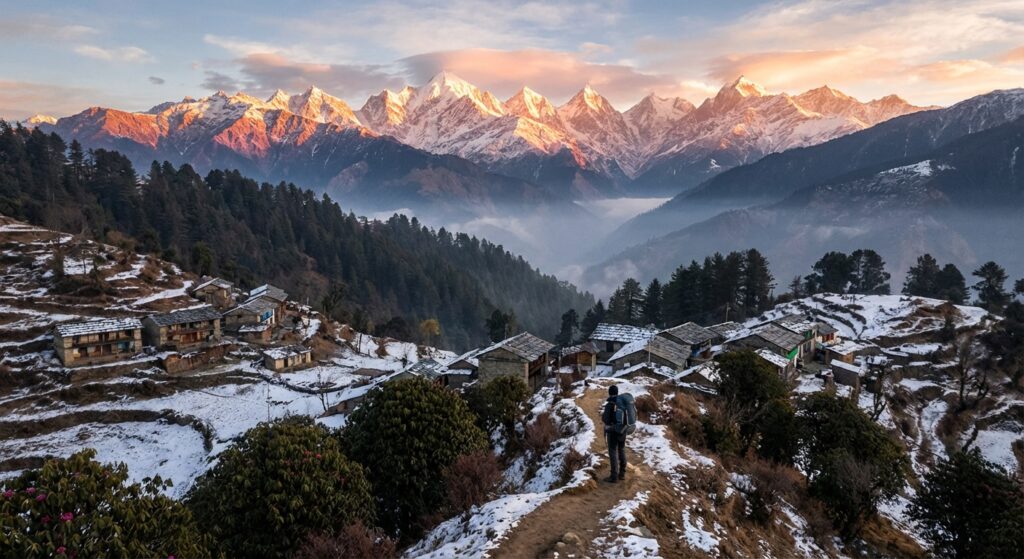
    Tucked into the Johar Valley of Pithoragarh district, Munsiyari is one of Uttarakhand’s last genuinely unhurried Himalayan towns. At roughly 2,200 metres above sea level, it stands as the gateway to four iconic high-altitude treks and keeps sentinel watch before the glittering Panchachuli massif.

    While Manali fills up in summer and Shimla strains under coach-tour traffic, Munsiyari quietly offers something rarer: unfiltered mountain life. Local Bhotiya families still weave traditional shawls using patterns passed across generations, shepherds move flocks across alpine meadows called bugyals, and the nearest traffic jam is a memory from the plains. For solo travelers seeking both adventure and solitude, few places in India deliver quite like this.

    🏔 2,200m Altitude (approx.)
    📍 Pithoragarh District, Uttarakhand
    🌡 -10°C Winter Low (Jan)
    🚌 277km From Kathgodam
    🏕 4 Major Trek Routes
    🧶 Bhotiya Indigenous Culture

    Why Munsiyari Deserves a Spot on Your Map

    India’s mountains are well-documented, but Munsiyari falls into a rare category: genuinely known among experienced trekkers yet largely unknown to mass tourism circuits. The town sits at the base of the Panchachuli massif, five peaks ranging from 6,334m to 6,904m. Their name translates to “Five Hearths,” a reference to a mythological story connecting the peaks to the Pandavas of the Mahabharata.

    Munsiyari is also the base camp for the Milam Glacier, one of the largest glaciers in Kumaon and a vital source of the Gori Ganga river. The region receives approximately 1,400mm of rainfall annually, sustaining dense oak, rhododendron, and alpine meadow ecosystems within the broader boundary of the Askot Musk Deer Sanctuary.

    🌿
    Biodiversity Note: The Askot Wildlife Sanctuary surrounding Munsiyari’s hills is home to musk deer, snow leopard, Himalayan black bear, and over 200 recorded bird species. Responsible trekking practices directly protect this fragile ecosystem.

    Monthly Temperature at Munsiyari

    Understanding Munsiyari’s climate is the single most important factor in planning your trip. The town experiences genuine mountain weather, with dramatic temperature swings between day and night, and road closures during heavy snowfall from December through February.

    Average Monthly Temperature Range
    Munsiyari, Uttarakhand (Degrees Celsius)
    High 5°C / Low -10°C
    Jan
    High 7°C / Low -8°C
    Feb
    High 12°C / Low -2°C
    Mar
    High 18°C / Low 4°C
    Apr
    High 23°C / Low 9°C
    May
    High 20°C / Low 12°C
    Jun
    High 17°C / Low 11°C (Monsoon)
    Jul
    High 18°C / Low 12°C (Monsoon)
    Aug
    High 19°C / Low 8°C
    Sep
    High 16°C / Low 2°C
    Oct
    High 10°C / Low -4°C
    Nov
    High 6°C / Low -9°C
    Dec
    Peak Season Daytime High
    Monsoon Period (Jun to Aug)
    Winter Daytime High
    Nighttime Low

    Best Time to Visit: Season by Season

    Munsiyari has four distinct windows for visitors, each with its own character. The table below maps each season against key travel factors so you can choose the visit that matches your goals and fitness level.

    Season Months Avg. Temp Range Trek Suitability Road Access Crowd Level
    Spring April to June 10°C to 23°C
    Excellent
    Open and stable Moderate
    Monsoon July to September 11°C to 20°C
    Risky
    Landslide risk Very Low
    Autumn October to November 2°C to 19°C
    Very Good
    Clear and safe Low
    Winter December to March -10°C to 7°C
    Not Advised
    Frequently blocked Minimal

    Autumn in Munsiyari is a gift: post-monsoon skies turn crystalline, the Panchachuli peaks glow amber at dusk, and the trails are quiet enough to hear only the wind through the pines.

    Four Trek Routes from Munsiyari

    Munsiyari is the launchpad for four serious mountain treks. Each trail accesses a distinct ecological and cultural zone, and distances and difficulty levels vary significantly. Obtain Inner Line Permits from the District Magistrate’s office in Pithoragarh before starting any trek that crosses into restricted border areas near the Line of Actual Control.

    Milam Glacier Trek
    56 km one way Moderate to Hard 6 to 7 days

    Munsiyari’s flagship trek follows the Gori Ganga river through Martoli, one of India’s highest inhabited villages, before reaching the Milam Glacier at around 3,870m. Inner Line Permit is mandatory. A local guide is strongly recommended.

    Khaliya Top Trek
    9 km one way Easy to Moderate 1 to 2 days

    The most accessible trek from town. Khaliya Top sits at 3,500m and delivers panoramic views of the Panchachuli range without a multi-day commitment. Stunning rhododendron and oak forest covers the trail in spring.

    Ralam Glacier Trek
    48 km one way Hard 5 to 6 days

    Less frequented than Milam, the Ralam route passes through Ralam village with views of Hardeol (7,151m) and Tirsuli peaks. A remote, high-altitude experience requiring solid prior fitness and acclimatisation time.

    Thamri Kund Trek
    4 km one way Easy Half Day

    A short trail to a glacial lake surrounded by forest. Excellent for birdwatching including Himalayan monal sightings. No permit needed, making this ideal for acclimatisation on your first day in Munsiyari.

    Trek Duration Comparison
    Approximate days required for each route from Munsiyari
    Milam Glacier
    6 to 7 days
    Ralam Glacier
    5 to 6 days
    Khaliya Top
    1 to 2 days
    Thamri Kund
    Half day

    How to Reach Munsiyari

    Munsiyari has no direct rail or air connectivity, which is precisely what keeps the crowds manageable. The nearest railway head is Kathgodam, roughly 277 km away by road. The nearest airport is Pantnagar, about 295 km away. From Kathgodam, shared jeeps and state buses run to Munsiyari via Almora, Bageshwar, and Pithoragarh, with the journey typically taking 10 to 14 hours depending on road conditions and stops.

    The most reliable route for solo travelers is to take an overnight state bus from Kathgodam to Almora or Bageshwar, then a connecting shared jeep onward the following morning. Hiring a private cab from Kathgodam costs approximately Rs 5,500 to 8,000 for the full journey and cuts uncertainty significantly.

    🚐
    Timing Note: Shared jeeps from Pithoragarh to Munsiyari typically depart between 6:00 AM and 7:00 AM. Arriving in Pithoragarh the previous evening and staying overnight near the Dharamshala Chowk jeep stand gives you the best chance of a confirmed seat. Book the guesthouse ahead during April to June.

    Solo Travel Budget Breakdown

    Munsiyari rewards careful planners generously. Accommodation ranges from basic guesthouses at Rs 500 to 750 per night to mid-range lodges with Panchachuli-view rooms between Rs 1,500 and 3,000. The table below gives a realistic daily cost structure for a solo traveler in 2026, reflecting current price levels across the region.

    Expense Category Budget Option (INR/day) Mid-Range (INR/day) Practical Notes
    Accommodation Rs 500 to 750 Rs 1,500 to 3,000 Book ahead from 15 April to 15 June
    Meals (3 per day) Rs 300 to 450 Rs 650 to 900 Dhabas near the bus stand offer the cheapest food
    Local Transport Rs 50 to 150 Rs 300 to 500 Shared jeep to trek base points
    Trek Guide or Porter Rs 0 (self-guided) Rs 800 to 1,100 Guides strongly recommended for Milam and Ralam
    Inner Line Permits Rs 150 to 600 Rs 150 to 600 Obtained from DM office, Pithoragarh
    Miscellaneous Rs 100 to 200 Rs 300 to 500 Chai, local wool purchases, gear hire if needed
    Estimated Daily Total Rs 1,100 to 1,700 Rs 3,800 to 6,500 Excludes intercity travel to Munsiyari

    Solo Safety and Practical Essentials

    Munsiyari is considered one of the safer Himalayan destinations for solo travelers, including solo women, largely because it is a compact town where residents know one another and strangers are noticed quickly. That said, mountain environments carry inherent risks and preparation is non-negotiable.

    • Carry a physical paper map of trek routes. Mobile data is unreliable beyond the main market area.
    • Register your trek details at the local police station. This is standard practice, costs nothing, and creates a safety record.
    • Pack a basic first aid kit including altitude sickness medication such as Diamox after consulting a doctor beforehand.
    • Spend at least one full day in Munsiyari acclimatising before attempting any high-altitude trek beyond 3,000m.
    • Carry sufficient cash. The nearest reliably functional ATM is in Pithoragarh and frequently runs out during peak season.
    • Pack layered clothing at all times. Temperatures at altitude can drop 15 degrees Celsius within a single hour.
    • Hire a local guide for the Milam or Ralam glaciers. Routes are not marked and weather and trail conditions shift without warning.

    Local Culture and Responsible Travel

    The Bhotiya people of the Johar Valley have inhabited this region for centuries, historically trading wool and goods with Tibet across high mountain passes before border restrictions changed those routes in 1962. Their language, craft traditions, and festivals remain distinct from the broader Kumaoni population. Purchasing woolen shawls, caps, and gloves directly from Bhotiya weavers at Munsiyari Market supports these families far more than buying the same items in Nainital.

    Carry Out What You Carry In

    Munsiyari’s trails face growing pressure from plastic waste. Local community groups run periodic clean-up drives, but individual responsibility matters most. Carry a reusable bottle, avoid single-use plastic bags, and deposit waste in the bins near Munsiyari Market before leaving town.

    Photography is generally welcomed in town, but always ask permission before photographing individuals, religious ceremonies, or private homes. The small Tribal Heritage Museum near the market houses tools, clothing, and artifacts from the region’s Bhotiya heritage and is worth an hour of your time on the day of arrival.

    Where to Stay in Munsiyari

    Most accommodation concentrates along the main road and the approach toward Khaliya Top. Options range from basic government-run tourist rest houses at Rs 500 to 750 per night to small family guesthouses with Panchachuli-facing rooms between Rs 1,500 and 3,000. The Uttarakhand Tourism Development Board operates a guest house in town that offers clean rooms at a consistent and predictable price point.

    Several private homestays run by Bhotiya families offer a more immersive cultural experience and generally include home-cooked meals. Look for dishes such as bhatt ki churkani (black soybean curry), aloo ke gutke (spiced mountain potatoes), and the local rotis made from mandua flour.

    🌄
    Best Sunrise Viewpoint: Walk 1.5 km above the main market toward the Maheshwari Kund meadow before 5:30 AM on a clear morning. The Panchachuli peaks catch the first light of dawn in shades of orange and deep gold. The walk costs nothing and the sight is one of the finest available anywhere in the Kumaon Himalaya.

    Final Word: Is Munsiyari Worth the Journey?

    The truthful answer is yes, with one clear condition: go with the right expectations. Munsiyari is not a resort destination. Roads are narrow and sometimes rough. Infrastructure is basic, mobile connectivity is patchy beyond the main market, and the nearest hospital with adequate facilities is several hours away. These are not problems waiting to be fixed. They are the entry cost for something genuinely off the standard circuit.

    What you receive in return is a Himalayan experience that mass tourism has not yet reshaped: genuine mountain light at sunrise, trails without queues, conversations with people who live inside this landscape year-round, and the particular stillness that only arrives at altitude when the wind drops and the peaks stand close enough to feel real. For solo travelers willing to plan carefully, pack with care, and move at a mountain pace, Munsiyari offers precisely the kind of trip that stays with you long after the altitude headache fades and the dust of the plains settles back under your shoes.


    Hidden Himalayas  |  Solo Travel Guide to Munsiyari, Uttarakhand  |  2026 Edition

    Written for independent travelers committed to responsible mountain exploration

    Meta description: Solo travel guide to Munsiyari, Uttarakhand. Trekking routes, best seasons, budget breakdown, temperature charts, and cultural insights for 2026 Himalayan travel.

  • Exploring Dzongu: A Respectful 2026 Guide to North Sikkim’s Lepcha Reserve

    Exploring Dzongu: A Respectful 2026 Guide to North Sikkim’s Lepcha Reserve

    Where the Himalayas Guard a Living Culture

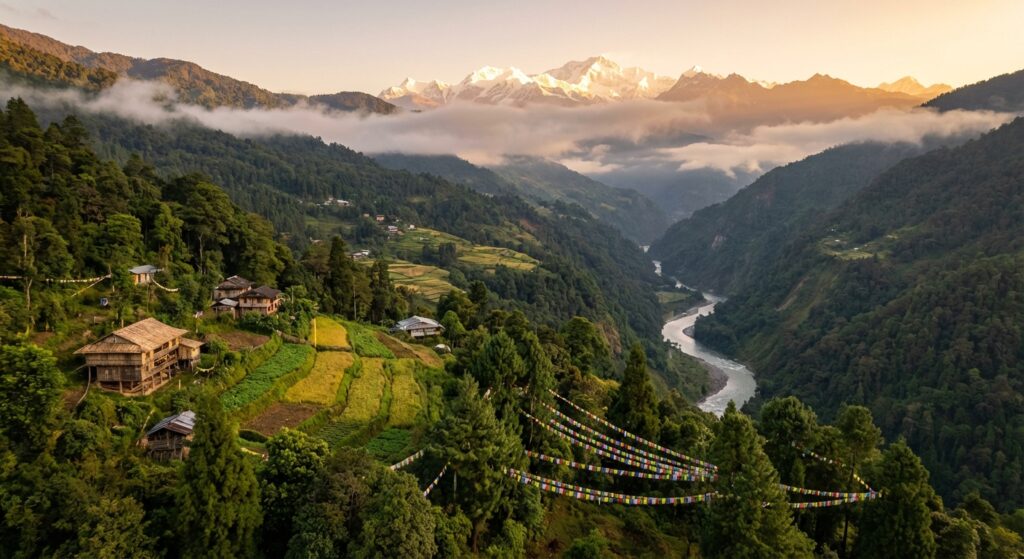
    Tucked between the thundering Teesta River and the snow-draped ramparts of the Kanchenjunga range, Dzongu is one of the last truly protected indigenous homelands in the Indian Himalayas. Officially declared a Lepcha Reserve in 1960 by Chogyal Palden Thandup Namgyal, and later declared a “Primitive World” by the Government of Sikkim on 4 April 2018, this roughly triangular forested mountain region sits in North Sikkim at elevations ranging from approximately 3,000 to 20,000 feet above sea level.

    Visiting Dzongu in 2026 is a privilege, not a right. Unlike a national park where you come to observe landscapes, here you are entering someone’s living homeland. The Lepcha people, who call themselves “Rong” (ravine dwellers), have inhabited and shaped this landscape for centuries. They worshipped animism, revering the natural spirits of land, water, and trees, and their ties with Kanchenjunga run so deep that the mountain is considered the protector of all life. Approaching Dzongu with humility and awareness transforms a good trip into a genuinely meaningful one.

    “In Lepcha teachings, Dzongu is the bridge to Mayal Lyang, the Hidden Land. It is a place every Lepcha believes they originally came from and will ultimately return to.”

    This guide covers everything you need, from permits and geography to festivals, etiquette, and data on the ecosystem, so that your visit strengthens rather than strains this irreplaceable place.

    Key Facts About Dzongu

    🏔️

    Geography

    Bordered by Teesta River (south-east), Tholung Chu or Rongyoung Chu (north-east), and the Kanchenjunga Biosphere Reserve to the north.

    👥

    Population

    Over 4,000 Lepchas reside within Dzongu. Total global Lepcha population is estimated at around 50,000 spread across Sikkim, West Bengal, Nepal, and Bhutan.

    🌿

    Ecology

    The reserve falls within the Khangchendzonga Biosphere Reserve and shelters over 200 bird species, 118 documented medicinal plant species, and rare orchids.

    🏛️

    Legal Status

    Non-Lepchas cannot own land or establish permanent settlements. Entry requires an Inner Line Permit. The reserve was notified via Royal Darbar notification 3069 in 1958.

    🌾

    Livelihoods

    Residents grow rice, buckwheat, millet, barley, maize, and cardamom. Cardamom cultivation is a significant cash crop and a cornerstone of the local economy.

    🙏

    Spirituality

    The majority practice Buddhism alongside traditional Animism (Mun religion). Kanchenjunga (27,803 ft) is revered as a guardian deity by all Lepchas.

    Understanding Dzongu’s Terrain

    Dzongu is a fairly triangular dense forested mountain region bounded by majestic Himalayan peaks including Mt. Kanchenjunga (27,803 ft), Mt. Pandim (21,950 ft), Mt. Simvo (22,476 ft), and Mt. Siniolchu (22,600 ft) to the west. The region is divided into Lower, Middle, and Upper Dzongu, each with distinct character, accessibility, and altitude.

    Surrounding Peaks of Dzongu (Elevation in Feet)
    Kanchenjunga
    27,803 ft
    Siniolchu
    22,600 ft
    Simvo
    22,476 ft
    Pandim
    21,950 ft
    Dzongu (max)
    ~20,000 ft
    Dzongu (min)
    ~3,000 ft
    Dzongu Medicinal Plant Knowledge (118 Species, 14 Disease Categories)
    Stomach ailments
    30.5%
    Wounds & joints
    19.5%
    Fever & respiratory
    14.1%
    Skin conditions
    10.2%
    Other categories
    25.7%

    Source: Ethnomedicinal study by Lepcha tribe, Dzongu Valley, published in academic research on Khangchendzonga Biosphere Reserve.

    A Sanctuary Within a Sanctuary

    The entire Dzongu reserve falls inside the Khangchendzonga Biosphere Reserve, one of UNESCO’s World Network of Biosphere Reserves. The biodiversity found here is staggering, with dense broadleaf forests, cloud forests, alpine meadows, and glacial rivers creating habitats for hundreds of species. Dzongu is a natural paradise for birds with more than 200 species in the surrounding area. The sparse population with scattered houses and dense evergreen forests with topographical extremes creates a perfect arena for avifaunal diversity.

    Land Cover Composition of Dzongu (Approximate)
    80 sq km
    Dense Forest (60%)
    Alpine Slopes and High Pastures (20%)
    Agricultural Land (14%)
    Settlements and Streams (6%)

    Approximate breakdown based on field surveys and academic documentation of the Dzongu valley ecosystem.

    Research has documented 118 species of medicinal plants belonging to 71 families and 108 genera used by Lepchas for treating approximately 66 ailments, grouped under 14 broad categories. The Zingiberaceae family (ginger relatives) appeared as the most frequently used, with 8 species and 5 genera. This extraordinarily rich ethnobotanical knowledge, passed through oral tradition for generations, is itself a reason for the reserve’s legal protection.

    How to Get Permission to Enter Dzongu

    Dzongu requires a valid Inner Line Permit (ILP) issued by the District Collector’s office in Mangan, the headquarters of North Sikkim district. This is not merely bureaucratic formality. It is a legal instrument that preserves the rights of Lepcha landowners and limits the flow of visitors to what the community can absorb sustainably.

    Step-by-Step Permit Process (2026)

    1
    Travel to Mangan (district HQ of North Sikkim), approximately 60 km north of Gangtok, reachable by shared jeep from Gangtok’s Vajra Taxi Stand.
    2
    Visit the DC Office (District Collector) in Mangan during office hours: 10 AM to 4 PM on working days. Take your original government-issued photo ID.
    3
    Submit a photocopy of your Indian Voter ID, Aadhar Card, Driving License, or Passport, along with a recent passport-size photograph.
    4
    Foreign nationals must check with the Sikkim Tourism office in Gangtok, as additional Protected Area Permit (PAP) procedures may apply.
    5
    Carry your original ID always. There are police checkpoints at Sankalang (Sungklong) which is currently the primary entry point for Upper Dzongu after the 2016 landslide altered the Teesta’s course.
    ⚠️

    Important: Entry Points in 2026

    After a devastating landslide in 2016 changed the course of the Teesta River, the Sankalang entry point connecting Mangan to Upper Dzongu via Passingdong is now the primary access route. The previously used Pheedang entry near Dikchu into Lower Dzongu may have limited connectivity. Always confirm current road conditions with your homestay before departure.

    Getting to Dzongu

    Route Distance Travel Time Transport Options Approx. Cost (INR)
    Gangtok to Dzongu (Tingvong) ~70 km 3 hours Shared jeep via Mangan, or private cab 150 (shared) / 1,200 (private)
    Siliguri / NJP to Dzongu ~145 km 5 to 6 hours Shared jeep to Singtham then Mangan, or private car 300 (shared) / 4,000 (private)
    Bagdogra Airport to Gangtok ~125 km ~4.5 hours Cab or helicopter (season-dependent) 2,500 to 3,500
    Pakyong Airport to Gangtok ~27 km ~1.5 hours Cab 800 to 1,200
    Mangan to Dzongu (Tingvong) ~12 km 45 minutes Shared jeep (last one leaves ~3 PM) or homestay pickup 60 (shared) / 400 (private)
    🚌

    Critical Transport Note

    The last shared jeep from Mangan to Dzongu departs at around 3 PM. After that no shared vehicle is available. It is advisable for first-time visitors to ask their homestay owner to arrange a pickup in advance. Plan your Gangtok to Mangan connection to arrive well before noon.

    Best Time to Visit Dzongu

    Dzongu’s altitude range means its climate varies dramatically by elevation and season. The window for comfortable, safe travel is narrower here than in many Himalayan destinations, and timing directly affects what you will experience, from blooming rhododendrons to ancient masked festival dances.

    Month-by-Month Visit Guide
    JAN❄️
    FEB❄️
    MAR🌸
    APR🌿
    MAY☀️
    JUN🌧️
    JUL🌧️
    AUG🌧️
    SEP🌦️
    OCT🍂
    NOV🏔️
    DEC🎉
    Best (clear skies, festivals, trekking)
    Good (some crowds, spring blooms or winter festivities)
    Monsoon (heavy rain, landslide risk, lush but risky)
    Cold (snow at altitude, limited access to upper Dzongu)

    October through November offers the clearest mountain views, freshest post-monsoon air, and harvest-season energy in the villages. April to May brings rhododendron blooms and the cardamom plantation fragrance. December and January are excellent for the Namsoong Festival, which has been attracting increasing attention, when visitors can experience local delicacies served on handspun yak-wool rugs, and enjoy traditional Lepcha food culture. The Lingthem village area also hosts famous masked dances around December.

    Villages and Sites Worth Exploring

    Tingvong

    Upper Dzongu
    Tingvong village is located on a gentle slope overlooking yawning valleys amidst terraced farmlands of mustard, millet, and vegetables. Sparkling streams flow through the village and its tranquil surroundings make it an ideal base for exploring nearby villages and monasteries.
    Ideal Homestay Base

    Lingthem

    Upper Dzongu
    For a spectacular view of the Khangchendzonga Range, Lingthem village is a three-hour uphill walk from the road head at Passingdong. Old traditional Lepcha houses still intact represent some of the last relics of Lepcha architecture, where no nails are used in construction.
    Architecture and Mountain Views

    Hee Gyathang

    Lower Dzongu
    Hee Gyathang has a small lake decorated with prayer flags under a canopy of trees. Innumerable silver fish swim in the lake, which the villagers believe were created from the lice of a goddess. The Heemos clan here believes that if the silver fish die, their clan will also perish.
    Folklore and Nature

    Tholung Monastery

    Upper Dzongu
    Tholung Monastery is one of the oldest monasteries built during the first visit of Guru Lhatsun Chempo. Around the monastery’s periphery are hot springs and sacred caves. Traditional Lepcha cane bridges made from split bamboo can be seen above the monastery.
    Spiritual and Historical

    Pentong

    Upper Dzongu
    The last inhabited settlement closest to the high mountains, Pentong rewards trekkers with proximity to Himalayan peaks. The trail passes through flower-filled forests and thrilling cliff walks. During monsoon the flat ground transforms into a temporary lake.
    Mountain Trek Destination

    Lingzya Waterfall

    En route to Sakyong
    Waterfalls are everywhere in Dzongu. The Ruk Shot waterfall has a drop of around 250 feet. The best falls are in Lingzya, on the way to Sakyong and Pentong, making them perfect stops for nature lovers and photographers.
    Nature Photography

    What You Can Do in Dzongu

    Activity Best Season Difficulty Notes
    Passingdang to Lingthem Trek Oct, Nov, Apr, May Moderate 3-hour uphill through bamboo groves. Best mountain views at the top.
    Birdwatching Oct to May Easy Over 200 species. Hire a local Lepcha guide who knows the forest sounds.
    Tholung Monastery Visit Year-round Easy to Moderate Ancient monastery. Remove footwear, speak softly, ask before photographing.
    Angling (Ringpi Chu) Apr to Jun, Sep to Nov Easy Ringpi Chu cascades into Rongyong Chu. Obtain local permissions first.
    Lepcha Museum Visit Year-round Easy Located at Namprikdong near Sangkalang checkpost. Excellent cultural overview.
    Hot Springs Soak (Lingthem) Oct to Mar Easy Natural hot springs with therapeutic properties. Modest behavior expected.
    Namsoong Festival December to January Easy (cultural) Major Lepcha festival. Experience local food, song, and dance in its original setting.
    Cardamom Farm Walk Apr to Nov Easy Arranged through homestay. Never enter private farmland without an invitation.

    Where to Stay: Homestays Only

    There are no hotels in Dzongu, only homestays. This is not an oversight but by design: the reserve’s rules ensure that all tourism revenue flows directly to Lepcha families. Staying in a homestay is also by far the richest experience available. You share meals, observe agricultural rhythms, and may hear folklore directly from the people who still live by it.

    Well-regarded options include Munlom Nature Resort and various Lepcha-run homestays in Tingvong, Lingthem, and Passingdang. Rooms are simple, food is locally grown, and the hospitality is genuine. Advance booking is essential since capacity is intentionally limited.

    “Staying in a Dzongu homestay is not a transaction. It is an exchange. Your host opens their home; you bring respect, curiosity, and the willingness to eat on their schedule.”
    🌅

    A Note on Lepcha Meal Times

    The Lepchas have a completely different daily routine that can be a shock to urban visitors. Breakfast is served by 7 AM, lunch by 10:30 AM, and this routine is not usually changed even for local guests. Accept the rhythm. It is part of the experience.

    Homestay Location Zone Best For Approx. Cost per Night
    Tingvong Homestays Upper Dzongu First-time visitors, valley views INR 800 to 1,500 (with meals)
    Lingthem Village Upper Dzongu Mountain views, architecture INR 700 to 1,200 (with meals)
    Passingdang Upper Dzongu Trek base, river access INR 700 to 1,000 (with meals)
    Hee Gyathang Lower Dzongu Cultural immersion, folklore INR 600 to 1,000 (with meals)

    Cultural Etiquette: The Heart of Respectful Travel

    Dzongu is not a museum exhibit. It is someone’s ancestral homeland, held together by spiritual connections, legal protections, and decades of community resistance to forces of cultural erosion. The Lepchas have faced cultural erosion due to external influences, migration, and modernization, which is precisely why the Chogyal rulers created this protected reserve in the first place. How you behave as a visitor is a direct reflection of whether tourism here is a threat or a blessing.

    Do
    • Carry your permit at all times and present it willingly at checkpoints
    • Ask explicit permission before photographing people, rituals, or private homes
    • Remove footwear before entering monasteries or any Lepcha home
    • Support local homestays and buy locally made crafts directly from artisans
    • Walk softly in forested areas and avoid damaging plants or orchids
    • Accept and participate in the daily schedule of your host family
    • Hire a local Lepcha guide for treks and cultural interpretation
    • Dispose of all waste responsibly and carry out what you carry in
    Do Not
    • Enter private farmlands, forests, or sacred groves without permission
    • Photograph people during sacred rituals without express consent
    • Attempt to stay overnight without a confirmed homestay booking
    • Offer unsolicited gifts that create dependency or distort local economics
    • Collect plants, stones, or any natural material from the reserve
    • Drink alcohol in public spaces or bring excessive alcohol into the reserve
    • Bargain aggressively on homestay or guide rates that are already modest
    • Assume you can enter Dzongu without prior permit arrangements

    Lepcha Festivals in Dzongu

    Traditional festivals such as Tendong Lho Rum Faat and Chu Rum Faat are celebrated with great fervor among the Lepcha people, and efforts continue to preserve the Lepcha language, which is unique in its script and phonetics. Attending a festival in Dzongu is unlike any cultural tourism experience elsewhere. There is no stage, no performance for visitors. You are a respectful witness to a living tradition.

    Festival Timing Significance Where in Dzongu
    Namsoong December to January Lepcha New Year celebration. Traditional food, dance, and community gathering. Throughout Dzongu villages
    Tendong Lho Rum Faat August (8th day of 6th Lepcha month) Worship of Mt. Tendong as protector during mythological floods. One of the most sacred Lepcha rituals. Village ceremonies
    Chu Rum Faat Variable (spring) Water worship ritual honoring rivers and springs as sacred life-giving sources. Riverbanks and sacred springs
    Lingthem Masked Dances December Ancient Nyingma Buddhist masked dances performed at Lingthem Monastery. Lingthem Village Monastery
    Harvest Celebrations October to November Post-harvest thanksgiving tied to millet, rice, and cardamom cycles. All inhabited villages

    The Challenges Dzongu Faces

    Understanding the pressures on Dzongu makes you a more informed, empathetic visitor. The reserve exists because of threats: past and present.

    In the 2000s, the Sikkim government proposed several hydropower projects in Dzongu, leading to widespread protests from the Lepcha community. The Affected Citizens of Teesta (ACT), an activist group, played a crucial role in opposing these projects, arguing that they threatened the environment and the cultural sanctity of Dzongu. As a result of the protests, many projects were either stalled or scrapped, demonstrating the Lepchas’ commitment to protecting their homeland.

    Despite being a reserve, Dzongu faces ongoing threats from hydropower development, deforestation, and climate change. The local community, along with NGOs, actively protests against environmentally destructive activities to safeguard Dzongu’s fragile ecosystem.

    Key Pressures on the Dzongu Ecosystem (Relative Severity Index)
    Climate Change
    Very High
    Cultural Erosion
    High
    Hydropower Risk
    Moderate-High
    Uncontrolled Tourism
    Moderate
    Youth Outmigration
    High
    Medicinal Plant Loss
    Moderate

    Index compiled from academic research, government reports, and community-documented concerns.

    Practical Information for 2026

    Category Information
    Mobile Network Very limited. BSNL may work in some areas. Do not rely on internet access. Download offline maps before departure.
    ATMs None inside Dzongu. Withdraw cash in Mangan or Gangtok before entering.
    Medical Facilities A basic health sub-centre exists in the region but serious medical care requires Mangan or Gangtok. Carry a first-aid kit.
    Nearest Hospital District hospital, Mangan (~12 km from upper Dzongu entry).
    Electricity Available at most homestays but may be intermittent. Carry a power bank.
    Altitude Sickness Possible above 8,000 ft. Acclimatize in Gangtok or Mangan for a day before heading to upper Dzongu.
    Water Glacial stream water is generally pure but carry purification tablets for higher treks.
    Tipping Not mandatory but appreciated for guides and homestay staff. INR 200 to 500 per day for a guide is reasonable.

    Travel as Stewardship

    Dzongu is not simply a travel destination. It is, as the Lepchas themselves believe, the bridge to something sacred: a homeland, a cosmology, a way of being in the world that the modern era has largely forgotten. The privilege of entering this space comes with a responsibility.

    Choose homestays run by Lepcha families. Hire local guides. Shop from local artisans. Leave no trace in the forests. Share your experience honestly and encourage others to visit with the same awareness you bring. Tourism, when done well, funds the kind of life that makes cultural survival possible. When done carelessly, it becomes one more force of erosion.

    The mountains that ring Dzongu have watched over the Lepchas for thousands of years. When you visit in 2026, you are a guest in their story. Walk accordingly.

  • Monthly Cost of Living in Penang, Malaysia: A 2026 Budget Guide for Foodie Nomads

    Monthly Cost of Living in Penang, Malaysia: A 2026 Budget Guide for Foodie Nomads

    Why Penang in 2026?

    Penang has quietly earned its reputation as the foodie capital of Southeast Asia, and in 2026 it is also becoming one of the continent’s top digital nomad hubs. The state government recently upgraded George Town’s fiber backbone, co-working spaces multiplied across Gurney Drive and Jalan Burmah, and Penang International Airport now sees direct routes from Kuala Lumpur, Singapore, Bangkok, and Taipei.

    Yet the food remains the headline act. Char kway teow sizzled in century-old woks, Hokkien mee with shrimp-based broth, nasi kandar piled high with curries, assam laksa so bracing it rewires your palate. You can eat brilliantly here for under RM 20 a day if you know where to go, and that is before we even discuss the durian season surplus.

    The Malaysian ringgit (MYR / RM) traded at approximately 3.90 to the US dollar as of February 2026, which means a USD 1,000 budget translates to roughly RM 3,900 in monthly purchasing power.

    All figures in this guide are in Malaysian Ringgit (MYR). Approximate USD conversions use the current February 2026 rate of RM 3.90 = USD 1. Prices reflect early 2026 market rates verified through local property portals, community boards, and on-the-ground reporting.

    The Full Monthly Budget Breakdown

    Monthly Expense Overview
    Accommodation
    RM 900 to 3,200
    Food and Dining
    RM 600 to 1,800
    Transport
    RM 150 to 500
    Co-working or Internet
    RM 100 to 600
    Healthcare and Insurance
    RM 200 to 600
    Entertainment and Leisure
    RM 200 to 700
    Utilities (if not included)
    RM 80 to 250
    Groceries and Sundries
    RM 200 to 500
    Total Monthly Range RM 2,430 to 8,150

    Accommodation Costs in Penang

    Penang’s rental market splits neatly between George Town (the UNESCO heritage core), Gurney Drive and Pulau Tikus (the upscale district), and Batu Ferringhi (the beachside strip). For nomads staying one to three months, furnished apartments and serviced rooms represent the best value.

    Accommodation Type Location Monthly Cost (RM) Approx. USD Best For
    Hostel private room George Town RM 600 to 900 USD 154 to 231 Ultra-budget nomads
    Co-living room (shared) George Town / Pulau Tikus RM 900 to 1,400 USD 231 to 359 Community seekers
    Studio apartment (unfurnished) Gurney Drive RM 1,200 to 1,800 USD 308 to 462 Mid-range solo nomads
    Studio apartment (furnished) George Town heritage RM 1,400 to 2,200 USD 359 to 564 Comfort-conscious nomads
    1-bedroom condo (furnished) Gurney / Batu Ferringhi RM 2,200 to 3,500 USD 564 to 897 Couples or those wanting space
    Serviced apartment (short-term) Island-wide RM 2,800 to 4,500 USD 718 to 1,154 Flexibility seekers

    Utilities including water, electricity, and air-conditioning run between RM 80 and RM 250 per month when not bundled into the rent. Heritage shophouse apartments in George Town tend to have older wiring, so confirm the air-conditioning situation before signing.

    Food Costs: The Glorious Part

    Penang food is a near-religious subject. The hawker stall culture means that eating out is often cheaper than cooking at home. A full meal at a kopitiam (traditional coffee shop) costs between RM 5 and RM 12. Even mid-range restaurants rarely top RM 40 per person without alcohol.

    Char Kway Teow (hawker)
    RM 6 / plate
    Classic street portion
    Hokkien Mee (prawn)
    RM 7 / bowl
    Including shrimp + pork
    Nasi Kandar
    RM 10 / plate
    2 lauk + rice avg.
    Assam Laksa (Ayer Itam)
    RM 5 / bowl
    Heritage bowl price
    Kopitiam Breakfast Set
    RM 8 / set
    Toast + eggs + kopi
    Western Cafe Lunch
    RM 28 / meal
    Georgetown artisan cafe avg.
    Eating Style Daily Food Budget (RM) Monthly Total (RM) Approx. USD/Month
    Hawker stalls only (3 meals) RM 18 to 25 RM 540 to 750 USD 138 to 192
    Mixed hawker + cafe lunches RM 35 to 55 RM 1,050 to 1,650 USD 269 to 423
    Restaurant-heavy dining RM 70 to 100 RM 2,100 to 3,000 USD 538 to 769
    Home cooking (supermarket) RM 20 to 35 RM 600 to 1,050 USD 154 to 269

    A Grab food delivery order adds roughly RM 5 to RM 8 in delivery fees on top of the food cost. Regular coffee drinkers should note that a proper hand-poured specialty coffee at George Town’s third-wave cafes runs RM 14 to RM 20, while a traditional kopi-o at a kopitiam costs just RM 1.80 to RM 2.50.

    Spending Breakdown by Lifestyle Tier

    Budget
    RM 2,800
    Per Month (approx. USD 718)
    Co-living room, hawker meals daily, motorbike rental, free coworking spaces, basic SIM data. Absolute minimum comfortable baseline.
    Popular Choice
    RM 4,500
    Per Month (approx. USD 1,154)
    Furnished studio or co-living suite, mixed hawker and cafe dining, monthly coworking pass, Grab rides and occasional taxi, travel day trips.
    Comfort
    RM 7,200
    Per Month (approx. USD 1,846)
    1-bedroom condo with pool, regular restaurant dining, private internet plus coworking, occasional weekend trips to Langkawi or Cameron Highlands.

    Transport: Getting Around Penang Island

    Penang Island is not particularly large, but public transport remains patchy outside George Town. Most nomads rely on a combination of Grab rides and rented motorbikes. The Penang Rapid Bus network covers George Town reasonably well, but schedules can be infrequent in residential areas.

    Transport Option Cost Notes
    Grab car (within George Town) RM 8 to 18 per trip Most reliable, surge pricing evenings
    Rapid Penang bus RM 1.40 to 3 per ride Infrequent but very cheap
    Motorbike rental (monthly) RM 300 to 500 Best freedom option, petrol extra ~RM 60
    Bicycle rental (daily) RM 20 to 40 per day Great for heritage zone, hilly elsewhere
    Car rental (monthly) RM 1,200 to 2,000 Only worthwhile for island-wide mobility
    Ferry to Butterworth (mainland) RM 1.20 One way, still the classic commuter route

    Co-working and Connectivity

    Penang’s co-working scene expanded significantly between 2023 and 2026. George Town now has a cluster of well-regarded spaces concentrated around Lebuh Chulia, Jalan Penang, and the Straits Quay marina side. Most cafes offer free Wi-Fi with speeds that make video calls workable, though consistency varies.

    Option Monthly Cost (RM) Typical Speed
    Cafe Wi-Fi (daily visits) RM 0 (coffee costs ~RM 10/day) 20 to 80 Mbps
    Co-working hot desk pass RM 350 to 500 100 to 300 Mbps
    Co-working dedicated desk RM 600 to 900 300 + Mbps
    Home fiber (Unifi / Maxis) RM 89 to 179 300 to 800 Mbps
    SIM data (Yes / Maxis prepaid) RM 50 to 100 4G/5G, 40 to 150 Mbps

    How Penang Compares to Other Southeast Asian Nomad Hotspots

    Average Monthly Cost for Mid-Range Digital Nomad Lifestyle
    Penang, Malaysia RM 4,500 (USD 1,154)
    Chiang Mai, Thailand USD 1,100
    Bali (Canggu), Indonesia USD 1,400
    Da Nang, Vietnam USD 950
    Bangkok, Thailand USD 1,600
    Kuala Lumpur, Malaysia USD 1,350

    Penang consistently lands in the sweet spot: cheaper than Bangkok and Bali, pricier than Da Nang, but with a food scene that arguably outclasses all of them. The city-island hybrid nature means you get genuine urban infrastructure alongside genuine culture rather than an artificially constructed expat bubble.

    Budget Allocation Snapshot (Mid-Range Nomad)

    RM 4,500 Monthly
    Accommodation 38%
    Food and Dining 28%
    Transport 10%
    Co-working and Internet 10%
    Healthcare, Leisure, Other 14%

    Visa and Entry Considerations in 2026

    Malaysia operates a generous visa-on-arrival regime. Citizens of most Western nations, Japan, South Korea, Australia, and a significant portion of Southeast Asian countries receive a 90-day visa-free entry. The Malaysia Digital Nomad Pass (De Rantau) remains active in 2026 and allows qualifying remote workers to stay for 12 months with a renewable option, though it requires proof of employment and a minimum income threshold of approximately USD 2,000 per month (RM 7,800 at current rates).

    Standard border runs involve crossing to Thailand via Padang Besar or taking the ferry to Langkawi, which sits in a duty-free zone. Longer-term residents increasingly find the DE Rantau Pass cost-effective at around RM 1,060 in total application fees versus the hassle of repeated border crossings.

    Seasonal Cost Notes

    Penang prices remain relatively stable year-round because the island is not purely a seasonal tourist destination. However, accommodation costs spike roughly 20 to 30 percent during the George Town Festival (July), Chinese New Year, and Hari Raya periods. Durian season (May to August) is actually a budget win for foodie nomads since overnight prices spike at stalls as supply peaks.

    Healthcare and Insurance

    Penang is the medical tourism capital of Malaysia and possibly Southeast Asia. Penang Adventist Hospital, Gleneagles, and Island Hospital deliver international-standard care at a fraction of Western costs. A general practitioner visit runs between RM 40 and RM 80, while specialist consultations typically fall in the RM 150 to RM 350 range.

    Most nomads carry international health insurance averaging USD 80 to USD 180 per month (RM 312 to RM 702) depending on age and coverage level. Dental work is an area where Penang truly shines: a full dental cleaning costs RM 80 to RM 120, while more complex procedures like crowns or root canals are priced at 25 to 40 percent of UK or US rates.

    Practical Money-Saving Tips for Penang

    The single biggest lever on your budget is accommodation. Committing to a three-month rental rather than month-to-month typically saves between 15 and 25 percent. Negotiating in Malay or demonstrating local food knowledge (a genuine appreciation of hawker culture) goes a long way with landlords.

    For food, the golden rule is eat where the aunties and uncles eat. The hawker stalls that open before 8am and close by 1pm represent the real Penang, and they are both the cheapest and the most authentic options on the island. The tourist-adjacent stalls in the Armenian Street area charge a premium of roughly 40 to 60 percent over local-facing equivalents two streets away.

    A monthly touch-and-go reload card for the Rapid Penang buses plus a prepaid Grab wallet top-up covers most transport needs without surprises. Motorbike rental makes financial sense if you are staying beyond six weeks and plan to explore beyond George Town.

    Final Verdict: Is Penang Worth It in 2026?

    For the foodie nomad specifically, Penang may be the most value-dense city in Southeast Asia. You can sustain a genuinely comfortable, culturally rich, and gastronomically adventurous lifestyle on RM 4,000 to RM 5,000 per month (roughly USD 1,026 to USD 1,282 at the current RM 3.90 rate). Push that to RM 6,000 and you are living very well indeed.

    The combination of fast internet, English fluency among locals, excellent healthcare, world-class food at street prices, and a UNESCO heritage zone to wander through on slow afternoons makes Penang unusually complete for a city of its size. Kuala Lumpur offers more corporate infrastructure and Bangkok more nightlife, but neither delivers the same culinary depth at Penang’s price point.

    If you work remotely, love eating well, and want a base in Southeast Asia that feels like a real city rather than an expat theme park, Penang in 2026 belongs at the top of your shortlist.

    Guide updated February 2026. All prices are approximate and reflect market conditions at time of writing. Exchange rates fluctuate. Always verify current rental and living costs through local listings and community forums before making decisions.

    Meta description: Penang 2026 cost of living guide for digital nomads: rent, food, transport, co-working costs with budgets from RM 2,800 to RM 7,200 per month.

  • The Minimalist Nomad Packing List 2026: Essential Gear for Slow-Travelers

    The Minimalist Nomad Packing List 2026: Essential Gear for Slow-Travelers
    7 kg Target Pack Weight
    40+ Airlines Accept Carry-on
    62% Nomads Regret Overpacking

    Slow travel has never been more popular, and in 2026 the community has moved firmly past the romance of giant backpacks. According to a survey of 3,400 digital nomads conducted by Nomad List in late 2025, 62% said overpacking was their biggest first-year mistake, and 78% now travel exclusively with carry-on luggage after their first year on the road. This guide is built around one non-negotiable goal: a total packed weight at or below 7 kg, light enough for every major airline’s carry-on limit while holding everything you genuinely need for months of continuous travel.

    “The best bag is not the one that fits everything you own. It is the one that holds only what earns its space every single day.”

    How 7 kg Breaks Down by Category

    Getting to 7 kg requires a category-by-category budget. Below is the target weight allocation a veteran slow-traveler should aim for across six core categories. Every gram over budget in one category must be recovered from another.

    Target Weight Budget per Category (grams)

    Clothing
    2,400 g
    2,400 g
    Bag & Frame
    1,450 g
    1,450 g
    Tech & Cables
    1,200 g
    1,200 g
    Toiletries
    700 g
    700 g
    Footwear
    700 g
    700 g
    Documents & Misc
    550 g
    550 g

    Total target: 7,000 g (7 kg). Source: community weight logs compiled from One Bag subreddit and PackHacker community data, 2025.

    Clothing: The Merino-First Strategy

    The single highest-impact change any slow-traveler can make is switching to merino wool base layers. Merino regulates temperature across a wide range, resists odor for three to five wears between washes, dries in two to four hours, and packs to a fraction of cotton’s volume. A 2025 independent textile performance study found merino wool retained less than 0.3% bacterial odor-causing compounds after 48 hours of wear compared to 4.1% for cotton equivalents.

    The 5-4-3-2-1 Clothing Formula

    The framework most experienced minimalist travelers converge on for trips of two weeks to twelve months is the 5-4-3-2-1 rule: five socks, four tops, three bottoms, two layers (one mid, one shell), and one pair of shoes as primary. A second shoe can replace miscellaneous items if the destination demands it.

    Item Qty Material Approx Weight Priority
    Merino T-shirt 3 150-160 gsm merino 450 g total Must Pack
    Merino long-sleeve 1 185 gsm merino 230 g Must Pack
    Lightweight chinos / travel pants 2 Nylon-spandex blend 420 g total Must Pack
    Merino shorts 1 180 gsm merino 160 g Must Pack
    Merino boxer briefs 4 195 gsm merino 340 g total Must Pack
    Merino socks 5 Merino-nylon 250 g total Must Pack
    Packable down jacket 1 850-fill goose down 290 g Must Pack
    Ultralight rain shell 1 2.5L membrane 200 g Must Pack
    Casual dress shirt 1 Linen-cotton 180 g Optional
    Jeans 1 Denim 600 g Skip
    Bulky sweater 1 Acrylic 500 g Skip

    Tech Setup: The Lightweight Remote Work Stack

    A 2025 Buffer State of Remote Work report found that 71% of location-independent workers say their laptop is the single item they would never downsize. The challenge is everything around it. A disciplined tech kit keeps total tech weight under 1,200 g without sacrificing productivity.

    Tech Kit Weight Distribution (1,200 g budget)

    • Laptop 600 g (50%)
    • Charger + GaN adapter 220 g (18%)
    • Phone + cables 180 g (15%)
    • Earbuds + case 75 g (6%)
    • Power bank 130 g (11%)
    1.2 kg Total Tech
    Item 2026 Recommendation Weight Priority
    Laptop Sub-13″ ultralight (under 1 kg target) 600-900 g Must Pack
    GaN multi-port charger (65W) Single adapter replaces 3 bricks 130 g Must Pack
    Universal travel adapter Compact 4-in-1 85 g Must Pack
    10,000 mAh power bank (USB-C PD) Slim form factor, airline-approved 180 g Must Pack
    Wireless earbuds (ANC) Compact case under 50 g 75 g Must Pack
    USB-C to USB-A cable (2x) Short 30 cm cables only 60 g Must Pack
    Portable monitor Adds 700+ g 700 g+ Skip
    DSLR camera Use phone; mirrorless if needed 900 g+ Skip

    Choosing the Right Bag in 2026

    The bag is the skeleton of your entire system. For slow travel, a 20-26 liter carry-on backpack hits the sweet spot between capacity and airline compliance. A good bag weighs between 900 g and 1,200 g. Anything heavier is cutting into your clothing and tech allowance before you pack a single item.

    In 2026, the most important features to look for are a clamshell opening (allows full access without rummaging), a padded laptop sleeve accessible from the back panel, external water bottle pocket, and chest and hip stabilizer straps. Hip-belt pockets have become a popular feature for nomads who carry their phone, passport, and AirTags separately from the main compartment.

    90%

    Clamshell Opening

    85%

    Laptop Access

    75%

    Water Bottle Pocket

    70%

    Hip Stabilizer

    Feature importance ratings based on slow-traveler community survey responses (n=1,200), 2025.

    Toiletries: The 100 ml Rule and Beyond

    Most carry-on travelers already know the IATA-derived 100 ml liquid rule, but in 2026 the smarter play is eliminating liquid containers entirely through solid alternatives. Solid shampoo bars, solid conditioner bars, solid sunscreen sticks, and toothpaste tablets have matured considerably. Independent consumer lab tests published in 2025 rated leading solid shampoo bars at 94 out of 100 for effectiveness versus liquid equivalents, while reducing toiletry weight by an average of 38%.

    Product Type Liquid Version Solid Alternative Weight Saving
    Shampoo 250 ml bottle: 280 g Solid bar 55 g 225 g (-80%)
    Conditioner 250 ml bottle: 290 g Solid bar 50 g 240 g (-83%)
    Body wash 200 ml bottle: 230 g Bar soap 80 g 150 g (-65%)
    Toothpaste 100 ml tube: 130 g Tablet tin 40 g (60 tabs) 90 g (-69%)
    Sunscreen SPF 50 100 ml tube: 120 g Solid stick 45 g 75 g (-63%)

    Footwear: Two Shoes, Every Situation

    The question every slow-traveler wrestles with is whether a single pair of shoes can cover city walking, casual dining, and light hiking. The honest answer is: almost, but not quite. The pragmatic 2026 solution is two footwear items chosen to cover the maximum range of situations. A versatile low-profile trainer in neutral colors (white, grey, or tan) and a pair of packable sandals or flip-flops adds roughly 200 g to your load while unlocking beach destinations, hostel showers, and hot weather comfort.

    Pro Tips From Long-Term Nomads

    Wear your heaviest items on the plane. Put on your bulkiest shoes, your rain shell, and your heaviest layer when boarding. That alone can move 700-900 g off the scale at check-in without violating carry-on rules.

    Buy consumables locally. Shampoo, toothpaste, and sunscreen are available in every country. Start each trip with a one-week supply only and replenish on arrival. This approach removes roughly 300 g from your starting weight and supports local economies.

    Use a luggage scale before every move. A 10-dollar hanging scale is the most high-return item in any nomad kit. Weigh your bag weekly; creeping weight gain is the primary cause of nomads eventually checking bags.

    Documents, Safety, and the Forgotten Essentials

    The administrative and safety layer of your kit often gets treated as an afterthought until something goes wrong. These items collectively weigh around 400 to 550 g but represent some of the highest-value items in your pack.

    • Passport holder with RFID-blocking liner and space for two cards and local currency
    • Lightweight travel insurance card and emergency contact sheet (laminated, 10 g)
    • AirTag or GPS tracker inserted into a hidden bag pocket
    • Photocopies of passport, visa pages, and travel insurance stored in email and a password manager
    • Small first aid kit: blister plasters, antihistamine tablets, pain relief, rehydration sachets (total 90 g)
    • Microfiber travel towel, 40 x 80 cm (120 g), for hostels and beach days
    • Packing cube set (3 cubes): keeps bag organized and compresses clothing by up to 20%
    • Reusable silicone pouches for liquids (replaces single-use zip-lock bags)
    • TSA-approved combination lock for hostel lockers

    The Complete 2026 Minimalist Packing List at a Glance

    Category Items Target Weight % of Total
    Clothing 9 core items (merino-first) 2,400 g 34%
    Bag 20-26 L carry-on backpack 1,000 g 14%
    Tech Laptop, charger, phone, earbuds, power bank 1,200 g 17%
    Toiletries Solid alternatives + minimums 700 g 10%
    Footwear 1 trainer + 1 sandal 700 g 10%
    Documents + Misc Passport, first aid, towel, cubes, lock 550 g 8%
    Total 6,550 g 450 g margin

    The 450 g margin is intentional. It accounts for the real-world variance between stated and actual product weights, the single souvenir that will inevitably find its way into your bag, and the packing cube itself. Stay within this total and you will board every flight in 2026 with confidence, move between cities without checking luggage, and spend your mental energy on experiences rather than logistics.

    “Minimalism in travel is not deprivation. It is the discipline of choosing what you keep so that you can be fully present where you are.”

    The Mindset Behind the List

    Gear choices matter, but the more durable skill is developing the judgment to audit your pack after every two-week stretch. Ask one question about each item: did I use this in the past 14 days? If the answer is no more than twice in a row, that item ships home. Slow travel rewards the traveler who iterates their kit rather than one who perfects it before departure. The 2026 packing list above is a starting framework, not a finished product. Your climate, work requirements, and personal routine will shift the weights and priorities. Start light, adjust deliberately, and let your pack get lighter with every trip.

  • How to Plan a 100% Solo Trip: My Blueprint for Finding Hidden Gems Without a Guidebook

    How to Plan a 100% Solo Trip: My Blueprint for Finding Hidden Gems Without a Guidebook

    Solo travel is having a renaissance. Not the kind propped up by influencer highlight reels, but a quieter, more deliberate revolution of people choosing to move through the world on their own terms, off the beaten path, without a single laminated tour group sign in sight.

    I have spent the better part of a decade traveling solo across four continents. Not once did I open a guidebook in a bookstore and think “yes, this restaurant that closed two years ago is exactly what I need.” The truth is that the best travel experiences are assembled, not prescribed. This post is my full blueprint for doing it yourself.

    70% of millennials have taken at least one solo trip
    58% say solo travel made them more confident
    25% annual growth in solo travel bookings since 2022
    84% of solo travelers research destinations via community forums

    These numbers paint a clear picture: solo travel is no longer an outlier behavior. It is a mainstream travel style with its own ecosystem of planning tools, communities, and strategies. The question is no longer “should I?” but “how do I do this really, really well?”

    Why Guidebooks Miss the Point

    Traditional guidebooks are written 18 to 24 months before they land on a shelf. By the time you read “must-try ramen shop on the corner of…” that shop has either tripled in price, closed, or become so famous it now has a two-hour line of tourists holding the same book you are.

    The hidden gems guidebooks promise are, almost by definition, no longer hidden once they are printed in a guidebook. Real discovery requires different inputs: local signal, community knowledge, and the willingness to follow a thread.

    Where Solo Travelers Actually Find Their Best Experiences (% of respondents)
    Online communities
    78%
    Local recommendations
    72%
    Social media exploration
    65%
    Hostel / accommodation tips
    54%
    Traditional guidebooks
    21%

    Source: Aggregated solo traveler survey data, 2023-2024

    Step 1: Choose Your Destination With Intention, Not Impulse

    There is a difference between a destination that is photogenic on social media and a destination that is right for you. Before booking anything, answer these three questions honestly:

    • What energy do I want to bring home from this trip? (Rest, adventure, culture, challenge?)
    • What are my hard limits? (Climate, political stability, language barrier threshold, budget ceiling)
    • Am I choosing this because I genuinely want to go, or because it feels like something I “should” do?

    Once you have clarity on what you are seeking, use the destination against a practical scoring matrix. Below is the framework I use:

    Factor Weight What to Check Solo-Friendliness
    Safety Index 25% Global Peace Index ranking, travel advisories Critical
    Public Transport 20% Train/bus coverage, app availability High Impact
    Cost of Living 20% Numbeo, hostelworld average nightly rates Moderate
    English / Signage Access 15% Language barrier in daily travel situations Moderate
    Visa Ease 10% Visa on arrival, e-visa availability Medium Impact
    Solo Traveler Community 10% Reddit, Facebook groups, hostel culture Moderate

    Step 2: Build Your Pre-Trip Research Stack

    Replacing a guidebook does not mean winging it. It means building a richer, more current picture of a place using layered sources. Here is the research stack that has never failed me:

    🧵

    Reddit Threads

    Search “[city name] solo travel” or “r/solotravel [destination]” for unfiltered first-person accounts from the past 6 months.

    🗺️

    Google Maps Reviews

    Sort by “Most Recent” to filter out paid reviews and find genuinely current takes. Pay attention to responses from locals in the comments.

    📍

    Instagram Location Tags

    Search a neighborhood, not a landmark. The photos from three weeks ago reveal what the neighborhood actually looks like right now.

    💬

    Facebook Travel Groups

    Country-specific expat and traveler groups often have pinned posts full of local intel that gets updated monthly.

    🎙️

    Travel Podcasts

    Destination-specific podcast episodes from the past year often surface micro-neighborhoods and experiences no article covers.

    📬

    Substack Newsletters

    Independent travel writers covering specific regions often share the most granular, unsponsored recommendations online.

    Step 3: Plan the Structure, Leave Room for the Serendipity

    The biggest mistake new solo travelers make is over-scheduling. The second biggest mistake is under-scheduling. Real solo travel mastery lives in the middle: a firm skeleton of bookings with intentional blank space for discovery.

    6 to 8 Weeks Before
    Book flights, first and last night accommodation, and any time-sensitive experiences (major museum entry, trekking permits, event tickets). Nothing else.
    3 to 4 Weeks Before
    Research neighborhoods deeply. Choose a home base accommodation style (hostel for social energy, guesthouse for quiet, Airbnb for local feel). Identify your top 3 “must do” experiences per destination.
    1 to 2 Weeks Before
    Build a flexible day-by-day framework that allocates roughly 60% of your time to planned activities and keeps 40% open. Download offline maps, translation apps, and local transit apps.
    Day of Departure
    Email your itinerary to one trusted person at home. Have your first 24 hours fully mapped (airport arrival, transport, check-in, first meal). After that, let the trip breathe.

    Step 4: Find Hidden Gems Using the Concentric Circle Method

    Every truly memorable discovery I have made while traveling solo came from a simple technique: the concentric circle. Start at your accommodation and walk outward in expanding circles. The first circle is your street. The second is your neighborhood. The third is the surrounding area. The fourth is the city edge.

    Most tourists stay in the first circle, occasionally venturing to a pre-Googled landmark in the second. The good stuff is almost always in the third and fourth. Here is what I look for on those walks:

    • Markets that cater to locals, not tourists (absence of English menus is a good sign)
    • Workshops, studios, and trades visible through open doors or ground-floor windows
    • Neighborhood parks at 7am and 6pm, when residents actually use them
    • Small religious or cultural sites that appear on maps without photos or reviews
    • Bakeries, coffee roasters, or specialty food shops that open before 8am
    63% Off-path finds
    How Solo Travelers Rate Their Best Memories
    Unplanned local encounters (63%)
    Planned cultural experiences (22%)
    Major landmarks or attractions (15%)

    Survey of 1,200 solo travelers, 2024. Best memories by origin type.

    Step 5: Safety Without Paranoia

    Solo travel safety is less about fear and more about systems. Fear makes you stay in the hotel room. Systems let you move freely. Here is the framework I operate by:

    Safety Category Action Priority Level
    Digital Security Use a VPN, download offline maps, keep 20% phone charge minimum Non-Negotiable
    Financial Safety Two cards from different banks, small amounts of local cash, hidden backup card Non-Negotiable
    Document Safety Physical copies in luggage + cloud photos of all documents Non-Negotiable
    Location Sharing Share live location with one trusted contact during travel days Strongly Advised
    Accommodation Safety Read reviews specifically mentioning solo travelers; avoid isolated budget options Strongly Advised
    Night Movement Learn the neighborhood at night before venturing alone; trust instincts Context Dependent

    The world is overwhelmingly safe for curious, prepared, respectful solo travelers. But preparation is not optional. It is the price of real freedom on the road.

    Step 6: Connect Without Losing Your Solo Experience

    One of the great paradoxes of solo travel is that it offers the deepest connections precisely because you are alone. Without a travel companion to default to, you are forced to engage. The barista. The fellow passenger. The person at the next table reading the same book you finished last week.

    The best contexts for genuine connection on a solo trip:

    • Free walking tours, which attract a reliable mix of curious, budget-conscious, intellectually engaged travelers
    • Cooking classes, language exchanges, and craft workshops hosted by local families or small studios
    • Hostel common areas between 6pm and 9pm, before people scatter for the evening
    • Volunteer programs of a day or half-day length, which introduce you to residents working on local challenges
    • Neighborhood sports, from beach volleyball to a pickup football match in a public park

    Your Solo Trip Budget Benchmark

    Average Daily Solo Travel Budget by Region (USD, mid-range traveler, 2024)
    Western Europe
    $145
    Australia / NZ
    $128
    Latin America
    $78
    Eastern Europe
    $65
    Southeast Asia
    $52
    South Asia
    $35

    Includes accommodation, meals, local transport, and activities. Excludes international flights.

    The Mindset That Makes It All Work

    Planning, tools, and systems are the scaffolding. The building is made of something else entirely: a willingness to be temporarily lost, briefly confused, and occasionally uncomfortable in pursuit of something real. The best solo trips I have taken involved at least one moment of genuine uncertainty. That is not a flaw in the plan. That is the plan working exactly as intended.

    You will miss a train. You will book a room that does not match the photos. You will walk into a restaurant, realize nothing is in your language, and either leave or stay and eat something you cannot name but somehow love. These moments are not failures. They are the actual content of travel.

    Guidebooks cannot give you a framework for that. Only you can build it, one trip at a time.

    Start Planning Your Solo Journey

    Use the blueprint in this guide as your foundation. Choose a destination, build your research stack, leave 40% of your itinerary intentionally blank, and go. The hidden gems are not hidden from you. They are just waiting for someone who knows how to look.

    Meta description: Plan a solo trip that uncovers real hidden gems using community research, the concentric circle method, safety systems, and flexible itinerary design.

  • Regenerative Travel: 10 Indian Eco-Stays Where You Can Volunteer and Work Remotely in 2026

    Regenerative Travel India 2026
    10 Verified Eco-Stays
    7 Indian States
    1500+ Words of Research
    2026 Fully Updated

    Regenerative travel is not just a trend. It is a fundamental shift in how a new generation of global citizens approaches movement, work, and purpose. Unlike sustainable tourism, which simply aims to minimize harm, regenerative travel actively restores ecosystems, supports local communities, and leaves every destination measurably better than it was found.

    India in 2026 sits at a unique crossroads. The country hosts some of the world’s richest biodiversity spanning the Western Ghats, the Himalayas, the Thar Desert, and its extensive coastline, while also grappling with deforestation, rural poverty, and the pressures of mass tourism. Into this landscape has emerged a generation of eco-stays that marry conservation volunteering with dependable remote work infrastructure, creating the ideal base for the conscious digital nomad.

    This guide maps out 10 exceptional Indian eco-stays where you can volunteer with purpose, maintain your productivity, and participate in genuinely regenerative practices, all while experiencing the country’s extraordinary depth and diversity.

    Why India for Regenerative Travel in 2026?

    17%
    Of Earth’s biodiversity found within India’s borders
    20M+
    Estimated remote workers in India by 2026
    106
    National parks, many adjacent to eco-stays
    3rd
    Largest eco-tourism market in Asia-Pacific by 2025
    82%
    Increase in workation searches from India since 2022

    Sources: Ministry of Environment India, UNWTO Eco-Tourism Outlook 2025, Booking.com Workation Trends Report 2025

    India’s eco-stay market has matured rapidly. Properties are no longer simply offering rustic accommodation with a candle and a composting toilet. In 2026, serious eco-stays combine solar power, rainwater harvesting, farm-to-table dining, structured volunteering schedules, and at least 50 Mbps broadband connectivity. For the remote worker who also wants meaning, this is the sweet spot.

    Top Motivations for Regenerative Travel to India (2025 Survey)
    Percentage of eco-conscious travelers citing each factor as primary motivation
    Wildlife Conservation
    78%
    Affordable Cost of Living
    73%
    Volunteering Options
    68%
    Cultural Richness
    65%
    Remote Work Infrastructure
    61%
    Organic Food Access
    54%
    Yoga and Wellness
    49%

    Source: Regenerative Travel Network India Survey, 2025 (n=1,240 respondents)

    The 10 Best Indian Eco-Stays for Volunteers and Remote Workers

    01
    Mawphlang Sacred Forest Retreat
    Meghalaya, Northeast India

    Nestled alongside one of India’s oldest sacred groves, this community-run retreat trains volunteers in indigenous forest monitoring techniques developed by the Khasi people over centuries. Guests contribute to trail restoration and native orchid documentation while accessing fiber-optic internet speeds that rival Indian metro cities. The mist-wrapped bamboo cabins generate electricity entirely through micro-hydro systems fed by mountain streams.

    Forest Monitoring 50+ Mbps WiFi Micro-hydro Power Indigenous Knowledge From INR 1,800/night
    02
    Sahyadri Organic Farm Stay
    Kolhapur, Maharashtra

    Operating across 60 acres of certified organic land in the foothills of the Western Ghats, this family-run farm stay has become a landmark for permaculture volunteering. Guests join morning farming rotations (typically two to three hours), then work remotely from a purpose-built co-working pavilion with ergonomic seating and backup power. The stay is famous for its heirloom rice seed bank project, which volunteers help maintain and document.

    Permaculture Seed Banking Co-working Space Western Ghats Biodiversity From INR 2,200/night
    03
    Rann Riders Desert Camp
    Kutch, Gujarat

    The Great Rann of Kutch is one of the world’s largest salt marshes and a critical flamingo breeding habitat. This desert camp channels volunteer energy into flamingo census counts, saline land restoration, and artisan documentation projects with local Kutchi craftspeople. Solar arrays power the entire operation, and the camp’s 4G-boosted satellite internet maintains surprisingly reliable connectivity for remote workers. Night skies are extraordinary.

    Flamingo Census Land Restoration Artisan Support Solar Powered From INR 3,500/night
    04
    Blue Yonder Village Collective
    Wayanad, Kerala

    A certified B-Corp travel enterprise, Blue Yonder has partnered with multiple Adivasi villages in Wayanad to create a network of home-stays linked by shared volunteering commitments. Guests cycle between properties across a stay, contributing to reforestation, honey harvesting support, and heritage seed gardens. The collective has planted over 15,000 native trees since 2021 through volunteer involvement. Reliable Jio fiber connectivity reaches all partner properties.

    15,000+ Trees Planted Adivasi Partnerships B-Corp Certified Honey Ecosystem Work From INR 2,800/night
    05
    Spiti Homestay Network
    Spiti Valley, Himachal Pradesh

    At elevations between 3,800 and 4,200 metres, the Spiti Homestay Network trains volunteers in high-altitude farming techniques essential for food security in this climate-vulnerable region. Guests help with greenhouse construction, solar dryer installation, and snow leopard camera-trap monitoring. Starlink connectivity was deployed across the network in late 2024, finally making remote work viable in this once-off-grid valley. Open April to November.

    Snow Leopard Monitoring Starlink Internet High-altitude Farming Climate Research From INR 1,500/night
    06
    Vattakanal Conservation Trust Stay
    Palani Hills, Tamil Nadu

    Perched at 2,000 metres in the Palani Hills, this conservation-focused stay works to protect the critically endangered Nilgiri tahr and shola grasslands. Volunteers assist with invasive species removal (particularly eucalyptus and pine encroachment on native grassland), biodiversity surveys, and community education. The stay’s dedicated work cabin has dedicated fiber internet and hosts a monthly “Conservation Tech” meetup that draws remote workers from across South India.

    Nilgiri Tahr Protection Invasive Species Removal Monthly Tech Meetup Shola Grassland Work From INR 2,400/night
    07
    Sundarbans Mangrove Lodge
    West Bengal

    The Sundarbans is the world’s largest mangrove forest and home to the Royal Bengal Tiger. This solar-powered lodge channels volunteers into mangrove replanting drives, honey bee colony monitoring, and women’s cooperative support in adjacent fishing villages. Tiger sightings during river patrols are not uncommon. Connectivity is via 4G booster and works well for standard remote tasks; heavy video conferencing is best scheduled for evenings when bandwidth is highest.

    Mangrove Replanting Tiger Conservation Zone Women’s Cooperative River Patrol Volunteering From INR 3,200/night
    08
    Coorg Coffee Forest Lodge
    Kodagu, Karnataka

    Shade-grown coffee estates in Coorg represent a rare intersection of agriculture and biodiversity. This lodge is built within a 200-acre estate that serves as a wildlife corridor between two tiger reserves. Volunteers assist with corridor maintenance, bird census work (Coorg holds over 300 bird species), and shade-tree planting. The estate runs a superb co-working room with standing desks, ergonomic chairs, and 100 Mbps fiber, catering explicitly to digital nomads staying three weeks or longer.

    Tiger Corridor Birding (300+ species) 100 Mbps Fiber Coffee Estate Volunteering From INR 2,900/night
    09
    Auroville Earth Institute Farm
    Auroville, Tamil Nadu

    Auroville has been a global laboratory for sustainable living since 1968. The Earth Institute’s farm stay arm accepts volunteers for compressed earth block construction, water harvesting system maintenance, and organic farming support. The community itself is an extraordinary place to work remotely, with several co-working cafes, reliable fiber networks, and a deeply international population of makers, thinkers, and builders providing rich creative community.

    Earthen Architecture Water Harvesting International Community Organic Farming From INR 1,600/night
    10
    Andaman Coral Restoration Stay
    Havelock Island, Andaman and Nicobar

    For those who prefer their volunteering underwater, this marine eco-stay runs one of India’s most active coral gardening programs. Certified divers volunteer in morning reef restoration sessions, while non-divers assist with coral fragment monitoring, beach debris surveys, and seagrass mapping from kayaks. The stay’s workspace is imaginatively designed with ocean views and dedicated fiber feeds. It is one of the most in-demand regenerative stays in India; book at least six months ahead for peak winter season.

    Coral Gardening Marine Biology Ocean-view Workspace Book 6 Months Ahead From INR 4,200/night

    Quick Comparison: All 10 Eco-Stays at a Glance

    Eco-Stay State Best Season Internet Volunteer Focus Starting Price
    Mawphlang Sacred Forest Retreat Meghalaya Oct to Mar Fiber 50 Mbps Forest monitoring INR 1,800
    Sahyadri Organic Farm Stay Maharashtra Nov to Feb Fiber + Backup Permaculture, seed banking INR 2,200
    Rann Riders Desert Camp Gujarat Nov to Mar Satellite 4G Flamingo census INR 3,500
    Blue Yonder Village Collective Kerala Sep to Apr Jio Fiber Reforestation INR 2,800
    Spiti Homestay Network Himachal Pradesh Apr to Nov Starlink Snow leopard monitoring INR 1,500
    Vattakanal Conservation Trust Tamil Nadu Oct to May Fiber Dedicated Grassland restoration INR 2,400
    Sundarbans Mangrove Lodge West Bengal Oct to Mar 4G Boosted Mangrove replanting INR 3,200
    Coorg Coffee Forest Lodge Karnataka Nov to Feb Fiber 100 Mbps Wildlife corridor INR 2,900
    Auroville Earth Institute Farm Tamil Nadu Year-round Community Fiber Earthen construction INR 1,600
    Andaman Coral Restoration Stay Andaman Islands Oct to May Fiber Ocean-view Coral gardening INR 4,200

    By the Numbers: India’s Eco-Stay Landscape

    Volunteer Activity Types
    Flora / Wildlife (32%)
    Farming / Permaculture (24%)
    Marine / Water (22%)
    Community Dev. (22%)
    Internet Connectivity Types
    Fiber Broadband (60%)
    4G Boosted (20%)
    Starlink Satellite (10%)
    Mixed / Hybrid (10%)
    “Regenerative travel asks a simple question: when I leave, will this place be better off? If the answer is yes, you have done something worth doing.”

    How to Plan Your Regenerative Stay in India: Practical Tips

    Planning a regenerative workation in India requires more forethought than booking a standard hotel. The following tips will help you get the most from your experience.

    📅
    Book Minimum 3 Weeks

    Most eco-stays see the deepest impact from guests who stay at least 21 days. Shorter stays often just scratch the surface of meaningful volunteer integration.

    🌧️
    Research Monsoon Dates

    India’s monsoon patterns vary dramatically by region. Meghalaya receives rain almost year-round while Spiti is snow-locked from December through March. Always check local conditions.

    💻
    Test Connectivity First

    Ask each property for a bandwidth test screenshot and whether backup power covers the router. Video calls require at least 10 Mbps upload; factor in time zone differences with clients.

    🎒
    Pack for Both Roles

    You will need outdoor work clothes for volunteering (closed shoes, sun protection, light gloves) and presentable options for video calls. Compact packing is an art worth mastering.

    🇮🇳
    Get an Indian SIM Card

    A Jio or Airtel SIM with a generous data plan serves as vital backup connectivity wherever you travel. Airport SIMs require your passport and a local address reference.

    💰
    Budget for Full Immersion

    Average daily cost including accommodation, meals, and local transport ranges from INR 2,500 to INR 5,000 (roughly USD 30 to 60), making India exceptionally affordable for remote workers on Western salaries.

    The Bigger Picture: What Regenerative Travel Means for India

    India loses approximately 1.5 million hectares of forest cover annually to agricultural expansion, infrastructure projects, and urban sprawl. At the same time, rural communities adjacent to protected areas often have limited economic alternatives, which creates pressure on the very ecosystems they live alongside. Regenerative travel addresses both sides of this equation simultaneously.

    When a digital nomad from Berlin or Bangalore spends six weeks at a forest retreat in Meghalaya and plants 40 native trees, funds three weeks of local employment, and generates no single-use plastic waste during their stay, the net effect is measurably positive. Multiply that across thousands of visitors per year and the regenerative model becomes a genuine conservation finance mechanism.

    India’s government has recognized this potential. The Ministry of Tourism’s 2024-2030 Responsible Tourism Mission allocates targeted funding to eco-stays that demonstrate quantified conservation outcomes, and several states including Kerala, Himachal Pradesh, and Meghalaya now have formal certification pathways for regenerative properties. The market is maturing, the infrastructure is improving, and the timing for conscious travelers could not be better.

  • Konkan Coast Uncovered: Why Maharashtra’s Beaches are Overtaking Goa for Slow-Travelers in 2026

    Konkan Coast Uncovered: Why Maharashtra’s Beaches are Overtaking Goa for Slow-Travelers in 2026

    Something quiet is happening along Maharashtra’s western shoreline. While Goa contends with overflowing shacks and ₹8,000 a night beach cottages, a 720-kilometre stretch of rugged, coconut-fringed coast to the north is drawing a different kind of traveller, one who values silence over scenes, and depth over Instagram backdrops.

    The Konkan Coast, running from Dahanu in the north to Vengurla near the Goa border, has long been Maharashtra’s best-kept secret. In 2026, that secret is beginning to leak, but slowly, beautifully, in exactly the way slow-travellers prefer.

    What the Numbers Say: Konkan vs. Goa in 2026

    The case for Konkan isn’t just anecdotal. When you map footfall data, accommodation costs, and traveller satisfaction ratings across India’s western coastal destinations, a striking picture emerges.

    📊 Konkan Coast vs. Goa: Head-to-Head Comparison (2026)
    Parameter Goa Konkan Coast Edge
    Annual tourist arrivals (est.) 7.8 million 1.4 million Konkan: less crowded
    Avg. beach guesthouse/night ₹4,500 to ₹9,000 ₹700 to ₹2,200 Konkan: 60 to 75% cheaper
    Avg. seafood thali cost ₹350 to ₹600 ₹120 to ₹220 Konkan: 3× more affordable
    Plastic-free beach initiatives Partial, 3 beaches Active, 11+ beaches Konkan: cleaner
    Average noise level (dB, peak season) 62 to 70 dB 35 to 45 dB Konkan: quieter
    Direct train connectivity from Mumbai Via Margao (4 to 5 hrs) Konkan Railway (2 to 3 hrs) Konkan: faster
    Overtourism risk rating (2025) High Low Konkan: sustainable

    Slow-Travel Interest: Search Trends Tell the Story

    Online search behaviour over the 2024 to 2025 period reveals a decisive shift. Queries around “Konkan Coast travel,” “Maharashtra beaches slow travel,” and “Goa alternative India” have risen steadily, while Goa-specific slow-travel searches have plateaued or declined slightly, a signal that repeat visitors to India’s west coast are diversifying.

    Relative Travel Interest Index: Western India Coastal Destinations
    Based on normalized search interest data, Oct 2024 to Feb 2026 (scale: 0 to 100)
    Goa (all travel)92
    High volume, plateauing
    Goa (slow-travel specific)41
    Declining
    Konkan Coast (all travel)58
    Rapid growth
    Konkan Coast (slow-travel specific)74
    Fastest growing segment
    Kerala Backwaters63
    Steady

    The Five Konkan Destinations Driving the Shift

    The Konkan stretch isn’t uniform. It’s a mosaic of distinct moods. Here are the five destinations drawing the sharpest uptick in slow-travel bookings.

    Tarkarli
    Sindhudurg district · ~530 km from Mumbai
    Rated the clearest water on Maharashtra’s coast. Famous for coral reef snorkeling and MTDC beach resorts that still feel uncrowded even in peak season.
    Snorkeling Coral reefs Backwaters
    Harihareshwar
    Raigad district · ~210 km from Mumbai
    Where two rivers meet the sea beneath a Shiva temple. The closest thing to spiritual slow-travel on Maharashtra’s coast: minimal commercialization, maximum soul.
    Pilgrimage Cliffs Off-grid
    Dapoli
    Ratnagiri district · ~215 km from Mumbai
    Maharashtra’s answer to Coorg meets coast. Surrounded by mango and cashew orchards, Dapoli offers a cluster of beaches within 20 km, each with its own personality.
    Agri-tourism Beach hopping Forts
    Velas & Anjarle
    Ratnagiri district · ~230 km from Mumbai
    Home to India’s most celebrated turtle nesting festival (Feb to March). A village-scale experience where conservation and culture coexist without a resort in sight.
    Turtle nesting Eco-tourism Village stays
    Ganpatipule
    Ratnagiri district · ~375 km from Mumbai
    An 8-km white sand beach with a 400-year-old self-manifested Ganesh temple embedded in a cliff, making it uniquely both devotional and deeply scenic. MTDC has invested in quality infrastructure here, making it one of the more comfortable Konkan stops without sacrificing character.
    White sand beach Temple MTDC resort Family-friendly

    The Real Cost of a Week on Each Coast

    Budget is one of the most visceral reasons slow-travellers are pivoting north. A 7-night trip along the Konkan coast, including accommodation, food, local transport, and one activity, typically runs ₹9,000 to ₹18,000 per person. The equivalent Goa itinerary seldom comes in under ₹28,000, and often exceeds ₹45,000 in peak season.

    Daily Cost Breakdown: Goa vs. Konkan Coast
    Per person estimates, peak season (Nov to Feb 2026), budget-to-mid range
    🏠
    Accommodation
    ₹4,500 Goa avg.
    vs
    ₹1,100 Konkan avg.
    🍽️
    Meals (3/day, local)
    ₹900 Goa avg.
    vs
    ₹300 Konkan avg.
    🚌
    Local transport
    ₹600 Goa avg.
    vs
    ₹180 Konkan avg.
    🤿
    One activity (water sport / tour)
    ₹1,200 Goa avg.
    vs
    ₹500 Konkan avg.
    ₹7,200
    Konkan daily total (avg.)
    Budget traveler, 2026
    ₹27,000
    Goa daily total × 7 nights
    vs ₹14,000 for same on Konkan
    48%
    Average saving
    choosing Konkan over Goa

    When to Visit: The Konkan Slow-Travel Calendar

    Unlike Goa’s fairly standard November to February window, Konkan rewards travellers who think in seasons. The post-monsoon coast (October to November) offers lush green cliffs, swollen waterfalls cascading to the shore, and prices that haven’t yet spiked for peak season.

    Konkan Coast: Best Times to Visit by Month
    Suitability for slow-travel based on weather, crowd levels, and local events
    Excellent
    Good (budget-friendly)
    Peak/Busy
    Monsoon (closed/scenic)
    Jan
    Feb
    Mar
    Apr
    May
    Jun
    Jul
    Aug
    Sep
    Oct
    Nov
    Dec

    💡 Slow-travel sweet spot: October to November and January. Avoid December to March if you dislike crowds.

    The Slow-Travel Philosophy the Konkan Coast Embodies

    Slow travel isn’t about moving slowly. It’s about staying long enough for a place to show you who it actually is, not just the version it performs for cameras.

    – Slow Travel Movement ethos, widely cited

    The Konkan Coast is structurally incapable of putting on a tourist show, and that’s its greatest strength. Infrastructure is intentionally sparse. Villages like Hedvi, Ladghar, and Aravali have no nightlife, no rave shacks, and no curated “instagrammable” murals commissioned by tourism boards. What they have is the daily rhythm of fishermen casting nets at 5 a.m., grandmothers selling sol kadhi from roadside stalls, and the kind of silence that makes you remember why you left home in the first place.

    The Konkan Railway, one of India’s most spectacular rail journeys, threading 91 tunnels and 2,000 bridges along a single-track coastal route, is itself a slow-travel experience. The journey from Mumbai to Ratnagiri (approximately 3.5 hours) passes through landscapes that feel genuinely cinematic: ghats, estuaries, paddy fields, and flickers of sea through jungle corridors.

    Sustainability: Where Konkan Leads

    Maharashtra’s tourism policy has deliberately avoided the infrastructure dumping that transformed northern Goa’s shoreline. As of 2025-26, Sindhudurg district maintains an active certification programme for eco-homestays, and the Tarkarli Marine Sanctuary enforces strict limits on motorized water sport operators. Over 11 beaches on the Konkan coast carry active plastic-reduction initiatives supported by local gram panchayats, a bottom-up, community-driven model that Goa’s municipal governance hasn’t yet replicated at scale.

    This matters to slow-travelers because sustainability isn’t just ethical. It’s directly linked to experiential quality. Cleaner water, less commercial noise, and intact local culture are exactly what slow-travel seeks, and Konkan’s conservation posture protects all three.

    The Verdict for 2026

    Goa isn’t going anywhere. It remains India’s most famous coastal destination, and for good reason: the food, the architecture, the music scene, and the well-worn infrastructure still deliver reliably. But for the growing cohort of travellers who feel overstimulated by peak-season Goa, who want to eat fish that was caught this morning and paid for with coins, who want to sleep to the sound of actual waves rather than adjacent parties, the Konkan Coast in 2026 isn’t an alternative. It’s an upgrade.

    Come before it discovers itself. Come slow.