
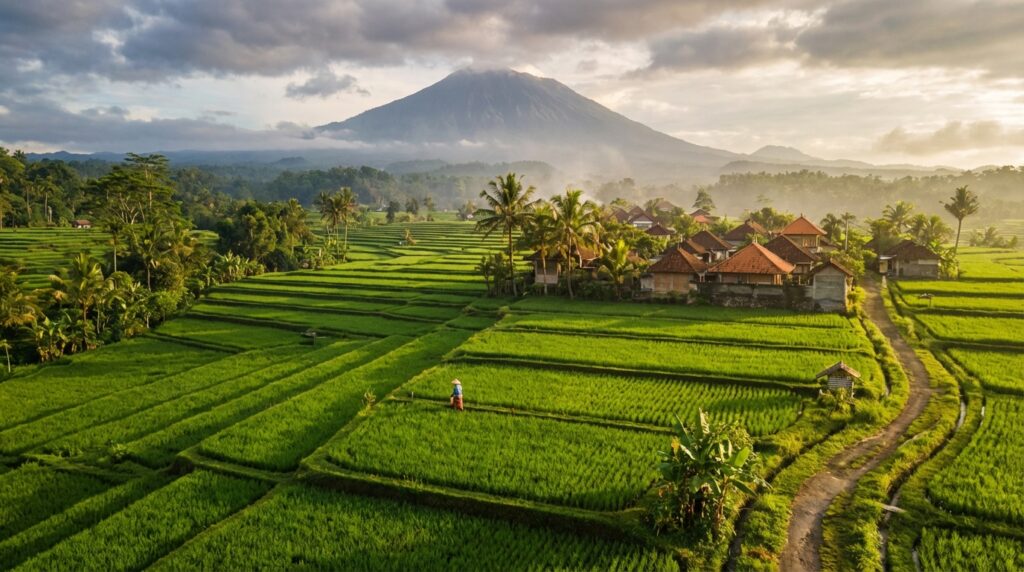
While millions flock to Seminyak’s beach clubs and Ubud’s Monkey Forest, a serene valley in East Bali remains one of Indonesia’s best-kept secrets. Sidemen Valley offers what overtourism has stolen from Bali’s southern coast: authentic village life, terraced rice paddies untouched by development, and genuine cultural connections.
In 2026, as Bali welcomes an estimated 7.4 million international visitors annually, Sidemen receives fewer than 15,000 overnight stays per year. This dramatic difference isn’t due to lack of beauty or accessibility. Rather, it’s the result of travelers following outdated itineraries while missing what many describe as the island’s soul.
Why Sidemen Valley Remains Off the Beaten Path
Located in Karangasem Regency, approximately 90 minutes northeast of Ubud, Sidemen Valley stretches across eight traditional villages nestled between Mount Agung and lush hillsides. The region’s remoteness isn’t geographic but perceptual. Most visitors never venture beyond the Ubud-Seminyak-Uluwatu triangle, missing entire swaths of authentic Balinese culture.
The valley’s economy remains rooted in agriculture and traditional crafts. Rice cultivation dominates the landscape, with terraced paddies following centuries-old subak irrigation systems. Unlike Tegallalang’s rice terraces near Ubud, which now charge entrance fees and feature Instagram swings, Sidemen’s fields remain working farms where locals still plant and harvest by hand.
Comparing Bali’s Tourist Hotspots: Where the Crowds Actually Are
Daily Visitor Numbers Across Bali Regions (2026 Average)
This stark contrast in visitor density creates fundamentally different experiences. In Sidemen, you’re more likely to be invited to a family temple ceremony than asked to buy sarongs or book a tour.
What Makes Sidemen Valley Authentically Different
Authenticity has become tourism’s most overused and misunderstood term. In Sidemen’s context, it means economic structures that don’t depend primarily on tourism, preserving cultural practices for community rather than performance, and daily life continuing largely unchanged whether visitors are present or not.
The valley hosts numerous natural dyeing workshops where artisans still extract colors from turmeric, indigo, and morinda root. These aren’t staged demonstrations but actual production facilities where weavers create textiles for Balinese ceremonies across the island.
Activities and Experiences Worth Your Time
Sidemen’s appeal lies not in manufactured attractions but in immersive experiences that reveal Bali’s agricultural and artistic heritage.
| Activity | Duration | Typical Cost (IDR) | Best Season |
|---|---|---|---|
| Rice terrace trekking | 2-4 hours | 150,000-300,000 | April-October |
| Traditional weaving workshop | 3 hours | 400,000-600,000 | Year-round |
| Cooking class with local family | 4 hours | 350,000-500,000 | Year-round |
| Mount Agung sunrise trek | 6-8 hours | 800,000-1,200,000 | April-October |
| Village cycling tour | 3-5 hours | 250,000-400,000 | May-September |
The rice terrace walks differ significantly from Ubud’s commercialized routes. Here, trails wind through working farms where farmers still use traditional tools and water buffalo for plowing. Guides typically come from farming families and can explain the intricate subak system that has sustained Balinese agriculture for over 1,000 years.
Practical Information for Planning Your Visit
Getting to Sidemen requires either renting a scooter, hiring a driver, or taking a combination of public transportation that most foreign visitors find challenging. The journey from Ngurah Rai International Airport takes approximately two to three hours depending on traffic and route.
Accommodation options range from family-run guesthouses charging 250,000-400,000 IDR per night to boutique properties with infinity pools overlooking Mount Agung at 1,500,000-3,000,000 IDR. The middle ground, offering comfort without luxury, typically costs 600,000-900,000 IDR including breakfast.
When to Visit: Seasonal Considerations
Bali’s seasons affect Sidemen more dramatically than coastal areas. The wet season, November through March, brings afternoon rains that turn dirt roads muddy and limit trekking options. However, this period also sees rice paddies at their greenest and waterfalls at peak flow.
| Month | Rainfall (mm) | Visitor Level | Rice Terrace Appeal |
|---|---|---|---|
| January-March | 280-350 | Low | Lush and green |
| April-June | 120-180 | Medium | Peak planting season |
| July-September | 40-80 | High | Golden harvest period |
| October-December | 200-280 | Medium-Low | Mixed planting cycles |
The dry season, particularly July through September, offers ideal conditions for trekking and photography but also coincides with Bali’s high season. Even so, Sidemen remains dramatically quieter than southern Bali destinations.
Cultural Etiquette and Responsible Tourism
Visiting Sidemen carries greater cultural responsibility than tourist-saturated areas. Villages here haven’t developed the thick skin that comes with constant visitor interaction. Small gestures matter more, and missteps feel more intrusive.
Temple ceremonies happen regularly throughout Sidemen’s villages. Visitors are often welcome to observe from respectful distances, particularly during major festivals like Galungan and Kuningan. However, attending requires proper temple dress including sarong and sash, covered shoulders, and maintaining silence during prayers.
Supporting local economies extends beyond accommodation and meal purchases. Buying directly from weavers rather than souvenir shops in Ubud ensures more money reaches artisans. Hiring local guides instead of bringing guides from other regions keeps tourism revenue in the community.
Is Sidemen Valley Right for Your Bali Trip?
Sidemen rewards travelers seeking cultural immersion over convenience. There are no beach clubs, minimal nightlife, and limited dining options beyond hotel restaurants and simple warungs. The valley’s appeal centers on natural beauty, cultural authenticity, and slower rhythms that stand in stark contrast to Bali’s tourism epicenters.
Visitors expecting resort amenities or constant activities will find Sidemen lacking. Those comfortable with quiet evenings, basic accommodations, and experiences centered on observation rather than consumption will discover what many consider Bali’s last accessible refuge from overtourism.
The valley works best as part of a broader Bali itinerary rather than a standalone destination. Three to four days provides sufficient time to explore rice terraces, visit weaving workshops, and experience village life without feeling rushed. Combining Sidemen with coastal areas creates balance between relaxation and cultural exploration.
As Bali continues attracting record visitor numbers in 2026, places like Sidemen become increasingly valuable not just for travelers but for Balinese communities hoping to preserve cultural traditions amid tourism pressures. Choosing to spend time here represents more than itinerary diversification. It’s a vote for the kind of tourism that sustains rather than consumes local culture.
The irony isn’t lost that writing about Sidemen risks undermining its quiet charm. Yet the alternative, allowing Bali’s cultural heartland to remain economically marginalized while resort areas boom, serves no one. Thoughtful, culturally-sensitive tourism can support communities without overwhelming them, but only if visitors arrive with realistic expectations and genuine respect for places that exist for residents first and tourists second.
Leave a Reply