
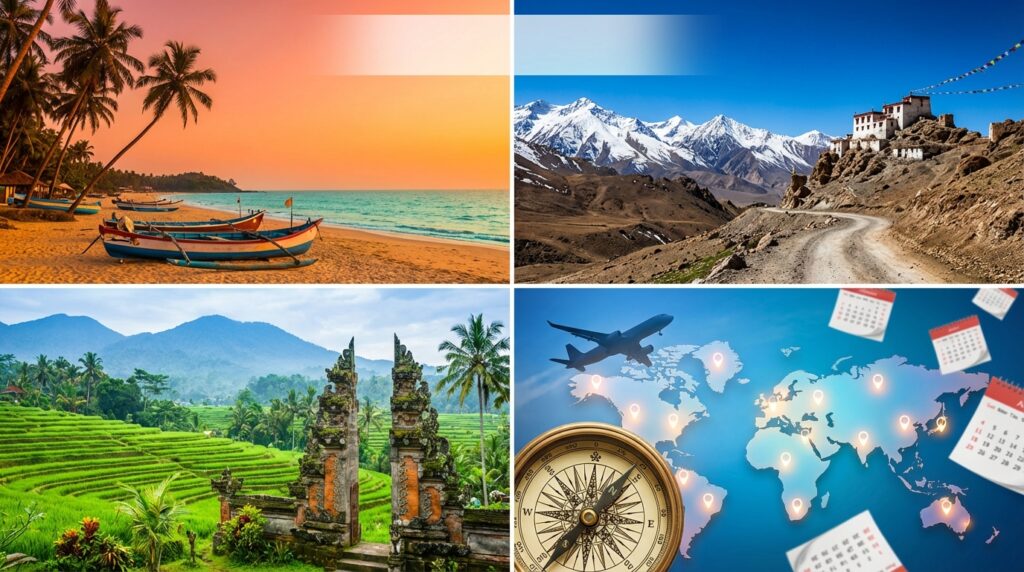
Planning your 2026 travel adventures requires strategic timing to maximize experiences while minimizing costs and crowds. Whether you’re dreaming of Goa’s pristine beaches, Ladakh’s mountain monasteries, or Bali’s cultural richness, understanding seasonal patterns can transform your journey from ordinary to extraordinary. This comprehensive guide breaks down the optimal travel windows for the world’s most sought-after destinations, backed by climate data, tourism statistics, and insider insights.
Understanding Travel Seasons: A Data-Driven Approach
Travel seasons directly impact your experience through three critical factors: weather conditions, tourist density, and pricing. Peak seasons offer the best weather but come with inflated prices and crowded attractions. Shoulder seasons provide the sweet spot of decent weather, moderate crowds, and reasonable rates. Off-peak periods deliver budget-friendly options but may include challenging weather or reduced services.
2026 Travel Season Calendar Overview
Goa: India’s Beach Paradise
Goa’s tropical climate creates distinct travel windows. The peak season from November through February attracts 8.2 million visitors annually, with December alone accounting for 22% of annual tourism. Temperature averages hover between 20-32°C during these months, with humidity levels at a comfortable 65-70%.
| Month | Avg Temp (°C) | Rainfall (mm) | Tourist Index | Hotel Rates |
|---|---|---|---|---|
| January | 25-32 | 0.3 | Very High | Premium |
| March | 27-33 | 1.2 | Moderate | Medium |
| July | 24-29 | 868 | Very Low | Budget |
| November | 24-32 | 31 | High | High |
Ladakh: The Himalayan Wonderland
Ladakh’s extreme altitude creates a compressed travel season. Roads open from May through September, with peak tourism concentrated in July-August when 73% of annual visitors arrive. Temperatures range from 10-25°C during summer months, dropping to -20°C in winter. The region receives minimal rainfall at just 115mm annually, but winter snowfall makes most areas inaccessible.
| Month | Road Access | Avg Temp (°C) | Oxygen Level | Crowd Level |
|---|---|---|---|---|
| May | Opening | 10-20 | 70% | Low |
| July | Full Access | 15-25 | 70% | Very High |
| September | Full Access | 8-20 | 70% | Moderate |
| January | Closed | -15 to -5 | 65% | Minimal |
Bali: Indonesia’s Island Gem
Bali’s equatorial position creates two primary seasons: dry season from April to October and wet season from November to March. The island welcomes 6.3 million international visitors annually, with July-August representing peak tourism at 18% above average. Temperatures remain consistent at 26-31°C year-round, but rainfall varies dramatically from 60mm in August to 345mm in January.
| Period | Weather | Avg Rainfall (mm) | Surf Conditions | Value Rating |
|---|---|---|---|---|
| April-May | Dry & Warm | 90 | Good (West Coast) | Excellent |
| July-August | Dry & Busy | 45 | Best (East Coast) | Fair |
| September-October | Transitional | 85 | Variable | Very Good |
| January-February | Wet Season | 315 | Poor | Budget |
Additional Premium Destinations for 2026
Santorini, Greece
Peak season runs May-September with July-August experiencing 40% above normal capacity. Shoulder months of April and October offer 30% lower prices with pleasant 18-24°C temperatures. Winter sees 65% of businesses closed.
Patagonia, Argentina/Chile
Southern hemisphere seasons reverse northern patterns. November-March provides optimal trekking conditions with 16-hour daylight. December-February peaks with 85% annual visitors concentrated in these months. Wind speeds average 40-50 km/h year-round.
Kerala, India
Monsoon season from June-September brings 3,000mm of rainfall but creates lush landscapes and 50% discounts. October-March offers dry weather with November-January peak season. Ayurveda treatments are optimal during monsoon months due to humidity benefits.
Strategic Booking Timeline for 2026
Data from global travel platforms reveals optimal booking windows maximize savings and availability. International flights booked 3-6 months advance save an average of 23% compared to last-minute bookings. Accommodation follows similar patterns with 4-8 week advance bookings securing 18% better rates.
| Destination Type | Ideal Booking Window | Average Savings | Peak Booking Period |
|---|---|---|---|
| Beach Destinations | 3-4 months prior | 22% | January-February |
| Mountain Regions | 4-6 months prior | 28% | March-April |
| Cultural Cities | 6-8 weeks prior | 15% | Year-round |
| Adventure Travel | 5-7 months prior | 31% | February-March |
Climate Change Considerations for 2026 Travel
Recent climate data indicates shifting seasonal patterns affecting traditional travel windows. Monsoon seasons in Southeast Asia show 12% increased variability, while European summers extend 2-3 weeks longer than historical averages. Winter sports destinations face 18% reduced snow coverage compared to decade averages. Smart travelers monitor real-time weather data and maintain flexible booking options when possible.
Budget Optimization Strategies
Maximizing travel value requires strategic timing beyond simple shoulder season selection. Midweek flights average 17% cheaper than weekend departures. Booking separate one-way tickets saves 8-12% on international routes. Hotel rates drop 25-35% during shoulder seasons while service quality remains consistent. Package deals during off-peak periods deliver 30-40% overall savings.
Key Takeaways for 2026 Travel Planning
- Shoulder seasons offer the optimal balance of weather, crowds, and value across most destinations
- Book international flights 3-6 months advance for maximum savings
- Consider climate pattern shifts when planning traditional seasonal destinations
- Flexibility in travel dates can unlock 20-40% cost savings
- Research destination-specific festivals and events to enhance cultural experiences
- Monitor currency fluctuations for international destinations to time bookings advantageously
Final Planning Recommendations
Successful 2026 travel planning balances personal preferences with data-driven insights. Whether prioritizing weather perfection, budget constraints, or crowd avoidance, understanding seasonal patterns empowers informed decisions. Goa shines November through February, Ladakh opens its mountain majesty June through September, and Bali welcomes visitors year-round with April-May and September-October sweet spots. Create backup plans for weather variability, book accommodations early for peak periods, and embrace shoulder seasons for authentic experiences without tourist saturation. The perfect travel window exists for every destination with proper research and strategic timing.
Remember that popular destinations evolve constantly with infrastructure improvements, emerging attractions, and changing tourism patterns. Monitor official tourism boards, check recent traveler reviews, and verify current entry requirements before finalizing 2026 travel plans. With careful planning using this data-driven calendar, your travels will deliver exceptional experiences while maximizing value and minimizing common tourist frustrations.
Discover the best time to visit Goa, Ladakh, Bali and more in 2026. Data-driven travel calendar with climate stats, booking tips, and seasonal insights.
Leave a Reply