
Introduction: Why February Is One of the Best Months to Travel in India
February is a sweet spot for exploring India: winter’s harshest chill has eased in most regions, summer heat hasn’t arrived, and skies are typically clear for sightseeing and photography. From heritage cities in Rajasthan to beach escapes on the west coast, February 2026 is ideal for comfortable daytime walks, sunrise viewpoints, and open-air festivals. It’s also a high-demand month for domestic travel, which means better energy in tourist hubs but it also rewards early planners with better flight and hotel deals.
If you’re looking for the best places to visit in India in February, the destinations below balance great weather, unforgettable experiences, strong photo opportunities, and practical, short itineraries you can actually follow (even on a long weekend).
1) Jaipur, Rajasthan (The Pink City)
Brief overview: Jaipur is a top February pick for first-time India travellers and repeat visitors alike. The city pairs royal forts and palaces with craft bazaars, rooftop cafés, and day trips that fit neatly into 1 to 3 days. In February, the air is crisp in the morning and pleasantly warm by afternoon perfect for fort-hopping without the intense summer sun.
Things to do:
- Explore Amber Fort early for cooler temperatures and softer light.
- Visit City Palace and the intricate courtyards of Hawa Mahal.
- See the astronomical instruments at Jantar Mantar (a UNESCO site).
- Shop for textiles, block prints, lac bangles, and blue pottery in the old city markets.
- Take a sunset view from Nahargarh Fort overlooking Jaipur’s grid of pink streets.
Best weather & photo spots: Expect comfortable winter weather (often around 10-28°C, varying by year). For photos, prioritize sunrise at Amber Fort, the honeycomb façade of Hawa Mahal in morning light, and golden-hour panoramas from Nahargarh. For an iconic “Jaipur shot,” frame the City Palace doorways and arches with a wide lens.
Suggested itinerary (1-3 days):
- Day 1: Amber Fort at opening time, Panna Meena ka Kund stepwell nearby, then City Palace and Jantar Mantar. Sunset at Nahargarh.
- Day 2: Hawa Mahal in the morning, Albert Hall Museum, and a relaxed afternoon in Bapu Bazaar/Johari Bazaar for shopping and snacks.
- Day 3 (optional): Day trip to Ajmer and Pushkar, or a slower “food and craft” day with a block-print workshop and café hopping.
Travel tips (budgets, bookings, food, festivals/events):
- Budget: Backpacker INR 2,000-3,500/day; mid-range INR 4,500-8,000/day; upscale INR 10,000/day (higher if you choose heritage hotels).
- Best time to book (February 2026): Aim to book flights and good-value hotels by November-December 2025. For boutique/heritage stays, earlier is better.
- Getting around: App cabs work well; for the old city, mix short auto-rickshaw rides with walking.
- Local food to try: Dal baati churma, ghewar, pyaaz kachori, laal maas (for meat-eaters), and a classic Rajasthani thali.
- Festivals/events nearby: Keep an eye on cultural fairs in Rajasthan and seasonal programming in the city. If you can add an extra day, Agra’s Taj Mahotsav (typically mid-late February) can pair well with a Golden Triangle route (check 2026 dates).
2) Jaisalmer, Rajasthan (Golden Fort and Thar Desert Nights)
Brief overview: Jaisalmer is one of the most atmospheric February destinations in India: sandstone architecture glows at sunrise, days are warm enough for desert activities, and nights feel crisp and dramatic under open skies. It’s compact, photogenic, and easy to cover in a short trip.
Things to do:
- Walk the living lanes of Jaisalmer Fort and visit its Jain temples.
- Tour the ornate havelis like Patwon ki Haveli and Nathmal ki Haveli.
- Head to Sam Sand Dunes for a sunset camel ride or a 4×4 dune drive.
- Catch a folk music and dance performance (often bundled with desert camp stays).
- Visit Gadisar Lake for calm reflections and birds in the early morning.
Best weather & photo spots: February is prime time (often around 8-26°C). Photo musts: sunrise inside the fort, the golden-hour façades of havelis, silhouettes on the dunes at sunset, and night-sky shots if you’re staying outside town. For portraits, the markets offer colourful textiles and turban styles that pop against the sandstone palette.
Suggested itinerary (1-3 days):
- Day 1: Fort and Jain temples, haveli circuit, sunset at Gadisar Lake or a fort viewpoint café.
- Day 2: Day trip to Kuldhara (abandoned village) and desert dunes; stay overnight at a desert camp for stargazing.
- Day 3 (optional): Visit Tanot Mata Temple and Longewala (history-focused border circuit) or enjoy a slower day of shopping and local eateries back in town.
Travel tips (budgets, bookings, food, festivals/events):
- Budget: Backpacker INR 2,500-4,000/day; mid-range INR 5,000-9,000/day; desert camp packages vary widely (compare inclusions like transfers, dinner, and cultural program).
- Best time to book (February 2026): Desert camps and popular hotels can sell out-book by December 2025 for better choices. If traveling around weekends, book even earlier.
- Desert camp choice: Ask where the camp is located (some are closer to town and less “quiet desert”) and what time you’ll reach the dunes for sunset.
- Local food to try: Ker sangri, gatte ki sabzi, bajra roti, and makhania lassi.
- Festivals/events nearby: The Jaisalmer Desert Festival is often held in February and brings parades, folk performances, and competitions. Dates vary each year-confirm your travel window if you want to align with it.
3) Goa (Beaches, Cafes, and Carnival Energy)
Brief overview: Goa in February delivers classic dry-season beach weather, lively nightlife, excellent seafood, and a relaxed “choose your own pace” vibe. It’s a strong pick for couples, groups, and solo travellers who want a mix of sand, culture, and day trips without weather stress.
Things to do:
- Beach-hop: try calmer South Goa beaches or busier North Goa hotspots depending on your style.
- Explore Old Goa’s churches and heritage streets.
- Do a cafe trail (sunset viewpoints, brunch spots, live music evenings).
- Take a spice plantation tour or a short trek to a waterfall if conditions allow.
- Browse flea markets for crafts, clothing, and homegrown brands (market days vary by season).
Best weather & photo spots: February is reliably sunny and warm (often around 20-32°C) with low humidity compared to monsoon months. For photos: sunrise on quieter beaches, late-afternoon palms and cliff viewpoints, colorful façades in Fontainhas (Panjim), and moody blue-hour shots around beach shacks with lantern light.
Suggested itinerary (1-3 days):
- Day 1: Choose a base (North for nightlife, South for calm). Beach time and sunset viewpoint and seafood dinner.
- Day 2: Old Goa heritage circuit and Panjim’s Fontainhas, then a relaxed cafe crawl.
- Day 3 (optional): Market morning, spice plantation or nature outing, then a final beach sunset and live music.
Travel tips (budgets, bookings, food, festivals/events):
- Budget: Backpacker INR 2,500-4,500/day; mid-range INR 5,500-10,000/day; premium beach stays can jump significantly in peak season.
- Best time to book (February 2026): For peak beach areas, aim for November 2025 bookings. If you’re traveling over long weekends or festival dates, lock stays earlier.
- Getting around: Consider renting a scooter if you’re comfortable riding; otherwise, use app cabs where available and pre-book airport transfers for late arrivals.
- Local food to try: Goan fish curry rice, prawn balchao, pork vindaloo, sorpotel, bebinca, and local cashew-based drinks (drink responsibly).
- Festivals/events nearby: Goa Carnival often takes place in February (dates vary). If you want a quieter trip, avoid the Carnival core days; if you want the full party atmosphere, plan around it.
4) Rann of Kutch, Gujarat (White Salt Desert and Cultural Nights)
Brief overview: The Great Rann of Kutch is one of India’s most surreal landscapes: a vast white salt desert that looks otherworldly under the sun and especially under moonlight. February is typically the final stretch of the season when tents, crafts, and cultural programs are in full swing, making it one of the most unique places to visit in India in February 2026.
Things to do:
- Visit the white salt flats for sunrise, sunset, and (if available) moonlight viewing.
- Shop Kutch crafts: embroidery, bandhani, ajrakh prints, and leatherwork.
- Explore nearby villages for artisan workshops and local culture.
- Try regional Kutchi and Gujarati food in set meal experiences.
- Add a day trip to nearby sights depending on your base (Bhuj area museums and viewpoints are popular).
Best weather & photo spots: February tends to be dry and comfortable (often around 12-30°C). The best photo moments are “edge light” times: sunrise when the salt blushes pastel, and sunset when footprints cast long shadows. If you can time it, moonlight across the salt can look unreal, carry a tripod if photography is a priority.
Suggested itinerary (1-3 days):
- Day 1: Arrive in Bhuj/Dhordo, settle in, then sunset at the salt desert and an evening cultural program.
- Day 2: Village craft circuit (choose 1-2 villages rather than rushing), then return for another salt desert session (sunrise or moonlight, depending on permits and timing).
- Day 3 (optional): Bhuj sightseeing (local museums/markets) and a slower lunch before departure.
Travel tips (budgets, bookings, food, festivals/events):
- Budget: Costs vary widely depending on tent category and packages. Budget INR 4,000-7,000/day for basic comfort; INR 8,000-15,000/day for better tents and inclusions; luxury packages can go higher.
- Best time to book (February 2026): If you want prime tent locations and better rates, book by October-December 2025. February availability can tighten quickly.
- Permits and entry: Salt desert access rules and timings can change; confirm the latest entry process through official sources before arrival.
- Local food to try: Gujarati thali, dhokla, handvo, thepla, and regional sweets (often part of fixed dining setups).
- Festivals/events nearby: Rann Utsav (the seasonal festival) typically runs through the winter months and often includes February dates. Check the official schedule and plan nights accordingly for music and craft programming.
5) Kochi and Alleppey, Kerala (Culture and Backwaters in Peak Comfort)
Brief overview: For travelers who want a calmer pace, February in Kerala is an easy win: warm, coastal weather; lush scenery; and a mix of heritage neighborhoods and iconic backwater experiences. Pair Kochi (Fort Kochi and art-forward cafés) with Alleppey (Alappuzha) for a short trip that feels both cultural and restorative.
Things to do:
- Walk Fort Kochi: colonial-era streets, galleries, cafes, and the waterfront promenade.
- See the Chinese fishing nets at sunset and explore local spice and antique shops.
- Consider a Kathakali performance for an evening cultural experience.
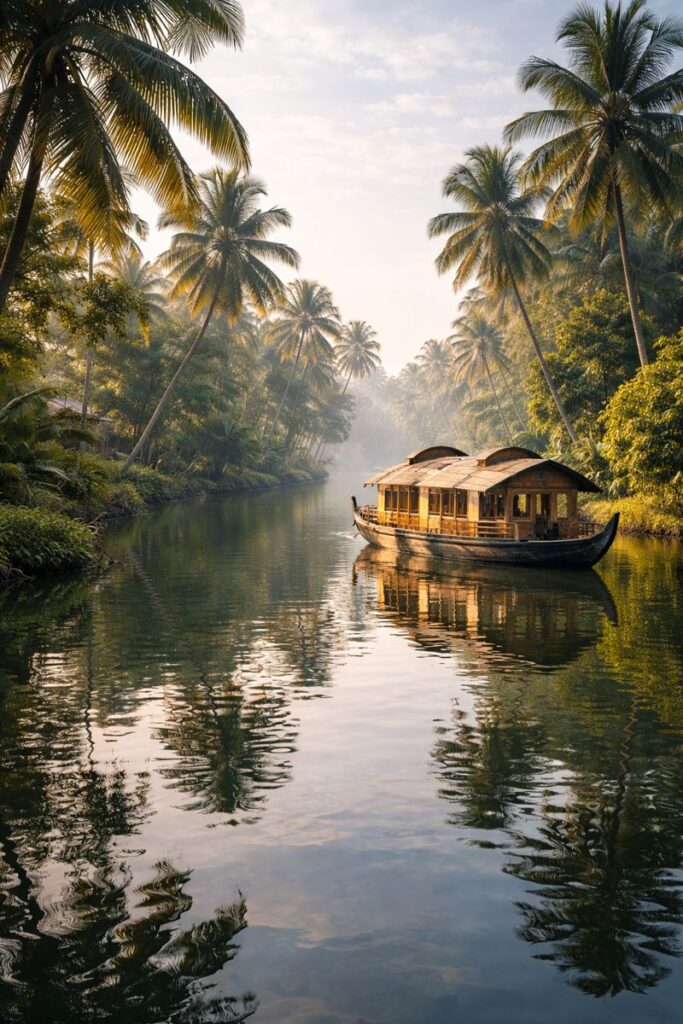
- In Alleppey, take a backwater cruise (day cruise or overnight houseboat, depending on your style).
- Try a short village canoe ride for quieter canals and closer local life.
Best weather & photo spots: February is typically dry and warm (often around 23-32°C). Photo highlights include golden sunsets by the fishing nets, pastel streetscapes in Fort Kochi, and mirror-like canal reflections in the backwaters during early morning. For people shots, fish markets and ferry jetties can be lively-ask before photographing closeups.
Suggested itinerary (1-3 days):
- Day 1: Fort Kochi walk, cafes and galleries, sunset by the waterfront, then Kathakali or a cultural show.
- Day 2: Transfer to Alleppey for a day cruise or overnight houseboat; add a canoe ride for narrower canals.
- Day 3 (optional): Return to Kochi for markets and a relaxed farewell meal, or spend extra time in Alleppey for a slow morning and local lunch.
Travel tips (budgets, bookings, food, festivals/events):
- Budget: Backpacker INR 2,500-4,000/day; mid-range INR 5,000-9,000/day. Houseboats are priced per boat and season cost-effective for small groups, pricier for solo travellers.
- Best time to book (February 2026): For the best houseboats and waterfront stays, book by December 2025. If you want a specific boat class or route, book earlier.
- Houseboat reality check: Choose reputable operators, confirm AC timings, inclusions (meals, tea/coffee), and whether the boat will anchor early evening (common practice).
- Local food to try: Kerala fish curry, appam with stew, puttu with kadala curry, prawn roast, and banana chips. In Kochi, don’t skip fresh seafood grills.
- Festivals/events nearby: Kerala’s cultural calendar varies by year. Look out for seasonal dance and cultural festivals (often hosted in major cities) and verify dates for any art events in Kochi during your travel window.
Also Consider: Bonus Options for February 2026
If your schedule or interests push you in a different direction, these destinations also shine in February:
- Agra, Uttar Pradesh: Comfortable weather for the Taj Mahal at sunrise, plus the Taj Mahotsav (typically in February; confirm dates) for crafts and performances.
- Udaipur, Rajasthan: Romantic lake views, palace architecture, and golden winter light, great for slower travel and photography.
- Varanasi, Uttar Pradesh: Crisp mornings for boat rides on the Ganges and powerful evening aartis; late winter often brings a distinctive misty mood for photos.
- Kaziranga, Assam: Peak safari season for one-horned rhinos (park operations are seasonal, confirm open dates and permits).
- Pondicherry: A calm coastal break with French-quarter streets, cafes, and nearby beaches are ideal if you want “easy” travel days.
Final Thoughts: Planning Your February 2026 India Trip
The best places to visit in India in February combine comfortable weather, strong sightseeing value, and experiences that feel uniquely “India,” from desert folk nights to backwater mornings. If you’re traveling in February 2026, plan your bookings earlier than usual especially for Goa, Rajasthan, and the Rann of Kutch then build your itinerary around light (sunrise/sunset), not just landmarks. That’s how February trips go from “busy sightseeing” to genuinely unforgettable.
Leave a Reply