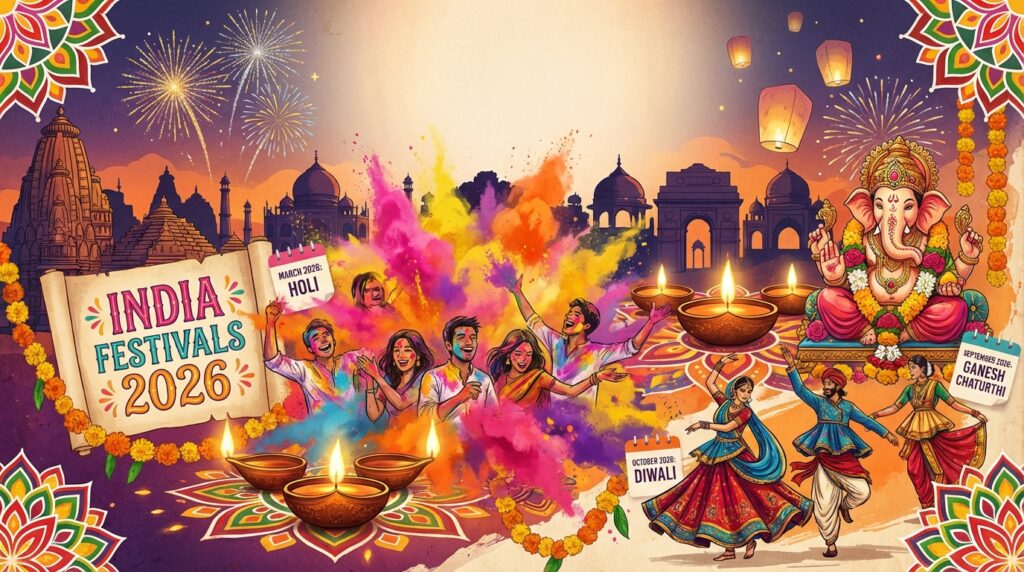
India’s cultural tapestry comes alive through its festivals, each celebration offering travelers an authentic glimpse into traditions that span millennia. Planning your 2026 journey around these vibrant holidays transforms a standard vacation into an immersive cultural experience. With over 40 major festivals celebrated across the nation’s 28 states and 8 union territories, strategic timing can mean the difference between witnessing everyday life and experiencing the extraordinary.
This comprehensive guide breaks down India’s 2026 festival calendar, providing travelers with essential dates, regional highlights, and practical planning insights to maximize their cultural exploration.
January Through March: Starting the Year with Spiritual Fervor
The first quarter of 2026 launches with some of India’s most visually spectacular celebrations. Makar Sankranti on January 14 marks the sun’s northward journey, celebrated uniquely across regions from kite-flying competitions in Gujarat to harvest festivities in Tamil Nadu called Pongal. This period sees approximately 12 million domestic tourists traveling specifically for festival participation.
Republic Day on January 26 showcases India’s military prowess and cultural diversity through the iconic parade in New Delhi, attracting over 150,000 spectators annually. February brings Maha Shivaratri, falling on February 26 in 2026, when temples across India host night-long vigils. The Khajuraho Dance Festival during this period presents classical performances against the backdrop of ancient temple architecture.
Holi, the festival of colors scheduled for March 14, 2026, represents peak tourist season with hotel occupancy rates reaching 95 percent in cities like Mathura and Vrindavan. This Hindu spring festival generates an estimated economic impact of 500 million dollars through tourism, with international visitor numbers surging by 300 percent during the celebration week.
| Festival | 2026 Date | Best Location | Average Tourist Influx |
|---|---|---|---|
| Makar Sankranti | January 14 | Ahmedabad, Gujarat | 2.5 million |
| Republic Day | January 26 | New Delhi | 150,000 |
| Maha Shivaratri | February 26 | Varanasi, Uttar Pradesh | 1.8 million |
| Holi | March 14 | Mathura, Uttar Pradesh | 4 million |
April Through June: Summer Festivals and Regional Celebrations
Despite rising temperatures, summer months host significant cultural events. Ram Navami on April 6 celebrates Lord Rama’s birth with processions in Ayodhya drawing 800,000 devotees. Baisakhi on April 13 marks the Punjabi New Year and harvest season, transforming Amritsar’s Golden Temple into a hub of celebration with over 1 million visitors.
Buddha Purnima on May 5, 2026, illuminates Buddhist sites across India. Bodh Gaya in Bihar becomes the epicenter, hosting 200,000 international Buddhist pilgrims alongside domestic visitors. The Hemis Festival in Ladakh, typically held in late June, offers high-altitude cultural experiences with traditional mask dances at the Hemis Monastery, attracting approximately 50,000 tourists to the region despite its remote location.
Summer Festival Tourist Distribution (in thousands)
July Through September: Monsoon Magic and Independence Celebrations
The monsoon season brings unique festival experiences. Rath Yatra in Puri, scheduled for July 6, 2026, witnesses the procession of Lord Jagannath’s chariot through streets lined with 1.5 million devotees. This ancient tradition, dating back over 800 years, requires booking accommodations six months in advance due to overwhelming demand.
Independence Day on August 15 features flag-hoisting ceremonies nationwide, with the prime minister’s address from Delhi’s Red Fort broadcast to the entire nation. Janmashtami on August 26 celebrates Krishna’s birth with midnight celebrations in Mathura and Dwarka, drawing combined crowds exceeding 3 million people.
Ganesh Chaturthi, beginning September 5 in 2026, transforms Mumbai into a ten-day festival extravaganza. The city installs over 150,000 Ganesh idols, with economic activity surpassing 300 million dollars. The final immersion processions on September 14 involve 2.5 million participants, making it Maharashtra’s largest public gathering.
October Through December: Festival Peak Season
Autumn ushers in India’s most concentrated festival period. Navaratri commences October 3, featuring nine nights of dance, particularly Garba in Gujarat where cities like Vadodara host gatherings of 100,000 participants nightly. This period sees hotel rates increase by 40 to 60 percent across major cities.
Dussehra on October 12 marks Ravana’s defeat with effigy burnings nationwide. Delhi’s Ramlila at Red Fort grounds attracts 500,000 spectators over ten days. Diwali, India’s biggest festival, falls on October 20, 2026, generating the highest domestic travel numbers with approximately 35 million Indians traveling during the five-day celebration period.
| Festival | Duration | Key States | Estimated Participants |
|---|---|---|---|
| Navaratri | 9 nights | Gujarat, West Bengal | 15 million |
| Dussehra | 1 day | Pan-India | 20 million |
| Diwali | 5 days | Pan-India | 100 million |
| Pushkar Camel Fair | 7 days | Rajasthan | 400,000 |
The Pushkar Camel Fair in early November combines livestock trading with cultural festivities, attracting 400,000 visitors including 50,000 international tourists. Guru Nanak Jayanti on November 15 sees Golden Temple attendance peak at 150,000 daily visitors. Christmas celebrations, while concentrated in Goa and Kerala, have expanded nationwide with urban centers hosting markets and events throughout December.
Strategic Planning: Maximizing Your Festival Experience
Successful festival travel requires advance planning. Accommodation during major festivals should be booked three to six months ahead, particularly for Diwali and Holi when prices surge 50 to 100 percent. Train tickets for popular routes sell out 60 days before departure, necessitating early reservation through Indian Railways’ booking system.
Budget Planning Insight: Festival periods see 30 to 70 percent price increases across accommodation, with luxury hotels experiencing the steepest hikes. Mid-range hotels average 45 percent increases, while budget accommodations rise approximately 30 percent. Planning visits during shoulder periods immediately before or after major festivals can reduce costs while still offering cultural immersion.
Regional festivals provide authentic experiences with fewer crowds. The Hornbill Festival in Nagaland during early December attracts 250,000 visitors annually but offers more intimate cultural interactions than massive pan-Indian celebrations. Similarly, the Konark Dance Festival in Odisha and Hampi Utsav in Karnataka deliver high-quality cultural programming without overwhelming tourist numbers.
Transportation and Logistics During Festival Seasons
India’s transportation network handles extraordinary pressure during festival periods. Diwali weekend alone sees 200 million domestic trips, with railways operating 4,500 special trains. Flight prices increase by 25 to 40 percent during peak periods, while advance bookings can secure savings of up to 35 percent compared to last-minute purchases.
Major cities implement traffic restrictions during large processions. Mumbai’s Ganesh Chaturthi immersion days close 60 kilometers of coastal roads. Delhi restricts vehicle movement around Republic Day parade routes, affecting approximately 500,000 commuters. Understanding these logistics helps travelers plan alternative routes and timing.
Accommodation Price Increase by Festival (Percentage)
Cultural Etiquette and Safety Considerations
Participating respectfully in festivals enhances experiences while honoring local traditions. Modest dress codes apply at religious sites, with temples requiring covered shoulders and legs. Photography permissions vary, with some ceremonies prohibiting cameras entirely while others welcome documentation.
Crowd safety becomes paramount during major gatherings. The 2026 Kumbh Mela, though not scheduled for this year, provides lessons in managing massive assemblies. Travelers should maintain awareness in dense crowds, secure valuables, and establish meeting points with companions. Official festival apps now provide real-time crowd density maps for major events, helping visitors navigate safely.
Making Your Festival Selection
Choosing festivals depends on interests and travel style. Spiritual seekers gravitate toward Kumbh Mela, Maha Shivaratri, and Buddhist festivals. Culture enthusiasts prefer classical dance festivals like Khajuraho or music-focused events such as the Jaipur Literature Festival in January, which draws 300,000 attendees and 500 speakers from 25 countries.
Adventure travelers combine festivals with regional exploration. Ladakh’s Hemis Festival pairs with Himalayan trekking, while Rajasthan’s desert festivals complement camel safaris and fort visits. Family travelers often select Diwali or Holi for their inclusive, joyful atmospheres that welcome participation across age groups.
India’s 2026 festival calendar offers unparalleled opportunities for cultural immersion. Whether witnessing the chromatic explosion of Holi, the spiritual intensity of Maha Shivaratri, or the community joy of Diwali, strategic planning transforms these ancient celebrations into modern travel highlights. With 150 million domestic tourists and 10 million international visitors expected during major festival periods, early preparation ensures unforgettable experiences at the heart of India’s living traditions.
Leave a Reply