
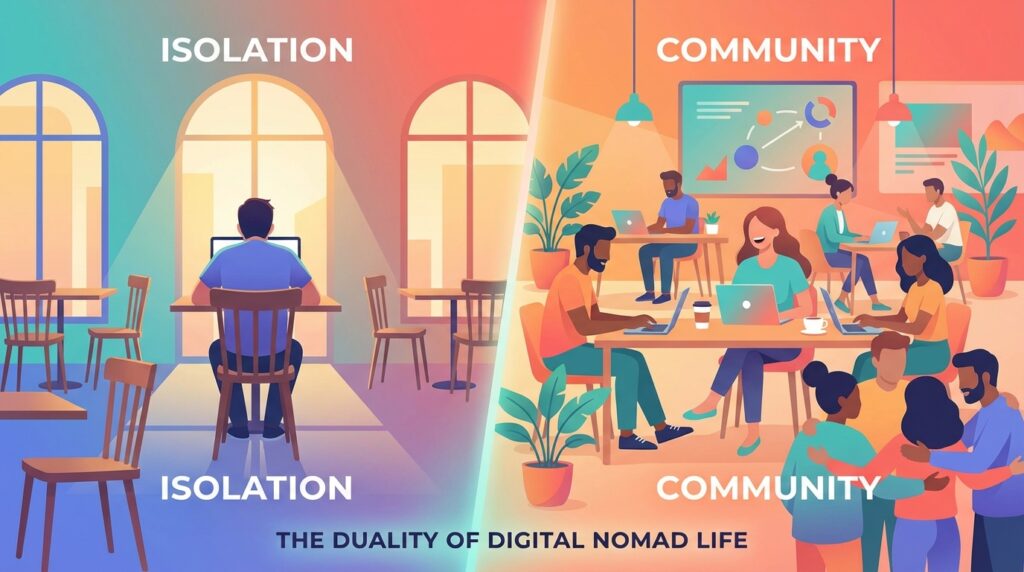
The digital nomad lifestyle promises freedom, adventure, and the world as your office. But behind the Instagram-worthy sunset photos and exotic cafe workspaces lies a reality few talk about: profound loneliness. A 2023 study by MBO Partners found that 53% of remote workers reported feeling isolated, with solo travelers experiencing even higher rates of disconnection.
The paradox is striking. You’re surrounded by people in bustling markets, crowded hostels, and vibrant coworking spaces, yet you can feel utterly alone. This isn’t just an emotional inconvenience, chronic loneliness has been linked to health risks equivalent to smoking 15 cigarettes daily, according to research published in the Journal of the American Heart Association.
But here’s the good news: building genuine community while traveling solo is not only possible, it’s becoming easier as more nomads face this challenge head-on. This guide will show you how to transform temporary connections into meaningful relationships, no matter how frequently you change time zones.
Understanding the Nomad Loneliness Cycle
Before we solve the problem, we need to understand it. The loneliness cycle for traveling nomads typically follows a predictable pattern that differs significantly from stationary loneliness.
| Phase | Duration | Emotional State | Social Behavior |
|---|---|---|---|
| Arrival Excitement | Days 1-5 | Energized, curious | Highly social, open to connections |
| Settling Discomfort | Days 6-14 | Anxious, overwhelmed | Selective, seeking familiar faces |
| Routine Depression | Days 15-30 | Isolated, disconnected | Withdrawn, work-focused |
| Integration or Departure | Day 30+ | Acceptance or avoidance | Community-embedded or planning exit |
Understanding this cycle helps you anticipate emotional dips and take proactive steps during vulnerable phases. The key is recognizing that day 15-30 slump isn’t personal failure, it’s a documented psychological response to repeated social resets.
Strategic Community-Building Tactics That Actually Work
Traditional friendship advice doesn’t translate well to nomadic life. You can’t join a weekly book club or commit to Sunday dinners when you’re moving cities every month. Instead, successful nomads use these evidence-based strategies:
1. The Coworking Space Anchor Method
Coworking spaces aren’t just about WiFi and desk space, they’re community infrastructure. Research from Deskmag’s Global Coworking Survey shows that 84% of coworking members feel more engaged and motivated, primarily due to social connections.
💡 The Strategy: Choose one primary coworking space per location and commit to showing up at consistent times. Regular presence creates familiarity. Within two weeks, you’ll recognize faces. By week three, you’ll have coffee buddies. By week four, you’ll have genuine connections.
Top nomad-friendly coworking networks include Selina, WeWork, and local spaces found through Coworker directory. Budget approximately $150-300 monthly for membership, consider it an investment in mental health, not just workspace.
2. The Slow Travel Formula
Here’s a revealing statistic: nomads who stay in locations for 60-90 days report 67% higher satisfaction with their social connections compared to those moving every 2-3 weeks, according to a 2024 survey by Nomad List.
- Week 1-2: Tourist phase, surface connections
- Week 3-4: Local rhythm established, recurring faces
- Week 5-8: Deeper friendships form, integration begins
- Week 9-12: Genuine community membership, difficult goodbyes
Slower travel doesn’t mean less adventure, it means depth over breadth. You’ll discover hidden neighbourhoods, build recurring routines, and have time for friendships to evolve beyond “Where are you from?” conversations.
3. Activity-Based Community Integration
Shared activities create bonds faster than conversation alone. Nomads who join regular group activities report feeling connected 3.2 times faster than those relying solely on coworking or hostel socializing.
High-impact activities for community building:
- Language exchanges: Sites like Conversation Exchange and Tandem connect you with locals eager to practice English while teaching you their language. These relationships often extend beyond lessons into genuine friendships.
- Fitness classes: Yoga, CrossFit, running clubs, and martial arts create consistent touchpoints with the same people. The endorphin boost doesn’t hurt either.
- Volunteer opportunities: Organizations like Workaway and WWOOF connect travelers with local projects. Contributing to community initiatives accelerates acceptance.
- Skill workshops: Cooking classes, photography walks, or coding bootcamps attract like-minded individuals while you learn something valuable.
4. Digital Community as a Supplement (Not Replacement)
Online nomad communities serve a crucial function, but they can’t replace in-person connection. The balance matters. A 2023 Buffer survey found that remote workers who engaged with both online and offline communities reported 41% lower loneliness scores than those relying on digital-only connections.
Effective digital community use:
- Join location-specific Facebook groups and Slack channels before arriving to arrange meetups
- Use apps like Meetup and Bumble BFF specifically to facilitate in-person connections
- Participate in nomad-focused platforms like Nomad List forums to find people in your current city
- Maintain regular video calls with close friends and family to preserve existing relationships
⚡ The Rule: Digital communities should drive offline interaction, not replace it.
The Data on Quality Over Quantity
How many friends do you actually need? Research from Robin Dunbar’s work on social connections suggests humans maintain approximately 5 intimate bonds, 15 close friendships, 50 casual friends, and 150 meaningful contacts.
For nomads, these numbers compress. You don’t need dozens of superficial connections, you need a handful of people who genuinely care about your wellbeing in each location, plus a core group of fellow nomads you reconnect with across different cities.
Nomad Social Circle Model
Creating Rituals and Routines
Humans are creatures of habit, and rituals create a sense of home regardless of location. Establishing personal and social rituals combats the rootlessness of constant travel.
Personal rituals anchor your day: morning coffee at the same café, evening walks in a specific park, Sunday market visits. Social rituals build community: weekly coworking lunches, Thursday language exchanges, monthly nomad dinners.
These predictable touchpoints provide stability in an otherwise fluid lifestyle. They also signal commitment to others when people know they’ll see you every Thursday, relationships deepen naturally.
The Reverse Networking Approach
Traditional networking focuses on what others can do for you. Reverse networking asks what you can contribute to others. This mindset shift is transformative for building genuine community.
Practical applications:
- Offer your professional skills to local organizations or fellow nomads
- Host events rather than just attending them, organize a potluck, skill share, or coworking meetup
- Make introductions between people who should know each other
- Share valuable local knowledge you’ve discovered with newcomers
When you become a community builder rather than just a community seeker, connections form organically around the value you create.
Dealing with Goodbye Fatigue
Perhaps the hardest part of nomadic community building is the constant cycle of goodbyes. A 2024 study in the Journal of Social and Personal Relationships found that frequent goodbyes can lead to emotional numbing and relationship avoidance.
Healthy coping strategies include reframing goodbyes as “see you laters” in the nomad circuit, maintaining digital connections with people you genuinely click with, and allowing yourself to grieve endings rather than minimizing their significance.
Some nomads find comfort in the concept of having “homes” in multiple cities not physical residences, but networks of people they return to cyclically. This transforms linear travel into a circular pattern where relationships can deepen over repeated visits.
Measuring Your Social Health
How do you know if your community-building efforts are working? Track these indicators:
| Indicator | Healthy Range | Warning Signs |
|---|---|---|
| Meaningful conversations per week | 5-10 | Less than 3 |
| People who know your name | 10-15 per location | Less than 5 after 3 weeks |
| Social activities per week | 3-5 | Less than 2 |
| Days feeling isolated | 1-2 per week | More than 4 per week |
If you’re consistently in the warning zone, it’s time to actively adjust your strategies rather than hoping things will improve organically.
The Bottom Line: Community is a Skill, Not Luck
🎯 Key Takeaway: Building community while traveling solo isn’t about being naturally extroverted or getting lucky with cool hostel mates. It’s a learnable skill set involving strategic location selection, consistent presence, genuine contribution, and intentional relationship investment.
The loneliness of the long-distance nomad is real, but it’s not inevitable. With the right approach, you can experience genuine belonging in every city while maintaining the freedom that drew you to this lifestyle in the first place. The key is treating community building with the same intentionality you apply to finding accommodation or planning your work schedule as an essential component of sustainable nomadic life, not an optional bonus.
Start small. Choose one strategy from this article and implement it in your next location. Show up consistently. Contribute genuinely. The connections will follow.
Leave a Reply