
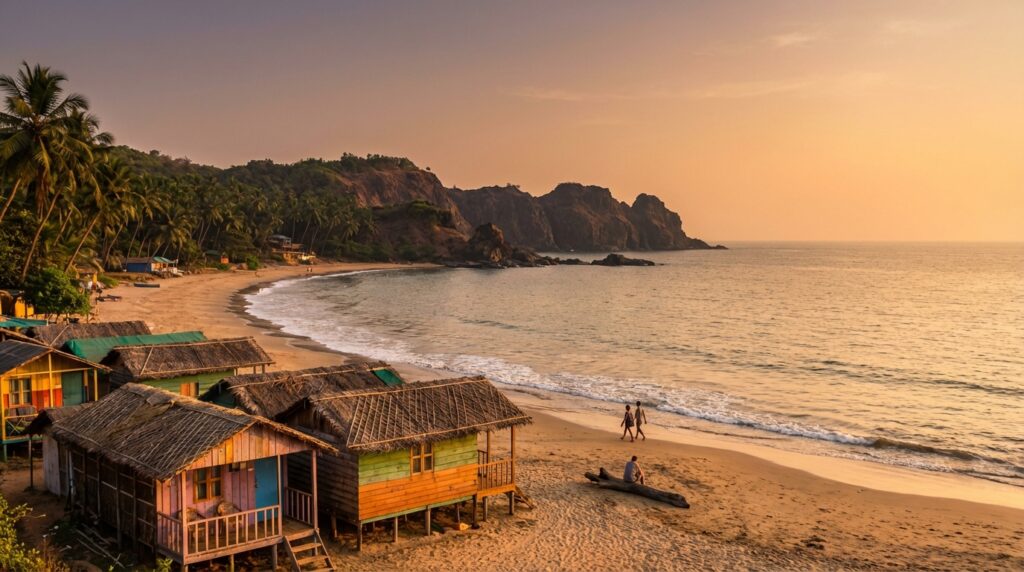
As Goa welcomed over 10.8 million tourists in 2025, setting yet another record, a quieter transformation was happening just 150 kilometers south. Gokarna, once known primarily as a Hindu pilgrimage town, has emerged as the coastal escape for travelers seeking what Goa once offered pristine beaches, authentic experiences, and a pace of life that prioritizes peace over parties. In 2026, this shift is no longer a whisper among backpackers; it’s a movement reshaping India’s coastal tourism landscape.
For decades, Goa held an uncontested position as India’s beach paradise. However, the very popularity that made it famous has become its challenge. With over 10.28 million domestic tourists flooding its beaches in 2025 alone, the state is grappling with overtourism, environmental degradation, and a loss of the laid-back vibe that once defined it. Meanwhile, Gokarna remains relatively undiscovered, offering travelers the authentic coastal experience that Goa provided two decades ago.
The Numbers Tell a Compelling Story
Tourist Arrivals Comparison (2025)
While exact visitor numbers for Gokarna are not officially published, tourism operators and local authorities report a steady annual growth of approximately 15-20% since 2023. The absence of mass tourism infrastructure means Gokarna maintains its carrying capacity naturally, preventing the overcrowding that plagues Goa’s popular beaches during peak season.
| Metric | Goa | Gokarna |
|---|---|---|
| Average Daily Budget (Budget Travel) | ₹3,500-4,000 | ₹1,500-2,000 |
| Beach Hut/Basic Stay (per night) | ₹1,500-2,500 | ₹400-1,000 |
| Mid-Range Hotel (per night) | ₹4,000-8,000 | ₹2,000-4,000 |
| Meal at Beach Shack | ₹400-800 | ₹200-400 |
| Number of Beaches | 52+ | 5 main beaches |
| Average Crowd Level | High to Very High | Low to Moderate |
The Economics of Escape: Why Gokarna is 40-50% Cheaper
Budget conscious travellers have discovered what savvy nomads have known for years: Gokarna delivers exceptional value without compromising on experience. A week-long stay in Gokarna costs approximately ₹10,000-15,000 for budget travellers, compared to ₹20,000-30,000 in Goa for comparable accommodations and experiences.
Cost Breakdown: 7-Day Trip Per Person
This significant price advantage extends beyond accommodation. Food, transportation, and activities in Gokarna remain refreshingly affordable, allowing travelers to extend their stays or redirect savings toward experiences rather than overhead costs.
The Overtourism Crisis: Goa’s Growing Pains
Goa’s tourism success has become a double-edged sword. During the December-January peak season, popular beaches like Baga and Calangute transform into what locals describe as “urban beaches” packed with visitors, vendors, and the inevitable pollution that accompanies mass tourism. The state recorded over 200 daily flight arrivals during the last week of December 2024, a statistic that highlights both the destination’s popularity and its strain.
Environmental concerns have escalated alongside tourist numbers. Beach erosion, water pollution, and waste management have become critical issues. Local communities and hospitality stakeholders acknowledge that while total numbers are up, the quality of visitor experience has declined. The Travel and Tourism Association of Goa noted subdued occupancy rates during the 2024-25 peak season despite record arrivals, suggesting travelers are dispersing more widely or choosing alternative destinations.
Gokarna’s Authentic Beach Experience
What makes Gokarna compelling isn’t just what it has, but what it has avoided becoming. The town has resisted large-scale commercialization, maintaining its character as a spiritual centre while welcoming travellers. Its five main beaches Gokarna Main Beach, Kudle Beach, Om Beach, Half Moon Beach, and Paradise Beach, each offer distinct personalities without the homogenization that characterizes many of Goa’s beaches.
| Beach | Characteristics | Best For |
|---|---|---|
| Kudle Beach | 2 km from town, accessible by road, numerous shacks | First-time visitors, families, social atmosphere |
| Om Beach | Shaped like Om symbol, water sports available, moderate crowd | Adventure activities, scenic beauty, photography |
| Half Moon Beach | Accessible by trek or boat, secluded, limited facilities | Solitude seekers, nature lovers, camping |
| Paradise Beach | Most remote, boat access only, pristine environment | Complete isolation, meditation, authentic experience |
| Gokarna Main Beach | Town beach, religious significance, local atmosphere | Cultural immersion, temple visits, local life |
The beach-hopping experience in Gokarna remains one of its most celebrated features. Travelers can trek between beaches along scenic coastal paths, an experience that combines adventure, exercise, and breath-taking views. This organic connectivity contrasts sharply with Goa’s vehicle-dependent beach hopping, adding both physical activity and environmental benefits to the Gokarna experience.
The Spiritual Dimension: Beyond Beach Tourism
Unlike Goa, where spirituality has largely been commercialized or relegated to heritage tourism, Gokarna maintains active religious significance. The Mahabaleshwara Temple, dedicated to Lord Shiva, draws pilgrims year-round, creating a unique cultural blend where spiritual seekers and beach enthusiasts coexist. This duality adds depth to the destination, offering travellers multiple dimensions of experience beyond sun and sand.
The town’s name itself derived from Sanskrit words meaning “cow’s ear” connects to Hindu mythology, and this spiritual heritage permeates daily life. Evening aartis (prayer ceremonies), temple architecture, and local customs provide cultural richness that mass tourism destinations often lose. For travellers seeking meaningful experiences beyond surface-level tourism, this integration of the sacred and secular creates compelling authenticity.
Environmental Sustainability: A Critical Advantage
Gokarna’s environmental advantages extend beyond less crowded beaches. The region has maintained cleaner waters, less plastic pollution, and better waste management practices precisely because it has avoided mass development. Local initiatives, including tourist-led beach clean-up drives and growing environmental consciousness among accommodation operators, suggest a commitment to sustainable tourism that Goa struggles to maintain at its current scale.
Goa Environmental Challenges
- Severe beach erosion in tourist zones
- Water pollution affecting swimming areas
- Waste management crisis during peak season
- Loss of natural coastal vegetation
- Depleted groundwater resources
Gokarna Environmental Advantages
- Preserved natural beach ecosystems
- Cleaner ocean waters suitable for swimming
- Active community waste management
- Protected coastal forests and hills
- Sustainable water usage practices
The Social Experience: Quality Over Quantity
Travel is as much about people as places, and Gokarna offers distinctly different social dynamics. The town attracts a self-selecting group of travellers those willing to venture beyond mainstream destinations, prioritize experience over convenience, and embrace a slower pace. This creates organic communities in beach shacks and cafes, where genuine interactions replace the transactional relationships common in heavily touristed areas.
Foreign tourists, particularly from Europe, Israel, and other parts of Asia, represent a higher percentage of Gokarna’s visitors compared to Goa’s current 95% domestic tourist base. This international mix, combined with Indian travellers seeking alternatives to crowded destinations, creates a cosmopolitan atmosphere without the overwhelming numbers that characterize Goa’s peak season.
Accessibility and Connectivity: The Infrastructure Reality
Gokarna’s relative remoteness is both limitation and advantage. The nearest major airport remains Goa’s Dabolim Airport, 140 kilometres away, requiring a 3.5-4 hour drive. The closest railway station, Gokarna Road, is 10 kilometres from town and receives limited train services, with most travellers using Ankola (20 kilometres) or Kumta (30 kilometres) as more practical rail access points.
| Access Point | Distance from Gokarna | Travel Time |
|---|---|---|
| Goa Airport (Dabolim) | 140 km | 3.5-4 hours by road |
| Gokarna Road Railway Station | 10 km | Limited train services |
| Ankola Railway Station | 20 km | 30-40 minutes by taxi |
| Kumta Railway Station | 30 km | 45 minutes by taxi |
| Bangalore | 550 km | 9-10 hours by overnight bus |
This infrastructure reality serves as a natural filter, ensuring that only travellers genuinely interested in Gokarna’s offerings make the journey. For those seeking convenience above all else, Goa remains the obvious choice. For travellers valuing authenticity and willing to invest slightly more effort in logistics, Gokarna rewards with a qualitatively superior experience.
Activities and Experiences: Divergent Offerings
Activity profiles differ significantly between destinations. Goa excels in organized entertainment casinos, nightclubs, extensive water sports infrastructure, shopping districts, and professional tour operations. Gokarna’s offerings lean toward nature-based and adventurous pursuits: beach trekking, dolphin spotting (₹500 per person), scuba diving (approximately ₹5,000 per person), kayaking, and yoga retreats.
The nightlife contrast is particularly stark. While Goa’s clubs and beach parties operate until dawn, Gokarna’s evenings center around bonfires, acoustic music sessions, and stargazing. Alcohol is available but less prominent, reflecting the town’s spiritual heritage and more relaxed atmosphere. This doesn’t indicate less fun but rather different priorities, connection over consumption, experience over excess.
Accommodation Evolution: Maintaining Character
Gokarna’s accommodation scene has evolved thoughtfully. Beach huts along Kudle and Om beaches range from basic (₹300-500 per night) to comfortable (₹800-1,500), maintaining affordability while improving amenities. Mid-range guesthouses and boutique properties (₹2,000-4,000) have emerged without the sprawling resort developments that characterize much of Goa’s coastline.
This measured growth preserves the destination’s character while providing necessary comfort. Unlike Goa, where accommodation options span from budget hostels to five-star luxury resorts, Gokarna’s range remains more limited but intentionally so. The absence of mega-resorts isn’t a deficiency but a feature, maintaining the intimate scale that defines the destination’s appeal.
The Food Scene: Simplicity and Substance
Culinary offerings reflect each destination’s character. Goa’s food scene is extensively developed, featuring international cuisines, fine dining, celebrity chef restaurants, and sophisticated beach clubs. Gokarna takes a different approach, emphasizing fresh seafood, South Indian specialties, and simple preparations that let ingredients shine. Beach shacks serve meals for ₹200-400, substantially less than Goa’s ₹400-800 average, while maintaining quality and freshness.
This simplicity shouldn’t be mistaken for limitation. Many travelers report that Gokarna’s straightforward approach to food fresh catches prepared traditionally, local recipes shared authentically provides more memorable meals than Goa’s sometimes over-processed tourist fare. The absence of pretension in Gokarna’s food culture aligns with its overall philosophy: substance over style, quality over quantity.
Weather Patterns and Optimal Visiting Times
Both destinations share similar climates tropical coastal with distinct monsoon seasons. However, Gokarna receives comparatively less rainfall during the June-September monsoon period, making it a viable alternative when Goa’s beaches become less accessible. The peak tourist season (November-February) sees pleasant weather in both locations, though Gokarna’s beaches remain less crowded even during these months.
The Broader Shift: Sustainable Tourism’s Future
Gokarna’s emergence as a Goa alternative reflects broader trends in global tourism. Travelers increasingly prioritize authenticity over amenities, sustainability over scale, and meaningful experiences over packaged entertainment. This shift, accelerated by pandemic-era travel reevaluations, has benefited destinations that never pursued mass tourism models.
The contrast between Goa’s “regenerative tourism” initiatives attempting to retrofit sustainability onto established mass tourism and Gokarna’s inherently sustainable scale illustrates two approaches to coastal tourism’s future. Goa’s challenges stem from success; Gokarna’s advantages come from restraint. This natural experiment offers insights for tourism development across India and beyond.
Making the Choice: Which Destination Suits You?
The Goa versus Gokarna decision ultimately depends on travel priorities. Choose Goa if you want comprehensive infrastructure, diverse nightlife, shopping options, luxury accommodations, family-friendly resorts, easy airport access, extensive restaurant choices, organized tours and activities, or a destination where English is universally spoken and tourist needs are anticipated.
Select Gokarna if you seek pristine, less crowded beaches, authentic coastal culture, budget-friendly travel, spiritual and cultural immersion, beach trekking and nature activities, quieter evenings and stargazing, escape from commercial tourism, or sustainable travel experiences. Many seasoned travelers now combine both destinations, using Goa as entry point and Gokarna as retreat, experiencing contrasting facets of India’s coastal diversity.
Conclusion: A New Chapter in Coastal Tourism
Gokarna’s rise as a viable Goa alternative marks more than a shift in tourist preferences; it represents evolving consciousness about what makes destinations truly valuable. As Goa wrestles with overtourism’s consequences like environmental degradation, cultural dilution, and diminishing visitor satisfaction, Gokarna demonstrates that smaller, more sustainable tourism models can deliver superior experiences while preserving the natural and cultural assets that attract travelers in the first place.
For the coastal nomad in 2026, the choice is no longer between Goa and nowhere else. It’s between different visions of beach paradise: the developed, convenient, but crowded model versus the authentic, peaceful, and sustainable alternative. Gokarna won’t replace Goa, nor should it try. Instead, it offers what Goa once provided and can no longer deliver at its current scale a genuine escape where the journey matters as much as the destination, and the experience transcends the transaction.
As more travelers discover this hidden gem along Karnataka’s coast, the hope remains that Gokarna learns from Goa’s challenges, growing thoughtfully rather than rapidly, prioritizing preservation over profit, and maintaining the authentic character that makes it worth discovering. In 2026, Gokarna isn’t just an alternative to Goa; it’s a reminder of what we seek when we travel to the coast connection with nature, authentic cultural exchange, and the space to simply exist at the rhythm of waves rather than the demands of overcrowded tourism infrastructure.
Leave a Reply