
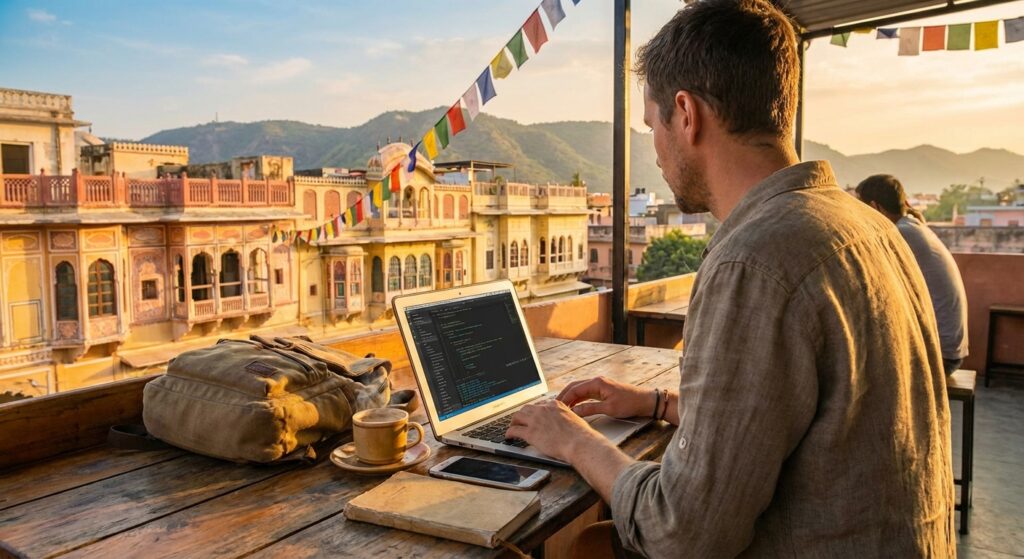
India has quietly become one of the world’s most compelling destinations for digital nomads in 2026. With its rich cultural tapestry, stunning landscapes ranging from Himalayan peaks to tropical beaches, and remarkably affordable cost of living, the country offers remote workers an opportunity to stretch their dollars further than almost anywhere else on the planet. While many digital nomads spend upwards of $2,500 per month in European cities or $3,000 in North America, living comfortably in India for under $1,200 monthly is not just possible it’s realistic and increasingly common.
As someone who has researched current digital nomad trends and spoken with remote workers living across India in 2026, I can confidently say that the country has matured significantly as a nomad destination. The infrastructure has improved dramatically, with reliable high-speed internet now available in major hubs, coworking spaces flourishing in tourist towns, and a growing community of like-minded remote professionals creating supportive networks. Whether you’re drawn to the spiritual serenity of Rishikesh, the beach lifestyle of Goa, the tech energy of Bangalore, or the mountain tranquility of Himachal Pradesh, India offers diverse environments to suit every nomadic preference.
This comprehensive guide breaks down exactly how you can live comfortably as a digital nomad in India on a $1,200 monthly budget, complete with real numbers, insider tips, and practical advice based on current 2026 costs. Let’s dive into the details of what makes India such an attractive and affordable destination for remote workers.
Understanding India’s Cost of Living Advantage
India consistently ranks among the most affordable countries globally for cost of living. According to recent data, India’s cost of living is approximately 68% less expensive than the United States and significantly cheaper than most European destinations. This dramatic difference means your salary or freelance income goes much further, allowing you to enjoy a comfortable lifestyle, save money, and even travel extensively within the country, all on a modest budget.
The affordability extends across all major expense categories: accommodation, food, transportation, entertainment, and services. A meal that might cost $15 in a Western country can be enjoyed for $2 to $4 in India. Rent that would set you back $1,500 in a major US city drops to $200 to $400 for comparable quality in Indian digital nomad hubs. This isn’t about sacrificing quality or comfort; it’s about accessing the same standard of living at a fraction of the cost.
Key Insight: While costs have risen in popular nomad destinations like Goa and Bangalore over the past few years due to increased demand, India remains one of the world’s most budget-friendly countries for digital nomads. The key is choosing the right location and living strategically.
Monthly Budget Breakdown for Digital Nomads in India
Here’s a detailed breakdown of monthly expenses for a comfortable digital nomad lifestyle in India, totaling approximately $1,100 to $1,200:
| Expense Category | Monthly Cost (USD) | Monthly Cost (INR) | Notes |
|---|---|---|---|
| Accommodation | $300 – $450 | ₹25,000 – ₹38,000 | Private 1-bedroom apartment or studio |
| Food & Dining | $200 – $300 | ₹17,000 – ₹25,000 | Mix of cooking and eating out |
| Coworking/Workspace | $50 – $100 | ₹4,000 – ₹8,500 | Monthly membership or café costs |
| Internet & Phone | $15 – $25 | ₹1,300 – ₹2,100 | High-speed home internet + mobile data |
| Utilities | $25 – $50 | ₹2,000 – ₹4,200 | Electricity, water, gas |
| Transportation | $50 – $80 | ₹4,200 – ₹6,800 | Local transport, occasional long-distance |
| Entertainment & Activities | $80 – $120 | ₹6,800 – ₹10,000 | Dining out, experiences, gym |
| Health Insurance | $45 – $60 | ₹3,800 – ₹5,000 | Travel/nomad insurance |
| Miscellaneous | $50 – $100 | ₹4,200 – ₹8,500 | Shopping, personal care, incidentals |
| TOTAL | $815 – $1,185 | ₹69,000 – ₹100,000 | Comfortable lifestyle with buffer |
Accommodation: Your Biggest Expense
Accommodation will likely be your largest monthly expense, but compared to Western standards, it remains remarkably affordable. The cost varies significantly depending on which city or region you choose and what type of accommodation suits your needs.
In popular digital nomad hubs like Goa, you can find furnished one-bedroom apartments ranging from $300 to $600 per month, depending on proximity to the beach and amenities. North Goa tends to be pricier than South Goa, where you can still find peaceful retreats for $300 to $400 monthly. In Bangalore, India’s tech capital, expect to pay $400 to $700 for a decent one-bedroom apartment in areas like Indiranagar, Koramangala, or HSR Layout.
For those seeking more affordable options, Himachal Pradesh offers exceptional value. In mountain towns like Old Manali or Dharamkot, you can rent rooms with kitchens for as low as $120 to $300 per month. Rishikesh, the yoga capital, provides a unique blend of spirituality and remote work comfort, with apartments and guesthouses available from $240 to $660 monthly. Udaipur, the city of lakes, offers rooms and small flats for just $60 to $120 per month.
Many nomads are discovering the benefits of coliving spaces, which have proliferated across India. Places like NomadGao in Dharamkot, The Void in Himachal, and various spaces in Goa offer all-inclusive packages starting from $400 to $800 monthly, including accommodation, coworking facilities, high-speed internet, and built-in community, often representing better value than renting independently.
Pro Tip: Landlords in major Indian cities often prefer renting to families or couples over singles, and typically require 6 to 12 months minimum lease terms. Negotiate monthly rates for longer stays, as many property owners offer significant discounts for commitments beyond one month. Always clarify deposit requirements upfront, these can range from two to ten months’ rent.
Food: Delicious and Incredibly Affordable
Indian cuisine is one of the country’s greatest treasures, and you’ll be delighted to discover how affordable eating can be whether you’re cooking at home, enjoying street food, or dining at restaurants.
Street food represents some of the best culinary value anywhere in the world. For just $0.10 to $0.60, you can enjoy samosas, momos (dumplings), chaat, and other local specialties. A filling thali meal, a traditional platter with multiple curries, dal, rice, bread, and accompaniments costs between $1.50 and $4 at local restaurants. Even at mid-range establishments, main dishes typically range from $3 to $6.50, with rice, naan, or roti adding $0.20 to $1.50 extra.
If you prefer cooking at home, groceries are equally affordable. A liter of milk costs around $0.65, fresh vegetables run about $6 per week, and a tray of 30 large eggs costs approximately $3. A whole roasted chicken can be purchased for $3 to $5 and provides multiple meals. Rice, lentils, and spices, staples of Indian cooking are exceptionally cheap, allowing you to prepare nutritious meals for under $2 per serving.
Western food options exist in most major cities and tourist areas, though at higher prices. Pizza typically costs $5 to $7 for a large pie, and Western-style cafés charge $1.80 for cappuccinos compared to $0.20 to $0.40 for traditional chai tea. Fast food meals at McDonald’s or similar chains cost around $3.50 to $4 for combo meals.
Most digital nomads in India find they can eat very well on $7 to $10 daily, which translates to $200 to $300 monthly. This budget allows for a healthy mix of home cooking, street food adventures, and occasional restaurant meals. Those willing to eat primarily local food can reduce this to $150 or less per month.
| Food Item/Meal Type | Price (USD) | Price (INR) |
|---|---|---|
| Street food (samosa, momos) | $0.10 – $0.60 | ₹10 – ₹50 |
| Thali (traditional platter) | $1.50 – $4 | ₹120 – ₹300 |
| Mid-range restaurant curry | $3 – $6.50 | ₹250 – ₹500 |
| Chai tea | $0.20 – $0.40 | ₹15 – ₹30 |
| Cappuccino (café) | $1.80 | ₹160 |
| Large pizza | $5 – $7 | ₹400 – ₹550 |
| Fast food combo meal | $3.50 – $4 | ₹300 – ₹350 |
| Eggs (30 count) | $3 | ₹240 |
| Milk (1 liter) | $0.65 | ₹58 |
Internet and Connectivity: Essential for Remote Work
Reliable internet is non-negotiable for digital nomads, and India has made significant strides in connectivity infrastructure. The country’s Digital India initiative has expanded internet access considerably, with fiber-optic networks reaching even smaller cities and towns.
Home internet plans with speeds of 60 Mbps or higher typically cost between $5.50 and $11 per month—remarkably affordable compared to Western countries. In major cities like Bangalore, Mumbai, and Delhi, you can easily access 100 Mbps connections. Popular providers include Jio Fiber and Airtel, both offering reliable service in urban and semi-urban areas.
For mobile data, which serves as an excellent backup, Indian SIM cards are among the cheapest globally. Unlimited data plans with high-speed allowances cost around $3 to $8 per month. Many nomads use portable hotspots like JioFi dongles as backup during video calls or when working from cafés with unreliable WiFi.
Internet speeds and reliability vary by location. Major cities and established nomad hubs like Goa, Bangalore, Rishikesh, and popular Himachal towns generally have solid connectivity. However, very remote areas may experience occasional outages during monsoon season or other weather events. Always test internet speeds before committing to long-term accommodation.
Connectivity Tip: Invest in both a primary home internet connection and a backup mobile hotspot. Dual SIM phones work excellently in India, allowing you to use both Jio and Airtel networks for redundancy. Many experienced nomads recommend carrying a portable power bank and keeping mobile data topped up for emergency work situations.
Coworking Spaces and Work Environment
India’s coworking scene has exploded in recent years, with options ranging from professional corporate spaces in major cities to laid-back community-focused venues in beach and mountain towns.
In Bangalore, premium coworking chains like WeWork, BHIVE, IndiQube, 91springboard, and Workshaala offer monthly memberships from $100 to $200, providing professional environments with high-speed internet, meeting rooms, and networking opportunities. These are ideal for digital nomads working in tech or seeking a corporate-style atmosphere.
In Goa, coworking spaces like The Playce, Innov8, and The Hive cater specifically to the nomad crowd, with monthly rates between $80 and $150. Himachal Pradesh offers even more affordable options—spaces like The Void in Dharamkot charge around $85 monthly for unlimited access, including fiber-optic internet and community events.
Many nomads find they don’t need dedicated coworking memberships if their accommodation has reliable internet. Instead, they work from home and occasionally visit cafés for a change of scenery. Budget-conscious nomads can keep coworking costs to $50 monthly by purchasing café coffees and working from different spots throughout the week.
Transportation: Getting Around Affordably
Transportation in India is remarkably affordable, whether you’re navigating city streets or exploring the country on weekends.
Local transportation options include auto-rickshaws (tuk-tuks) for short distances, typically costing $0.60 to $6 depending on distance. Ride-hailing apps like Uber and Ola offer convenient and safe transportation, with most city rides costing $2 to $6. Public buses are extremely cheap often under $0.40 for city routes though they can be crowded and confusing for newcomers.
For those staying in one location, many nomads rent scooters or motorcycles for $30 to $120 per month, providing freedom to explore at their own pace. Fuel costs approximately $3.87 to $4.40 per gallon for gasoline, still reasonable for occasional use.
India’s extensive railway network makes long-distance travel affordable and adventurous. Overnight sleeper trains connect major cities, with tickets ranging from $5 to $30 depending on class. Budget airlines like IndiGo and SpiceJet offer domestic flights between $20 and $80 for routes like Delhi to Goa or Mumbai to Bangalore, perfect for exploring different regions during your stay.
Best Cities for Digital Nomads in India (2026)
Choosing the right base is crucial for your nomadic experience. Here are the top destinations for digital nomads in 2026:
Goa: Beach Paradise Meets Remote Work
Goa remains India’s premier digital nomad destination, offering beautiful beaches, a vibrant international community, and well-developed nomad infrastructure. North Goa (Anjuna, Vagator, Arambol) is livelier with more social options, while South Goa (Palolem, Agonda) provides tranquility and lower costs. Monthly budget: $700 to $1,200.
Bangalore: India’s Tech Capital
For those seeking a more urban, professional environment with excellent infrastructure, Bangalore is unbeatable. The city offers the best internet in India, abundant coworking spaces, a massive startup ecosystem, and a large expat community. Areas like Indiranagar and Koramangala are particularly nomad-friendly. Monthly budget: $900 to $1,500.
Himachal Pradesh: Mountain Serenity
Places like Old Manali, Dharamkot, and Dharamshala offer stunning Himalayan views, cool weather, and a growing community of creative nomads. The cost of living is among the lowest in India, making it ideal for budget-conscious remote workers who love nature. Monthly budget: $400 to $800.
Rishikesh: Spiritual and Productive
Known as the yoga capital of the world, Rishikesh combines spiritual atmosphere with practical nomad amenities. The riverside setting, yoga studios, adventure activities, and improving coworking scene make it perfect for those seeking balance. Monthly budget: $600 to $1,000.
Udaipur: Cultural Charm
The city of lakes offers a uniquely Indian experience with its palaces, lakeside cafés, and cultural richness all at very low costs. It’s less discovered by the international nomad crowd, providing authentic immersion. Monthly budget: $500 to $900.
| City | Monthly Budget | Best For | Vibe |
|---|---|---|---|
| Goa | $700 – $1,200 | Beach lovers, social nomads | Relaxed, international, party-friendly |
| Bangalore | $900 – $1,500 | Tech professionals, networkers | Urban, professional, energetic |
| Himachal Pradesh | $400 – $800 | Nature lovers, budget travelers | Mountain tranquility, creative |
| Rishikesh | $600 – $1,000 | Yoga enthusiasts, balance seekers | Spiritual, adventurous, peaceful |
| Udaipur | $500 – $900 | Culture seekers, authenticity lovers | Historical, romantic, local |
Visa Considerations for Digital Nomads
India currently does not offer a specific digital nomad visa, which is one area where the country lags behind competitors like Portugal or Thailand. However, several visa options work well for remote workers:
The tourist e-visa is the most common choice, allowing stays of up to 90 or 180 days depending on your nationality (US citizens receive 180 days). Many nomads use this visa and do “visa runs” to neighbouring countries like Nepal or Sri Lanka to reset their stay duration. The e-visa costs around $80 and is easy to obtain online.
For longer stays, business visas are available for those who can demonstrate business connections or are working with Indian companies. These typically allow six-month or one-year stays with multiple entries. Employment visas require sponsorship from an Indian employer and are less relevant for most digital nomads.
It’s important to note that while many digital nomads work remotely in India on tourist visas, this exists in a legal Gray area. You’re not technically supposed to work on a tourist visa, even if working for foreign companies. The reality is that enforcement is minimal for remote workers who aren’t taking local jobs, but it’s important to understand the technical restrictions.
Healthcare and Insurance
India offers excellent healthcare, particularly in major cities, at a fraction of Western costs. Private hospitals in Mumbai, Delhi, Bangalore, and Hyderabad rival international standards, with consultations costing $5 to $20 and procedures dramatically cheaper than in the US or Europe.
Despite affordable healthcare, international health insurance is essential. Services like SafetyWing offer nomad-specific insurance starting at around $45 to $56 monthly, covering medical emergencies, lost belongings, and repatriation. WorldNomads is another popular option among digital nomads.
Basic medical care is very affordable, a doctor’s visit might cost $10, prescription medications are often generic and cheap, and even dental work is extremely reasonable. Many nomads combine basic local insurance with international coverage for major issues.
Money Management and Banking
Managing finances as a digital nomad in India requires some planning. Opening an Indian bank account can be challenging for foreigners, so most nomads rely on international banking solutions and cards.
Services like Wise (formerly TransferWise) and Revolut offer multi-currency accounts with low-fee international transfers and competitive exchange rates. These are essential for avoiding poor airport exchange rates and high ATM fees.
ATMs are widely available, but many charge fees of $2 to $4 per withdrawal. Look for HDFC, ICICI, and Axis Bank ATMs, which tend to have lower or no fees. Always inform your bank of travel plans to avoid card blocks.
Cash remains important in India, particularly for street food, local transport, and smaller establishments. Credit cards are increasingly accepted in cities and tourist areas, but having cash on hand is essential.
Cultural Considerations and Lifestyle
Living in India as a digital nomad means immersing yourself in one of the world’s most diverse and complex cultures. The experience goes far beyond low costs, it’s about daily encounters with ancient traditions, spiritual practices, vibrant festivals, and warm hospitality.
Culture shock is real, particularly regarding noise levels, traffic chaos, different hygiene standards, and the intensity of daily life. However, most nomads find that after an initial adjustment period, they develop deep appreciation for India’s richness. The key is approaching the experience with patience, openness, and realistic expectations.
India’s diversity means you can change your environment dramatically without leaving the country from beaches to mountains to deserts to modern cities. This variety keeps the nomadic lifestyle fresh and exciting without the hassle and expense of international travel.
Practical Tips for Digital Nomads in India
- Always test internet speeds before committing to accommodation. Use tools like Speedtest to verify connectivity meets your work requirements.
- Negotiate rates for stays longer than one month. Landlords and hotel owners often provide significant discounts for extended commitments.
- Join local Facebook groups and nomad communities for accommodation leads, travel advice, and social connections.
- Start with short-term stays in different cities to find your perfect fit before committing to longer leases.
- Invest in quality noise-canceling headphones for working in cafés and dealing with India’s ambient noise levels.
- Keep copies of all important documents (passport, visa, insurance) in cloud storage and with trusted contacts back home.
- Learn basic Hindi phrases, locals deeply appreciate any effort to speak the language, even poorly.
- Be mindful of your impact as a privileged visitor. Support local businesses, engage respectfully with communities, and consider volunteering or contributing positively to your temporary home.
- Stay flexible with your plans. India often doesn’t work according to Western timelines or expectations, and embracing this is part of the adventure.
- Connect with other digital nomads through coworking spaces, meetups, and online communities. The nomad scene in India is growing rapidly and offers great networking and friendship opportunities.
Conclusion: Is India Right for You?
Living as a digital nomad in India for under $1,200 monthly is not only achievable, it offers an incredible quality of life, rich experiences, and the opportunity to save money while exploring one of the world’s most fascinating countries. The combination of low costs, improving infrastructure, diverse landscapes, and deep cultural immersion makes India an increasingly attractive option for remote workers in 2026.
However, India isn’t for everyone. The country can be challenging, intense, and overwhelming at times. Infrastructure, while improving, still lags behind many Western countries and even some Southeast Asian competitors. Bureaucracy can be frustrating, and daily life requires patience and adaptability.
For those willing to embrace the challenges alongside the rewards, India offers an unparalleled nomadic experience. Your monthly budget of $1,200 will provide comfortable accommodation, excellent food, reliable internet, and enough left over for adventures, savings, or occasional splurges. More importantly, you’ll gain experiences and perspectives that come only from truly immersing yourself in a culture so vastly different from your own.
As India continues to develop its digital infrastructure and more remote workers discover its appeal, the country stands poised to become one of the world’s premier digital nomad destinations. The time to explore what India has to offer is now before costs rise further and the secret is fully out. With proper planning, realistic expectations, and an adventurous spirit, your Indian nomad journey could be the most memorable and meaningful chapter of your remote work career.
Leave a Reply