
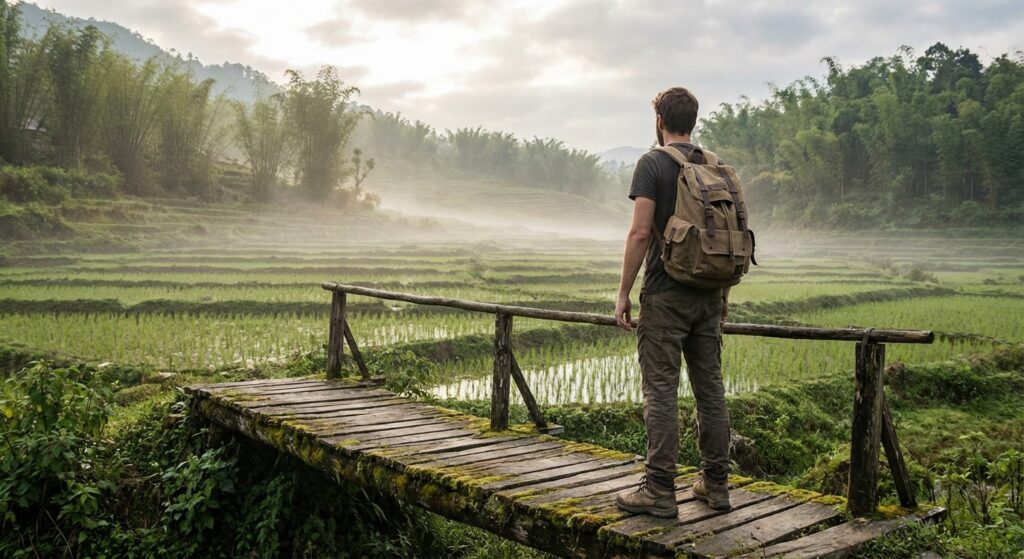
The rhythm of slow travel finds its most authentic expression in India’s remote northeast, where ancient traditions merge with dramatic Himalayan landscapes. Unlike the hurried pace of conventional tourism, slow travel invites you to immerse yourself in local cultures, savor regional flavors, and forge genuine connections with communities that have preserved their heritage for centuries. This 10-day journey through Ziro Valley in Arunachal Pradesh and the sacred town of Tawang offers a transformative experience that prioritizes depth over breadth, quality over quantity.
Ziro and Tawang represent two distinct facets of northeastern India’s cultural tapestry. Ziro’s lush rice terraces and the Apatani tribal villages showcase sustainable living practices that have existed for generations, while Tawang’s towering monastery and snow-capped peaks reveal the profound influence of Tibetan Buddhism in the region. This carefully crafted itinerary allows ample time to absorb the essence of each destination, participate in daily life, and return home with stories rather than just photographs.
Best Places to Visit: Top 5 Picks
1. Ziro Valley – The Heart of Apatani Culture
Nestled at 5,500 feet above sea level, Ziro Valley stands as a UNESCO World Heritage Site tentative list nominee, celebrated for its distinctive agricultural practices and the unique Apatani tribe. The valley’s emerald rice paddies create a patchwork landscape that changes with the seasons, while traditional bamboo houses dot the hillsides, offering glimpses into a way of life that has remained largely unchanged for centuries.
Things to Do:
- Explore traditional Apatani villages like Hong and Hari, observing the intricate wet rice cultivation system that requires no chemical fertilizers
- Visit local artisans to witness bamboo and cane craft-making, and learn about the significance of facial tattoos among older Apatani women
- Trek through pine forests to Talley Valley Wildlife Sanctuary, home to clouded leopards, Himalayan black bears, and over 200 bird species
- Attend the legendary Ziro Music Festival if visiting in September, showcasing independent musicians against a stunning natural amphitheater
- Participate in a homestay experience where you can help with daily farming activities and learn traditional cooking methods
Best Weather and Photo Spots:
March through October offers the most pleasant weather, with September and October providing crystal-clear skies perfect for photography. The golden hour transforms the rice terraces into a photographer’s paradise, particularly from Kile Pakho viewpoint. The weeks following monsoon rains reveal the valley at its greenest. For spectacular sunrise shots, head to the viewpoint above Hong village, where morning mist creates ethereal scenes across the valley floor.
Suggested Itinerary:
Days 1-2: Arrive in Ziro via North Lakhimpur. Settle into your homestay and take a gentle orientation walk through the nearest village. Day 3: Deep dive into Apatani culture with visits to Hong and Hari villages, spending time with local families. Day 4: Trek to Talley Valley, packing a picnic lunch to enjoy in nature. Evening interaction with local craft makers.
Travel Tips:
Budget travelers can expect to spend 1,500 to 2,500 rupees daily including homestay accommodation, meals, and local transport. Book flights to Lilabari Airport in North Lakhimpur at least six weeks in advance for the best rates, typically ranging from 4,000 to 8,000 rupees from major cities. The four-hour drive from Lilabari to Ziro costs approximately 2,000 rupees for a shared taxi. Homestays offer the most authentic experience at 800 to 1,500 rupees per night with meals included.
Essential foods to try include Apong, a traditional rice beer integral to Apatani hospitality, bamboo shoot curry, smoked pork with local herbs, and Pika Pila, a spicy chutney made with fermented fish and bamboo shoots. The Ziro Music Festival in late September draws visitors worldwide, while the agricultural Myoko Festival in March celebrates friendship and harmony among tribes. Book accommodations three months ahead during festival periods.
2. Tawang Monastery – Spiritual Haven in the Himalayas
Perched at 10,000 feet, Tawang Monastery ranks as the largest monastery in India and second-largest in the world, housing over 300 monks. Founded in 1680, this fortress-like structure embodies Tibetan Buddhist architecture and serves as the spiritual heart of the region. The 14th Dalai Lama was born in Tawang, adding profound historical significance to this already sacred site.
Things to Do:
- Attend morning prayers at 5:30 AM to experience the monastery’s spiritual atmosphere with chanting and butter lamp lighting
- Explore the monastery’s library containing rare Buddhist manuscripts and thankas, some dating back centuries
- Participate in a meditation session guided by resident monks, learning techniques practiced for generations
- Visit the monastery museum showcasing historical artifacts, ancient manuscripts, and insight into Monpa Buddhist culture
- Walk the circumambulation path around the monastery, spinning prayer wheels while absorbing panoramic mountain views
Best Weather and Photo Spots:
April through June and September through October provide ideal conditions, though winter transforms Tawang into a snow-covered wonderland for adventurous travelers. The monastery looks most photogenic during early morning light when first rays illuminate its golden roofs against snow-peaked mountains. The courtyard during festivals becomes a riot of color with monks in ceremonial dress. For dramatic landscape photography, position yourself on the road approaching Tawang town for sweeping monastery views framed by the Himalayas.
Suggested Itinerary:
Day 5: Travel from Ziro to Tawang, an adventurous journey through Sela Pass. Day 6: Rise early for monastery prayers, spend the day exploring the complex, interacting with monks, and visiting the museum. Day 7: Day trip to nearby attractions including Sela Lake and Jaswant Garh War Memorial, returning to Tawang for evening prayer ceremonies.
Travel Tips:
Daily expenses in Tawang range from 2,000 to 3,500 rupees depending on accommodation choice. The journey from Ziro to Tawang requires overnight stops in Dirang or Bomdila. Shared taxis cost approximately 1,500 rupees per person from Tezpur to Tawang. Budget hotels start at 1,200 rupees per night, while mid-range options with heating cost 2,500 to 4,000 rupees.
Don’t miss trying Thukpa, a hearty noodle soup perfect for high-altitude weather, Momos with spicy chutney, Gyapa Khazi (a rice porridge with vegetables and yak butter), and butter tea that helps with acclimatization. The Losar Festival in February or March celebrates the Tibetan New Year with masked dances and traditional ceremonies, while Torgya Festival in January features sacred mask dances performed by monks. Winter visitors should prepare for temperatures dropping below freezing and potential road closures at Sela Pass.
3. Sela Pass – Gateway Through the Clouds
At 13,700 feet, Sela Pass serves as a dramatic mountain crossing connecting lower Arunachal Pradesh with Tawang. The pass takes its name from Sela Lake, which remains frozen for much of the year, creating an otherworldly landscape where prayer flags flutter against stark white peaks and impossibly blue skies. The journey through Sela Pass ranks among Asia’s most spectacular mountain drives.
Things to Do:
- Stop at Sela Lake for photography and to witness the sacred site where locals believe wishes made come true
- Visit the war memorial dedicated to Jaswant Singh Rawat, a soldier who single-handedly held off Chinese forces during the 1962 war
- Experience the altitude and pristine mountain environment, often with opportunities to see yaks grazing nearby
- Observe hundreds of Buddhist prayer flags strung across the pass, their mantras carried by mountain winds
- Watch for Himalayan wildlife including musk deer, red foxes, and if fortunate, the elusive snow leopard tracks
Best Weather and Photo Spots:
May through October ensures the pass remains reliably open, though weather can change rapidly at high altitude. Winter transforms Sela into a snow kingdom but often closes the road. The area around Sela Lake offers stunning reflection shots on calm days. The numerous Buddhist prayer flags create vibrant foreground elements for mountain photography. Early morning provides the best light before afternoon clouds roll in.
Suggested Itinerary:
Sela Pass works perfectly as a day-long experience while traveling between lower Arunachal Pradesh and Tawang. Allocate at least three hours for stops, photography, and acclimatization. Avoid rushing through this spectacular landscape.
Travel Tips:
The pass lies on the route to Tawang, so no additional transport costs apply beyond your journey to Tawang. Carry warm clothing regardless of season as temperatures drop significantly at high altitude. Pack snacks and water as facilities remain limited. Altitude sickness can affect visitors; ascend gradually and stay hydrated. The pass occasionally closes due to snow or landslides, particularly during monsoon and winter. Check current conditions before traveling. Small dhabas near the pass serve hot tea and Maggi noodles, perfect for warming up in the cold.
4. Bumla Pass – The Indo-China Border Experience
Located at a staggering 15,200 feet, Bumla Pass marks the Indo-China border and offers visitors a rare opportunity to stand at one of the world’s most sensitive geopolitical boundaries. The pass provides access to the historic site where the Dalai Lama crossed into India in 1959, adding spiritual significance to its strategic importance. The landscape here feels otherworldly, with barren mountains and thin air creating a sense of being at the edge of the world.
Things to Do:
- Visit the border post and photograph the boundary markers between India and China
- Learn about the 1962 Sino-Indian War from Army personnel stationed at the pass
- Experience the extreme high-altitude environment and witness the Indo-Tibetan Border Police in action
- Explore PT Tso Lake near Bumla, a sacred high-altitude lake surrounded by snow-capped peaks
- Interact with soldiers who maintain vigil in one of the world’s harshest environments
Best Weather and Photo Spots:
May through September offers the only reliable access window, with the pass closed during winter months. Even in summer, expect cold temperatures and possible snow. The stark landscape provides dramatic photography opportunities with minimal vegetation and expansive views. PT Tso Lake creates mirror-like reflections on calm days. The contrast between the barren mountains and bright prayer flags offers compelling compositions.
Suggested Itinerary:
Day 8: Dedicate a full day to the Bumla Pass excursion, departing early from Tawang. The round trip takes approximately eight hours. Visitors require special permits organized through tour operators or hotels in Tawang. Groups must include a registered guide. Return to Tawang for overnight stay.
Travel Tips:
Permits for Bumla Pass cost approximately 5,000 to 7,000 rupees per vehicle and must be arranged through registered tour operators in Tawang. The permit includes the vehicle, driver, and guide. Apply for permits at least two days in advance, though delays can occur. Foreign nationals face restrictions for Bumla Pass visits. The journey requires a sturdy vehicle as road conditions vary. Carry multiple layers of warm clothing, sun protection, and medications for altitude sickness. The extreme altitude affects most visitors, so ascend slowly and avoid exertion. No food facilities exist at the pass, so pack a substantial lunch and hot beverages. Mobile connectivity remains non-existent at the border.
5. Dirang Valley – The Peaceful Stopover
Often overlooked as merely a transit point between Tezpur and Tawang, Dirang Valley deserves dedicated exploration. This charming valley at 5,000 feet offers hot springs, a picturesque dzong (fortress), and apple orchards alongside traditional Monpa villages. Dirang provides a gentler introduction to high-altitude regions while maintaining authentic cultural experiences away from tourist crowds.
Things to Do:
- Soak in natural hot springs at Dirang Chu, believed to have therapeutic properties for skin conditions and joint pain
- Explore the 500-year-old Dirang Dzong, a stone fortress housing about 60 families maintaining traditional lifestyles
- Visit National Yak Research Centre to learn about yak breeding and the animals’ importance to mountain communities
- Trek to nearby Sangti Valley, a birdwatcher’s paradise where endangered black-necked cranes winter from November to March
- Wander through apple and kiwi orchards, sampling fresh fruit directly from trees during harvest season
Best Weather and Photo Spots:
March through May brings apple blossoms transforming valleys into pink and white wonderlands, while September and October offer clear skies and fruit harvest. November through February attracts birdwatchers to Sangti Valley for black-necked cranes. The old Dirang Dzong provides excellent heritage photography opportunities, especially during golden hour when low sunlight warms the stone structures. The hot springs area surrounded by prayer flags creates unique compositions combining natural and cultural elements.
Suggested Itinerary:
Day 9: Break journey from Tawang back toward plains with an overnight stay in Dirang. Visit the dzong in the afternoon, relax in hot springs at sunset. Day 10: Morning visit to Sangti Valley or National Yak Research Centre before continuing journey toward Tezpur for departure connections.
Travel Tips:
Accommodation in Dirang ranges from 800 rupees for basic guesthouses to 3,000 rupees for comfortable hotels with heating. Daily expenses typically run 1,500 to 2,500 rupees. The town serves as a convenient overnight stop on the Tezpur-Tawang route, with shared taxis costing approximately 600 rupees to Bomdila or 1,200 rupees continuing to Tawang. Book accommodation in advance during peak season as options remain limited.
Try Zan, a local millet-based beverage served hot, local apple cider during harvest season, and traditional Monpa dishes similar to Tibetan cuisine including momos and thukpa. Dirang’s weekly market on Saturdays brings villagers selling produce, handicrafts, and traditional items, offering authentic interaction with local communities. The apple harvest festival in September celebrates the region’s primary crop with cultural programs.
Also Consider: Bonus Destinations
Bomdila
This administrative town at 8,000 feet features three significant monasteries offering insights into Buddhist practices. The Bomdila Monastery provides panoramic views across the valley, while local craft centers showcase traditional Monpa weaving and woodcarving. Apple orchards surround the town, and the climate remains pleasant year-round. Consider spending a night here to break the long journey between lower elevations and Tawang.
Nuranang Falls
Also called Bong Bong Falls, this spectacular 100-meter cascade lies en route to Tawang near Jang town. The waterfall featured in a famous Bollywood film and offers impressive photo opportunities, particularly after monsoon when water flow increases dramatically. A short trek from the road leads to viewpoints where rainbow mists create magical effects on sunny afternoons. Perfect for a one-hour stopover during the Tawang journey.
Sangti Valley
This hidden gem near Dirang transforms into a birdwatcher’s paradise from November through March when endangered black-necked cranes migrate from Tibet. The peaceful valley dotted with traditional homes offers homestay opportunities, providing an intimate look at Monpa agricultural life. Even outside crane season, the valley’s pristine beauty and tranquil atmosphere reward visitors seeking off-the-beaten-path experiences.
Tenga Valley
Situated between Bomdila and Dirang, Tenga sits at the confluence of two rivers creating a unique microclimate. The valley appeals to adventure enthusiasts with river rafting opportunities on the Tenga River during appropriate water levels. The Tenga Market held on Saturdays brings together various tribal communities trading goods and produces, offering fascinating cultural insights. The region’s moderate altitude and forested surroundings provide comfortable conditions for acclimatization.
Essential Planning Information
Permits and Documentation
Indian nationals require Inner Line Permits for Arunachal Pradesh, obtainable online or at checkpoints in Assam. Apply at least 48 hours before travel. Foreign nationals need Protected Area Permits and Restricted Area Permits, which require applying through registered tour operators weeks in advance. Carry multiple photocopies of permits and identification as checkpoints occur frequently throughout Arunachal Pradesh.
Health and Acclimatization
Tawang sits at 10,000 feet with Bumla Pass reaching over 15,000 feet, making altitude acclimatization crucial. Ascend gradually, spending nights at intermediate altitudes like Bomdila or Dirang. Stay hydrated, avoid alcohol initially, and consider medications like Diamox if prone to altitude sickness. Carry a basic medical kit including altitude sickness medication, digestive aids, and cold remedies. Travel insurance covering high-altitude regions remains essential.
Connectivity and Communication
Mobile connectivity remains sporadic throughout Arunachal Pradesh, particularly in valleys and high passes. BSNL provides the most reliable coverage, though even this network fails in remote areas. Inform family and friends about limited communication windows. Download offline maps and necessary information before entering areas with no connectivity. Consider this digital detox an integral part of the slow travel experience.
Cultural Sensitivity
The regions you’ll visit maintain strong cultural traditions and religious practices. Dress modestly, particularly when visiting monasteries where covering shoulders and knees shows respect. Always ask permission before photographing people, religious ceremonies, or inside monasteries. Remove shoes before entering religious buildings. Walk clockwise around Buddhist stupas and monasteries. Many communities remain unaccustomed to tourism, so approach interactions with sensitivity and patience.
This 10-day slow travel itinerary through Ziro and Tawang offers more than scenic landscapes and cultural attractions. It provides an opportunity to disconnect from the rushed pace of modern life, form meaningful connections with communities preserving ancient traditions, and return with a transformed perspective on what constitutes authentic travel. The northeast’s remoteness protects its cultural integrity, rewarding visitors who invest time in understanding rather than merely observing. By embracing slow travel principles—deeper engagement, cultural respect, and environmental consciousness—you’ll discover that the journey itself becomes as valuable as the destinations, creating memories that transcend typical tourist experiences.
Leave a Reply