
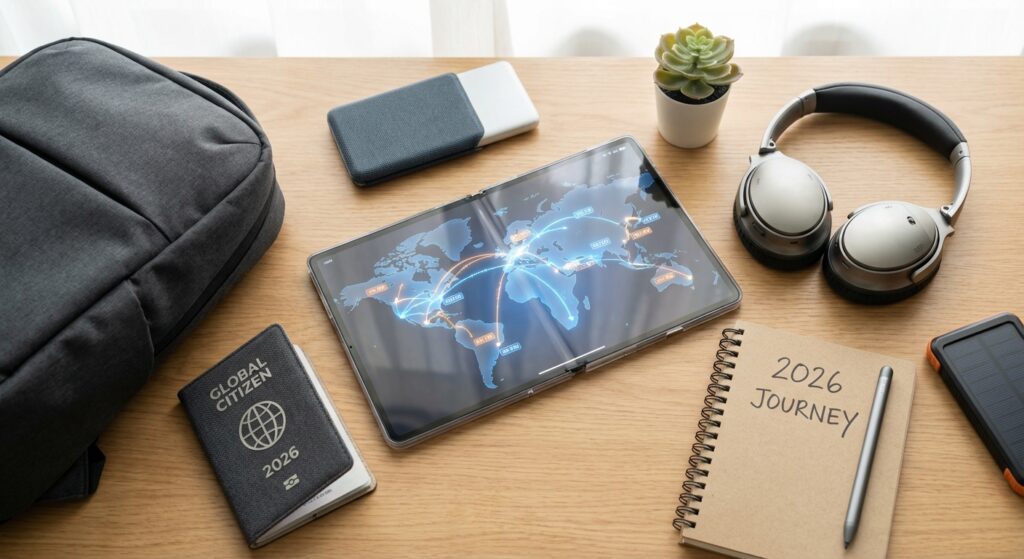
The digital nomad lifestyle has exploded in popularity, with the global number of remote workers reaching 35 million in 2025, representing a 131% increase since 2020. Planning a three-month nomad journey requires strategic preparation across finances, logistics, work arrangements, and destination selection. This comprehensive guide provides a step-by-step framework to transform your nomadic dreams into reality, backed by current data and proven strategies from thousands of successful nomads.
Step 1: Assess Your Financial Foundation
Financial preparedness is the cornerstone of successful nomadic living. According to 2025 nomad surveys, 78% of failed nomadic attempts cite inadequate financial planning as the primary factor. Your first step involves calculating your total budget and establishing emergency reserves.
Begin by determining your baseline monthly expenses. Research shows that nomads spend an average of $4,500 monthly, though this varies significantly by destination tier. Southeast Asian countries like Thailand and Vietnam average $1,800 to $2,500 monthly, while European destinations like Portugal and Spain range from $3,500 to $5,500. Latin American hubs such as Mexico and Colombia typically fall between $2,200 and $3,800 monthly.
| Expense Category | Budget Tier (Low) | Budget Tier (Medium) | Budget Tier (High) |
|---|---|---|---|
| Accommodation | $600 – $900 | $1,200 – $1,800 | $2,500 – $4,000 |
| Food & Dining | $400 – $600 | $700 – $1,000 | $1,200 – $1,800 |
| Transportation | $200 – $350 | $400 – $600 | $800 – $1,200 |
| Coworking Spaces | $100 – $200 | $200 – $350 | $350 – $500 |
| Insurance & Health | $150 – $250 | $250 – $400 | $400 – $700 |
| Entertainment & Misc | $250 – $400 | $500 – $800 | $1,000 – $1,500 |
For a three-month journey, multiply your monthly budget by four to account for the initial setup month and three months of travel. Add a 25% contingency fund for unexpected expenses. This means a medium-budget nomad should prepare approximately $18,000 to $22,000 in total savings before departure.
Step 2: Secure Your Income Streams
Sustainable income is non-negotiable for nomadic success. Current data reveals that 64% of digital nomads work as freelancers, 28% maintain remote employment relationships, and 8% run location-independent businesses. Your approach depends on your current professional situation.
Remote employees should initiate conversations with management six to eight weeks before intended departure. Frame the discussion around productivity metrics and business benefits. Research from 2025 indicates that 73% of employers who initially resisted remote work arrangements eventually approved them when presented with structured proposals including communication protocols, availability windows, and performance measurement frameworks.
Freelancers need to build client pipelines before departure. Aim to secure contracts representing 150% of your minimum monthly income requirement. This buffer accounts for payment delays and project fluctuations. Popular platforms for securing remote work include Upwork, which processes over $3 billion annually in freelance payments, Toptal for high-end technical talent, and Fiverr for diverse service offerings.
Income Source Distribution Among Digital Nomads (2025)
Entrepreneurs should ensure their businesses operate independently of their physical location. This requires robust systems, reliable team members, and automated processes. Test your business infrastructure by working remotely for two consecutive weeks before committing to extended travel.
Step 3: Choose Your Destinations Strategically
Destination selection dramatically impacts your nomadic experience and budget. In 2026, the top-ranked nomad destinations balance affordability, infrastructure quality, community size, and lifestyle factors. Strategic planning involves selecting two to three base locations for your three-month journey rather than constant movement.
The optimal approach allocates four to six weeks per destination. This timeframe allows for settling into routines, building local connections, and maintaining productivity while still experiencing diverse cultures. Rapid city-hopping correlates with 40% lower reported satisfaction and 60% higher stress levels according to nomad wellness studies.
| Destination | Avg. Monthly Cost | Internet Speed (Mbps) | Nomad Community Size | Best Season |
|---|---|---|---|---|
| Chiang Mai, Thailand | $1,800 – $2,400 | 85 – 120 | Large (5,000+) | Nov – Feb |
| Lisbon, Portugal | $3,200 – $4,500 | 100 – 150 | Very Large (8,000+) | Apr – Oct |
| Medellín, Colombia | $2,200 – $3,200 | 70 – 100 | Large (6,000+) | Year-round |
| Bali, Indonesia | $2,000 – $3,000 | 60 – 95 | Very Large (10,000+) | Apr – Oct |
| Mexico City, Mexico | $2,500 – $3,600 | 80 – 110 | Large (7,000+) | Oct – May |
Consider timezone alignment with clients or employers when selecting destinations. European nomads working with American clients benefit from westward travel to the Americas, while Asian timezone alignment favors eastward movement. A six-hour timezone difference represents the maximum manageable gap for real-time collaboration according to remote work efficiency studies.
Step 4: Arrange Essential Logistics
Practical logistics form the infrastructure of nomadic living. This encompasses accommodation, technology, insurance, and documentation. Systematic preparation in these areas prevents disruptions and enables focus on work and exploration.
Accommodation booking strategies vary by preference and budget. Long-term rentals through platforms like Airbnb offer 30-50% discounts for monthly stays compared to nightly rates. Coliving spaces, which now number over 1,200 globally, provide community integration and all-inclusive pricing averaging $1,400 to $2,800 monthly. Traditional apartment rentals via local platforms often deliver the best value but require language skills and local knowledge.
Book your first month of accommodation before departure to ensure smooth arrival. Reserve subsequent locations two to three weeks in advance, maintaining flexibility for itinerary adjustments based on experience and opportunities.
Technology requirements center on reliable internet connectivity and equipment redundancy. Invest in a quality portable WiFi hotspot with international coverage. Leading providers in 2026 include Skyroam, offering unlimited data in 130+ countries, and GlocalMe, providing flexible data packages across global networks. Budget $100 to $200 for the device plus $15 to $30 daily for data activation.
- Laptop with minimum 8GB RAM and solid-state drive for performance and durability
- Portable WiFi hotspot with international coverage and backup SIM cards
- Universal power adapter supporting Type A through Type G outlets
- External hard drive or cloud storage subscription for backup protection
- Noise-canceling headphones for productive work in varied environments
- Portable laptop stand and external keyboard for ergonomic workspace setup
Travel insurance is mandatory, not optional. Nomad-specific policies from providers like SafetyWing, World Nomads, and Cigna Global offer medical coverage, equipment protection, and trip interruption benefits. Comprehensive policies cost $50 to $150 monthly depending on age, destination risk levels, and coverage limits. Policies should include minimum $100,000 medical coverage, emergency evacuation, and repatriation benefits.
Step 5: Handle Visa Requirements
Visa regulations significantly impact destination selection and itinerary planning. The digital nomad visa landscape has expanded dramatically, with 47 countries now offering specialized visas for remote workers as of 2026, compared to just 12 in 2021.
Tourist visas remain viable for shorter stays, typically permitting 30 to 90 days per entry. This approach works well for three-month journeys spanning multiple countries. However, ensure you understand visa requirements, entry restrictions, and extension possibilities for each destination.
Digital nomad visas provide legal long-term residence for remote workers. Popular programs include Portugal’s D7 visa requiring minimum passive income of €8,460 annually, Estonia’s digital nomad visa for one-year residence with €3,504 minimum monthly income, and Thailand’s Long-Term Resident visa offering five-year stays with $80,000 annual income requirement.
| Country | Visa Type | Duration | Income Requirement | Application Fee |
|---|---|---|---|---|
| Portugal | D7 Passive Income | 1 year (renewable) | €8,460/year | €83 |
| Estonia | Digital Nomad | 1 year | €3,504/month | €100 |
| Mexico | Temporary Resident | 1 year (renewable) | $2,700/month | $48 |
| Croatia | Digital Nomad | 1 year | €2,870/month | €70 |
| Costa Rica | Rentista | 2 years | $2,500/month | $250 |
Research visa requirements six to eight weeks before departure. Some applications require processing times of four to twelve weeks. Prepare documentation including proof of income, employment verification letters, travel insurance certificates, and accommodation confirmations.
Step 6: Build Your Support Systems
Social connection and community integration distinguish thriving nomads from struggling travelers. Research consistently shows that loneliness and isolation rank among the top three challenges, affecting 58% of digital nomads during their first year.
Proactive community engagement begins before departure. Join online communities specific to your destinations and interests. Attend virtual meetups, introduce yourself, and arrange coffee meetings for your first week in each location. This advance networking transforms arrival from isolation to immediate integration.
Coworking spaces serve dual purposes as productive work environments and social hubs. Memberships at established spaces like WeWork, Selina, or local favorites provide professional amenities plus networking events, skill-sharing sessions, and social activities. Monthly memberships range from $150 to $400 depending on location and facility quality.
Maintain connections with home through scheduled video calls, shared online spaces, and regular updates. Successful long-term nomads report that strong home relationships provide emotional stability and reduce the pressure to constantly form new connections while traveling.
Step 7: Optimize Your Packing Strategy
Effective packing balances minimalism with preparedness. The average successful nomad travels with 15 to 20 kilograms of belongings, enabling flexibility while maintaining essential items for diverse situations and climates.
Invest in quality luggage designed for frequent travel. A 40-45 liter backpack serves as carry-on compatible primary luggage, eliminating checked bag fees and waiting times. Leading brands like Osprey, Tortuga, and Nomatic offer nomad-specific designs with laptop compartments, organization systems, and durability warranties.
Clothing strategy emphasizes versatile, quick-dry, wrinkle-resistant pieces suitable for multiple contexts. The capsule wardrobe approach of 15-20 interchangeable items covers professional video calls, coworking environments, casual exploration, and exercise activities. Merino wool and synthetic technical fabrics excel for nomadic lifestyles due to odor resistance and easy maintenance.
Electronics and work equipment require protective organization. Dedicated tech organizers prevent cable tangles and protect devices during transit. Pack backup charging cables, international adapters, and portable power banks with minimum 20,000mAh capacity for full-day device support.
Step 8: Establish Productive Routines
Maintaining productivity while traveling requires intentional routine development. Studies of high-performing nomads reveal that structured daily schedules correlate with 73% higher reported productivity compared to reactive, unstructured approaches.
Design your ideal workday considering timezone requirements, personal energy patterns, and exploration desires. Common successful patterns include concentrated morning work blocks from 8am to 1pm, afternoon exploration or exercise, and evening administrative tasks or client communication aligned with different timezones.
Workspace diversity prevents monotony and stimulates creativity. Rotate between coworking spaces, cafe environments, and accommodation workspaces. Reserve complex, focused work for professional coworking environments with reliable internet and minimal distractions. Use cafe settings for routine tasks, email management, and casual meetings.
Step 9: Manage Health and Wellness
Physical and mental wellness require proactive attention during nomadic travel. Health challenges including irregular sleep, dietary changes, reduced exercise, and stress affect 67% of new nomads during transition periods.
Establish non-negotiable wellness practices that transfer across locations. Daily exercise, even 20-30 minutes, maintains energy levels and stress management. Bodyweight workouts, yoga, running, or local gym access provide consistent options regardless of location. Apps like Nike Training Club, Down Dog, and Freeletics offer guided workouts requiring minimal equipment.
Nutrition stability comes from balanced approaches combining local food exploration with familiar healthy options. Research local grocery stores and markets within the first two days of arrival. Stock accommodation with breakfast essentials, snacks, and meal components enabling at least one daily home-cooked meal for nutritional control and budget management.
Mental health deserves equal attention to physical wellness. Maintain therapy or counseling relationships through video platforms. Meditation and mindfulness practices provide grounding amid constant change. Apps like Headspace, Calm, and Insight Timer offer guided sessions ranging from five minutes to extended practices.
Step 10: Document and Iterate
Learning from experience accelerates nomadic success. Systematic documentation of expenses, productivity patterns, destination experiences, and wellness metrics enables continuous improvement.
Expense tracking through apps like Trail Wallet, Toshl, or Splitwise provides accurate spending visibility. Weekly expense reviews identify budget discrepancies and enable real-time adjustments. This practice helped 84% of surveyed nomads stay within budget targets compared to 43% of non-trackers.
Productivity journaling captures patterns linking environment, routines, and output quality. Simple daily entries noting work location, hours invested, tasks completed, and energy levels reveal personal optimization opportunities. Monthly reviews synthesize insights for continual refinement.
Destination evaluation considers multiple dimensions including cost efficiency, community quality, lifestyle satisfaction, and work environment adequacy. Rating each location across these factors guides future travel planning and helps build your personal nomad destination preferences.
Conclusion: Your Journey Begins Now
Planning a three-month nomad journey demands systematic preparation across financial, professional, logistical, and personal dimensions. This comprehensive approach transforms overwhelming complexity into manageable steps, each building toward successful location-independent living.
Begin your planning journey today by assessing your current financial position and income stability. These foundational elements determine timeline and destination possibilities. Research potential locations, connect with online communities, and start building the knowledge base supporting confident decision-making.
Remember that perfect preparation is impossible and unnecessary. Successful nomads emphasize adaptability over perfection, learning through experience rather than waiting for ideal conditions. Your three-month journey represents both an adventure and an education in location independence, providing insights applicable whether you continue nomadic living or return to traditional arrangements with expanded perspective.
The digital nomad lifestyle offers unparalleled opportunities for cultural immersion, personal growth, professional development, and life design freedom. With proper planning, realistic expectations, and commitment to continuous learning, your three-month nomad journey can launch a transformative chapter in your life story. The world awaits your exploration on your own terms.
Leave a Reply