
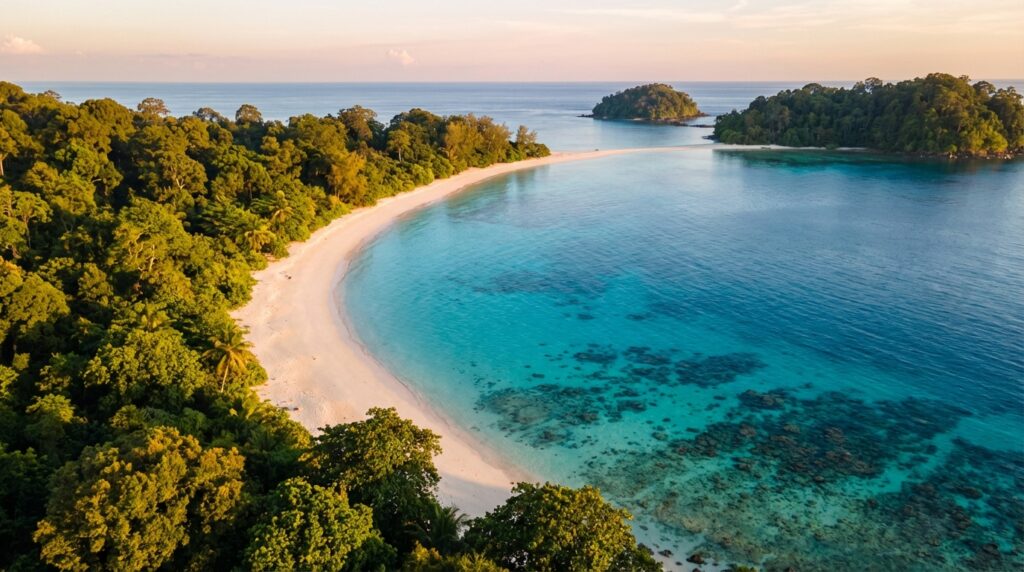
While Havelock Island continues to dominate Andaman tourism headlines, savvy travelers in 2026 are discovering that the archipelago’s most authentic experiences lie elsewhere. Neil Island and Diglipur represent the Andamans as they existed before mass tourism transformed the landscape, quieter beaches, more genuine local interactions, and natural wonders that haven’t been packaged for Instagram consumption. This comprehensive guide explores why these lesser-known destinations deserve a prominent place in your Andaman itinerary.
The vegetable bowl of Andamans offers pristine beaches, natural coral formations, and authentic island life just 40 kilometers from Port Blair.
The northernmost settlement offers mud volcanoes, turtle nesting beaches, and access to pristine Ross and Smith Islands connected by a natural sandbar.
Neil Island: The Andamans’ Best-Kept Secret
Officially renamed Shaheed Dweep in 2018 to honor India’s freedom fighters, Neil Island remains refreshingly uncommercial despite its proximity to Port Blair. The island’s small size just 18.9 square kilometers, makes it easily explorable by bicycle or scooter, with most visitors covering the entire island in a single day. However, the unhurried pace of island life encourages longer stays, and those who spend three to four days here discover a rhythm that epitomizes the Andamans at their most peaceful.
Neil’s economy traditionally centered on agriculture, earning it the nickname “vegetable bowl of the Andamans.” This agricultural heritage remains visible across the island, with banana plantations, papaya groves, and rice paddies creating a patchwork of green between beaches. Unlike Havelock, where tourism has fundamentally reshaped the local economy, Neil retains its agricultural character even as visitor numbers gradually increase.
Neil Island’s Beaches: Natural Perfection
Neil’s beaches represent some of the finest shorelines in the Andaman archipelago, each offering distinct characteristics that appeal to different types of travelers.
Bharatpur Beach serves as Neil’s most developed and accessible beach, located just 500 meters from the jetty. The shallow, calm waters extending 50 to 100 meters from shore create ideal conditions for non-swimmers and families with children. The beach gained fame for its extensive coral formations visible at low tide, though these have experienced degradation in recent years due to tourism pressure and climate change impacts. Despite this, Bharatpur remains excellent for snorkeling, with glass-bottom boat tours operating throughout the day.
Laxmanpur Beach divides into two sections separated by a rocky outcrop. Laxmanpur I, accessible via a short walk from the main road, features powdery white sand and excellent swimming conditions. However, Laxmanpur II steals the show, particularly during low tide when the sea recedes up to 500 meters, revealing an otherworldly landscape of coral formations, natural rock pools, and marine life trapped in tidal pools. This beach is also Neil’s premier sunset destination, with the western orientation providing unobstructed views of the sun descending into the Andaman Sea.
Sitapur Beach, located on the eastern coast, offers Neil’s most secluded and pristine experience. The beach sees relatively few visitors due to its distance from the main settlement and lack of development. Strong currents make swimming inadvisable, but sunrise watchers consider it the island’s finest dawn viewing point. The beach’s natural state completely undeveloped with dense forest extending almost to the high-tide line provides a glimpse of how the Andamans appeared before tourism.
Diglipur: Adventure in North Andaman
Diglipur represents a completely different proposition from Neil Island. Located 325 kilometers north of Port Blair, reaching Diglipur requires either a grueling 10-12 hour overnight bus journey on the Andaman Trunk Road or a combination of shorter bus segments broken by overnight stays. This accessibility challenge keeps visitor numbers low, which is precisely Diglipur’s appeal for travelers seeking authentic wilderness experiences.
The region encompasses several distinct attractions spread across a wide area, requiring multiple days to explore properly. Most visitors base themselves in Diglipur town itself, which offers modest but adequate accommodation and serves as the logical hub for day trips to surrounding sites.
Ross and Smith Islands: The Twin Paradises
These twin islands connected by a seasonal sandbar represent Diglipur’s crown jewel. Accessible only by boat from Aerial Bay (about 12 kilometres from Diglipur town), the islands remain beautifully undeveloped, with just a handful of basic facilities. The sandbar connecting them appears during low tide between October and April, creating a remarkable natural phenomenon where visitors can literally walk between two islands through ankle-deep turquoise water.
The Department of Tourism strictly limits daily visitor numbers to preserve the islands’ pristine condition. Current regulations cap visits at approximately 200 people per day, with permits required and issued on a first-come, first-served basis. This protection has preserved some of the Andamans’ healthiest coral reefs, with snorkeling here offering visibility often exceeding 15 meters and encounters with sea turtles, reef sharks, and vast schools of tropical fish.
Saddle Peak National Park
At 732 meters, Saddle Peak claims the title of the highest point in the Andaman Islands. The trek to the summit challenges even experienced hikers, requiring 4-6 hours of ascent through dense tropical rainforest. The trail passes through multiple vegetation zones, from coastal mangroves through dipterocarp forest to mountain evergreen forest near the summit. Wildlife sightings frequently include Andaman imperial pigeons, Andaman treepies, and if fortunate, glimpses of the endemic Andaman wild pig. The panoramic views from the summit encompass the entire northern Andaman archipelago, making the demanding climb worthwhile. Trekkers require permits from the Forest Department and must hire mandatory local guides.
Seasonal Considerations and Best Times to Visit
The Andaman Islands experience a tropical climate with distinct wet and dry seasons, though conditions vary somewhat between Neil Island and Diglipur due to their geographic separation.
| Season | Months | Neil Island | Diglipur | Considerations |
|---|---|---|---|---|
| Peak Season | December – February | Excellent | Excellent | Clear skies, calm seas, sandbar visible |
| Shoulder Season | October – November, March – April | Very Good | Good | Lower prices, fewer crowds, good weather |
| Monsoon | May – September | Challenging | Difficult | Heavy rain, rough seas, limited ferry service |
Activities Beyond the Beach
Sample Itinerary: One Week in Neil and Diglipur
Morning ferry from Port Blair (90 minutes). Check into accommodation, rent bicycle or scooter. Afternoon visit to Bharatpur Beach for snorkeling and coral viewing. Evening exploration of Neil Island market and local eateries.
Early morning visit to Sitapur Beach for sunrise. Return to accommodation for breakfast. Late morning exploration of Laxmanpur Beach during low tide to observe natural bridge and coral formations. Afternoon return to Laxmanpur Beach for sunset viewing.
Early morning ferry to Port Blair, then immediate connection on overnight bus to Diglipur (or break journey with overnight stay in Port Blair). The journey is long but necessary.
Early morning boat departure from Aerial Bay to Ross and Smith Islands. Full day exploring the twin islands, walking the sandbar at low tide, snorkeling in protected waters. Return to Diglipur by late afternoon.
Very early start (5:00 AM) for Saddle Peak National Park trek. Full day expedition with local guide, reaching summit by mid-morning, descent by mid-afternoon. Rest evening at accommodation.
Morning visit to Kalipur Beach (turtle nesting site if visiting December-February). Afternoon exploration of nearby mud volcanoes and limestone caves. Evening relaxation in Diglipur.
Overnight bus departure back to Port Blair, arriving following morning for onward connections or further Andaman exploration.
Practical Information for 2026 Travelers
Permits: Foreign nationals require a Restricted Area Permit (RAP) to visit the Andaman Islands, though this is typically issued on arrival at Port Blair airport or seaport. The permit allows access to most tourist areas including Neil Island and Diglipur for up to 30 days. Indian citizens require no special permits.
Connectivity: Mobile network coverage has improved significantly in recent years. BSNL provides the most reliable service across both Neil Island and Diglipur, while private carriers like Airtel and Jio offer coverage in main settlement areas but can be spotty in remote locations. Internet speeds remain slower than mainland India, and travelers should expect periodic connectivity issues.
Accommodation: Neil Island offers approximately 40-50 accommodation options ranging from basic guesthouses (starting around 800-1,200 rupees per night) to mid-range beach resorts (2,500-5,000 rupees). Diglipur has fewer options, mostly concentrated in the town center, with prices generally 20-30% lower than Neil Island. Advance booking during peak season (December-February) is essential.
Transportation: Ferry schedules between Port Blair, Neil Island, and Havelock operate multiple times daily, though schedules vary seasonally and can be disrupted by weather. Private operators like Makruzz and Green Ocean offer faster, more comfortable services than government ferries but at significantly higher prices. The Andaman Trunk Road connecting Port Blair to Diglipur remains the only overland route, with government buses operating overnight services.
Environmental Responsibility
Both Neil Island and Diglipur face increasing environmental pressures from tourism growth. Travelers should observe strict Leave No Trace principles, avoid touching or standing on coral formations, use reef-safe sunscreen, and support local businesses that demonstrate environmental commitment. The fragility of island ecosystems means that small actions by visitors have amplified impacts. Responsible tourism practices ensure these destinations remain pristine for future generations.
Why Visit Now?
The window for experiencing Neil Island and Diglipur in their current relatively undeveloped state may be limited. Tourism infrastructure in the Andamans is expanding rapidly, with the government announcing plans to develop several new beach resorts and improve road connectivity to remote areas. While these developments will make travel more convenient, they will inevitably alter the character of these destinations.
In 2026, Neil Island and Diglipur offer what Havelock provided a decade ago: authentic island experiences, meaningful interactions with local communities, and natural environments that haven’t been sanitized for tourism. The challenges of reaching these destinations, the long ferry rides, the overnight bus journeys, the limited accommodation options are precisely what keeps them special. For travellers willing to accept these inconveniences, the rewards are immense: some of India’s most beautiful beaches, largely to yourself, experiences that feel genuinely earned rather than purchased, and the satisfaction of having ventured beyond the well-trodden tourist circuit.
The Andaman Islands beyond Havelock represent travel at its most rewarding, slightly challenging, deeply authentic, and absolutely unforgettable. As more travellers discover Neil Island’s perfect beaches and Diglipur’s wilderness adventures, the window for experiencing them in their current state narrows. The time to visit is now.
Leave a Reply