
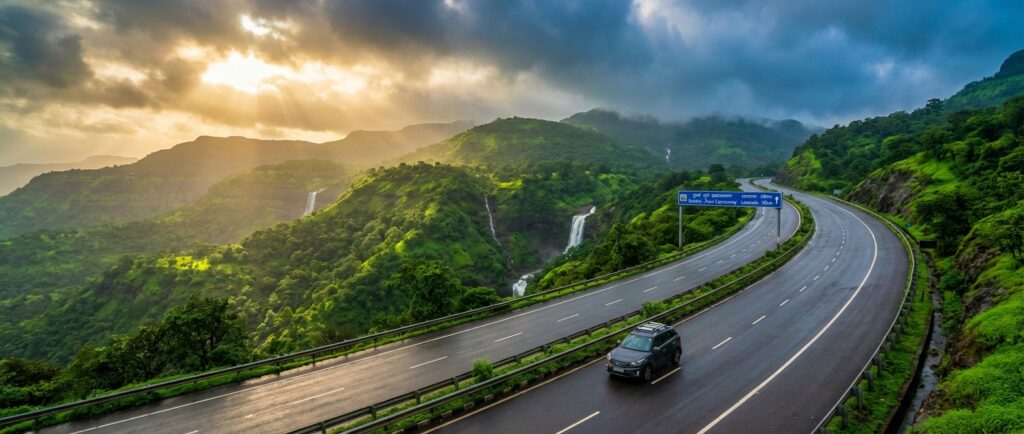
The Mumbai-Pune corridor represents one of India’s most scenic and well-traveled routes, connecting two of Maharashtra’s most vibrant cities. Spanning approximately 150 kilometers via the expressway, this route transforms into an unforgettable journey when you explore the hidden gems nestled in the Western Ghats. Whether you’re seeking ancient history, natural beauty, or adventure activities, the Mumbai-Pune highway offers diverse attractions that cater to every traveler’s taste.
Quick Overview: Distance & Travel Time from Mumbai
| Destination | Distance from Mumbai | Travel Time | Best Season | Ideal Duration |
|---|---|---|---|---|
| Lonavala | 83-96 km | 1.5-2 hours | June-September | 1-2 days |
| Khandala | 93 km | 2 hours | July-September | 1 day |
| Imagica Theme Park | 76 km | 1.5 hours | October-March | 1 day |
| Karla Caves | 60 km | 1.5 hours | October-February | 2-3 hours |
| Bhaja Caves | 65 km | 1.5 hours | October-February | 2-3 hours |
| Pawna Lake | 105 km | 2 hours | October-February | 1-2 days |
| Kamshet | 102 km | 2 hours | October-May | 1 day |
| Lohagad Fort | 70 km | 2 hours | October-March | 4-5 hours |
| Rajmachi Fort | 82 km | 2 hours + trek | June-September | 1-2 days |
| Lavasa | 185 km (from Mumbai) | 4 hours | September-May | 1-2 days |
1. Lonavala – The Hill Station Paradise
Located at an elevation of 622 meters above sea level, Lonavala stands as one of Maharashtra’s most cherished hill stations. Approximately 96 kilometers from Mumbai and just 64 kilometers from Pune, this picturesque town serves as the perfect midway retreat. The journey along the Mumbai-Pune Expressway treats visitors to spectacular views of the Western Ghats, tunnels carved through mountains, and lush valleys during the monsoon season.
Lonavala’s fame extends beyond its natural beauty. The town is renowned for producing the traditional candy known as chikki, a hard candy made from jaggery and groundnuts that has become synonymous with the destination. Visitors can explore numerous attractions including Bhushi Dam, where water cascades down stepped levels creating natural pools, and Tiger’s Leap, a rocky outcrop offering panoramic valley views from a cliff with a sheer drop exceeding 650 meters.
The establishment of this hill station dates back to 1871 when Lord Elphinstone, the Governor of Bombay Presidency, recognized its potential. Today, it attracts thousands of visitors year-round, with peak tourism occurring during the monsoon months when waterfalls come alive and the landscape transforms into a lush green paradise.
2. Khandala – The Twin Hill Station
Situated just 4.6 kilometers from Lonavala, Khandala functions as its twin hill station, positioned at 625 meters elevation at one end of the Bhor Ghat. This strategic location provides breathtaking views of both the Deccan Plateau and the Konkan coast. The town gained widespread recognition after being featured in popular Bollywood films, cementing its place in Indian popular culture.
Duke’s Nose, located 12 kilometers from Lonavala, represents one of Khandala’s most iconic landmarks. Locally known as Naagphani (Cobra’s Hood), this distinctive cliff formation resembles the nose of the Duke of Wellington. The site attracts hikers and adventure enthusiasts who come to experience the challenging trek and the rewarding panoramic views from the summit.
During the monsoon season, Khandala transforms into a wonderland with multiple viewpoints offering spectacular vistas. Lion’s Point provides 180-degree views of surrounding hills and Tungarli Lake, while Rajmachi Point offers stunning perspectives of the historic Rajmachi Fort nestled in the valley below.
3. Karla Caves – Ancient Buddhist Heritage
The Karla Caves stand as a testament to ancient Buddhist architecture, dating back to the 3rd century BC, making them among the oldest cave complexes in India. Located approximately 60 kilometers from Mumbai near Lonavala, these rock-cut caves showcase the architectural brilliance of the Hinayana Buddhist sect that once thrived in this region.
The main chaitya (prayer hall) at Karla is considered one of the largest and most impressive of its kind in India. The cave features intricate carvings, massive pillars, and a sophisticated design that demonstrates advanced engineering knowledge. The facade includes elaborate sculptures of elephants, horses, and human figures that have weathered centuries but still retain their artistic magnificence.
Visitors can explore the spacious interior where ancient monks once meditated and conducted religious ceremonies. The natural acoustics within the cave create an atmosphere of tranquility, allowing modern visitors to connect with the spiritual heritage of this historic site.
4. Bhaja Caves – Rock-Cut Monastery Complex
Complementing the Karla Caves, the Bhaja Caves represent another remarkable example of ancient Buddhist rock-cut architecture. These 22 caves, carved around the same period, showcase a simpler yet equally impressive architectural style. Located approximately 65 kilometers from Mumbai, the caves are accessible via a short trek that adds an element of adventure to the cultural experience.
The Bhaja complex includes viharas (monasteries) and a chaitya griha featuring a distinctive horseshoe-shaped entrance. The caves contain some of India’s earliest examples of rock-cut architecture, with carvings that depict various aspects of Buddhist life and mythology. Unlike Karla, the Bhaja Caves maintain a more austere character, reflecting the early ascetic traditions of Buddhism.
During the monsoon season, the area surrounding the caves comes alive with waterfalls and streams, creating a serene environment perfect for contemplation. The combination of historical significance and natural beauty makes this destination particularly appealing to history enthusiasts and nature lovers alike.
5. Imagica Theme Park – Entertainment Hub
Adlabs Imagica represents India’s premier theme park destination, sprawling across 132 acres and featuring more than 65 attractions. Located on the Mumbai-Pune Expressway approximately 76 kilometers from Mumbai, this world-class entertainment complex transforms a road trip into an adventure-filled day for families and thrill-seekers.
The park divides into three distinct zones: Theme Park with roller coasters and adventure rides, Water Park offering aquatic attractions, and Snow Park providing a unique winter experience in India’s tropical climate. Popular attractions include Nitro, India’s first spinning roller coaster, and various live shows that entertain visitors throughout the day.
Imagica has established itself as a must-visit destination since its opening, attracting millions of visitors annually. The park maintains international standards in safety and entertainment, making it comparable to theme parks worldwide while incorporating uniquely Indian themes and experiences.
6. Pawna Lake – Camping Paradise
Pawna Lake, a man-made reservoir created by the Pawna Dam on the Pawna River, has emerged as Maharashtra’s premier camping destination. Located approximately 105 kilometers from Mumbai, this serene water body offers panoramic views of the Sahyadri mountain range and serves as an ideal escape from urban chaos.
The lake’s popularity among adventure enthusiasts has led to the establishment of numerous camping sites along its shores. Visitors can experience overnight camping with bonfires, stargazing sessions, and water activities. The area around Pawna Lake also provides access to several historic forts including Tikona, Tung, and Lohagad, allowing camping enthusiasts to combine outdoor recreation with historical exploration.
During the monsoon and post-monsoon seasons, the lake reaches full capacity, creating a mesmerizing reflection of surrounding hills and cloudy skies. The tranquil atmosphere, combined with opportunities for photography and outdoor activities, makes Pawna Lake an increasingly popular weekend getaway destination.
7. Kamshet – Paragliding Capital
Kamshet has earned its reputation as the paragliding paradise of India, attracting adventure sports enthusiasts from across the globe. Located 102 kilometers from Mumbai along the Mumbai-Pune Expressway, this small town benefits from ideal wind conditions and thermal currents that make it perfect for paragliding throughout the year.
The area offers multiple take-off points at various elevations, with Shelar providing low-altitude thermal paragliding at 2,200 feet, while Kondeshwar Cliff enables flights from higher altitudes. Professional paragliding schools operate in Kamshet, offering tandem flights for beginners and training courses for those seeking certification. The experience of soaring over green hills, paddy fields, and sunflower meadows creates unforgettable memories.
Beyond paragliding, Kamshet serves as a gateway to several ancient Buddhist caves including Bedsa Caves and provides access to Pawna Lake. The scenic beauty of rolling hills and agricultural landscapes makes even the drive to Kamshet a rewarding experience.
8. Lohagad Fort – Trekker’s Delight
Lohagad Fort, meaning “Iron Fort,” stands proudly atop the Sahyadri ranges at an elevation significant enough to offer commanding views of the surrounding region. Located approximately 70 kilometers from Mumbai, this historic fortification played a crucial role in Maratha military strategy and witnessed numerous battles throughout history.
The trek to Lohagad spans approximately 5 kilometers from Lohagad Wadi village, making it ideal for beginners and experienced trekkers alike. The well-defined trail passes through lush vegetation, ancient gateways, and stone-paved pathways that showcase medieval engineering. The fort complex includes four main gates, numerous bastions, and a unique scorpion-tail shaped fortification known as the Vinchukata.
Historical records indicate that Chatrapati Shivaji Maharaj captured this fort, and it later became an important military base for the Maratha Empire. The fort also holds significance in more recent history, as Chhatrapati Shivaji’s treasure was supposedly kept here before being transferred to Raigad. Today, it attracts history enthusiasts and nature lovers who come to experience both cultural heritage and natural beauty.
9. Rajmachi Fort – Historic Twin Fortresses
Rajmachi Fort actually comprises two distinct fortifications: Shrivardhan Fort and Manaranjan Fort, both perched strategically in the Sahyadri mountains. Located approximately 82 kilometers from Mumbai, Rajmachi holds immense historical importance as it was captured by Chatrapati Shivaji Maharaj in 1657 before falling to British control in 1818.
The trek to Rajmachi can be undertaken via two different routes: a 15-kilometer trail from Lonavala or an alternate path from Kondiwade Village (13 kilometers). Both routes offer spectacular views of valleys, waterfalls during monsoon, and diverse flora and fauna. The fort area includes a small village where locals provide basic accommodation, making overnight stays possible for those wanting to experience sunrise from the ramparts.
From various viewpoints on the fort, trekkers can observe Duke’s Nose, the Konkan plains, and multiple waterfalls that cascade during the rainy season. The combination of moderate trekking difficulty, historical significance, and natural beauty makes Rajmachi one of the most popular weekend trekking destinations near Mumbai.
10. Lavasa – India’s First Planned Hill City
Lavasa represents a unique concept in Indian urban planning as the country’s first privately planned hill city, developed between Mumbai and Pune. Though approximately 185 kilometers from Mumbai (about 65 kilometers from Pune), Lavasa deserves inclusion for its distinctive character and modern amenities set against a backdrop of natural beauty.
The city’s architecture draws inspiration from the Italian town of Portofino, featuring colorful Mediterranean-style buildings arranged around a picturesque lakefront. Visitors can enjoy water sports at Lakeshore Watersports including jet skiing, pedal boating, and kayaking. The lakeside promenade offers opportunities for relaxation while admiring the unique urban landscape integrated into the natural hillside.
Lavasa includes multiple zones dedicated to different purposes including residential areas, commercial districts, and hospitality sectors. The planned infrastructure, combined with the scenic Dasve Dam reservoir, creates an atmosphere markedly different from traditional hill stations. While the city continues to develop, its current offerings include fine dining restaurants, nature trails, and recreational facilities that cater to modern travelers seeking a blend of urban comfort and natural surroundings.
Travel Route Comparison Chart
Distance from Mumbai (in Kilometers)
Activity-Based Destination Recommendations
| Activity Type | Recommended Destinations | Difficulty Level | Equipment Required |
|---|---|---|---|
| Trekking | Lohagad, Rajmachi, Duke’s Nose | Easy to Moderate | Trekking shoes, water bottle |
| Paragliding | Kamshet | Beginner-friendly | Provided by operators |
| Historical Exploration | Karla Caves, Bhaja Caves, Rajmachi | Easy | Comfortable walking shoes |
| Family Entertainment | Imagica, Lonavala, Lavasa | Easy | None |
| Camping | Pawna Lake, Rajmachi | Easy to Moderate | Camping gear (or rental) |
| Water Activities | Bhushi Dam, Pawna Lake, Lavasa | Easy | Swimming gear |
| Photography | Khandala, Tiger’s Leap, Kune Falls | Easy | Camera/smartphone |
| Nature Walks | Lonavala, Khandala, Lavasa | Easy | Comfortable shoes |
Best Time to Visit: Monthly Weather Guide
Season-wise Tourist Preference (%)
Note: Monsoon season (June-September) attracts the highest number of tourists due to lush greenery and active waterfalls. Winter offers pleasant weather for outdoor activities, while summer sees moderate tourist activity.
Budget Planning Guide
| Expense Category | Budget Range (₹) | Mid-Range (₹) | Premium (₹) |
|---|---|---|---|
| Fuel (Round Trip from Mumbai) | 1,500-2,000 | 2,000-2,500 | 2,500-3,000 |
| Toll Charges (Both Ways) | 500-800 | 500-800 | 500-800 |
| Food & Beverages (Per Person) | 400-600 | 800-1,200 | 1,500-2,500 |
| Accommodation (Per Night) | 1,000-2,000 | 3,000-5,000 | 7,000-15,000 |
| Entry Fees & Activities | 200-500 | 500-1,500 | 2,000-5,000 |
| Total Per Person (Day Trip) | 1,500-2,500 | 2,500-4,000 | 5,000-8,000 |
| Total Per Person (2D/1N) | 3,000-5,000 | 6,000-9,000 | 12,000-20,000 |
Essential Road Trip Tips
- Vehicle Maintenance: Ensure your vehicle undergoes a complete check-up before the journey. The Mumbai-Pune Expressway is well-maintained, but having properly inflated tires, functioning brakes, and adequate engine oil is crucial for safety.
- Two-Wheeler Restriction: Note that two-wheelers are not permitted on the Mumbai-Pune Expressway. Motorcyclists must use the Old Mumbai-Pune Highway, which offers scenic views but takes longer.
- Monsoon Precautions: During monsoon season (June-September), certain stretches may experience waterlogging or minor landslides. Check weather forecasts and road conditions before traveling. Drive slowly through ghat sections where visibility may be reduced.
- Toll Preparation: Multiple toll booths operate along the route. Carry sufficient cash or ensure your FASTag is active and has adequate balance for smooth passage.
- Food Stops: The Food Mall on the expressway serves as an excellent midway stop offering various food options including the famous vada pav. However, explore local restaurants in Lonavala and other destinations for authentic Maharashtrian cuisine.
- Photography Opportunities: Several designated viewpoints along the expressway allow safe stops for photography. Avoid stopping on the main road, which is dangerous and illegal.
- Cave Exploration Timing: Karla and Bhaja Caves have specific visiting hours. Plan to reach early morning to avoid crowds and experience the serene atmosphere these ancient sites offer.
- Booking Accommodations: During peak season (monsoons and major holidays), book hotels and resorts in advance. Lonavala and Khandala experience high demand, and last-minute bookings may be limited or expensive.
- Trekking Preparation: For fort treks like Lohagad and Rajmachi, start early morning to avoid midday heat. Carry adequate water, wear appropriate footwear, and inform someone about your trekking plans.
- Local Purchases: Buy Lonavala’s famous chikki from authentic shops rather than roadside vendors to ensure quality. Cooper’s and Maganlal are well-established brands.
Conclusion
The Mumbai-Pune corridor transcends being merely a connecting route between two major cities; it represents a treasure trove of diverse experiences that cater to every type of traveler. From the ancient Buddhist caves dating back to the 3rd century BC to modern entertainment complexes like Imagica, from serene lakeside camping at Pawna to adrenaline-pumping paragliding in Kamshet, this route offers an impressive variety of attractions within a compact geographic area.
The infrastructure along this route has evolved significantly, with the Mumbai-Pune Expressway reducing travel time to approximately 3 hours while offering spectacular views of the Western Ghats. The combination of excellent road connectivity, diverse attractions, and proximity to major urban centers makes these destinations ideal for both quick day trips and extended weekend getaways.
Whether you’re a history enthusiast drawn to the architectural marvels of Karla and Bhaja Caves, an adventure seeker looking for trekking and paragliding opportunities, a family planning a fun-filled day at theme parks, or a nature lover seeking tranquil lakeside camping experiences, the Mumbai-Pune route delivers memorable experiences. The key to maximizing your road trip lies in proper planning, considering seasonal variations, and allowing flexibility to explore spontaneous discoveries along the way.
As you embark on your journey between these two dynamic cities, remember that the true essence of a road trip lies not just in reaching destinations but in savoring the journey itself. The winding roads through the Western Ghats, the monsoon-fed waterfalls, the historical fortifications standing sentinel over valleys, and the warm hospitality of local communities all contribute to creating memories that last long after the trip concludes. Pack your bags, fuel up your vehicle, and set out to discover the magnificent diversity that awaits between Mumbai and Pune.
Leave a Reply