
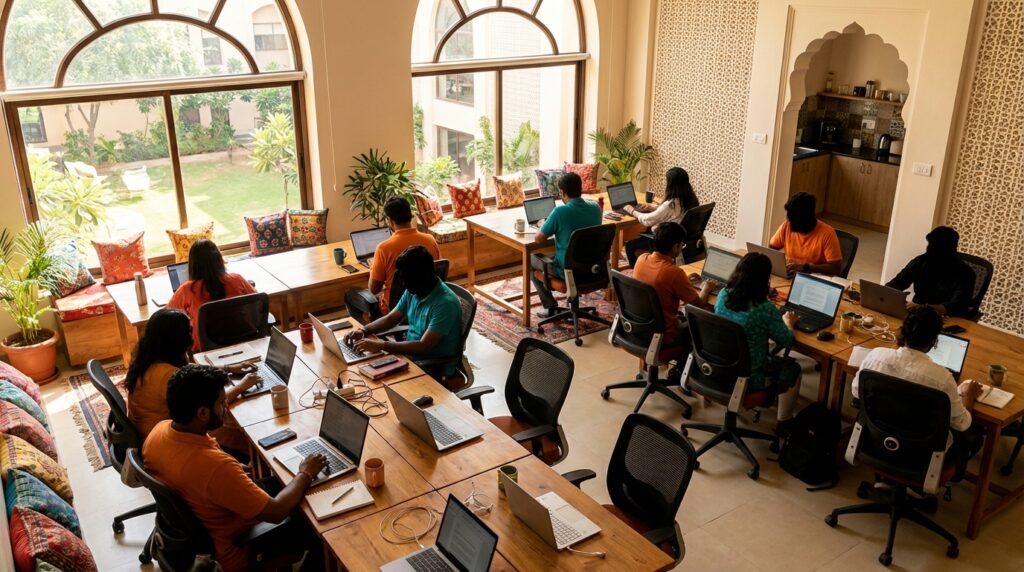
India’s co-living revolution is transforming how digital nomads experience remote work and community living. With the market valued at USD 307.45 million in 2024 and projected to surge to USD 950.36 million by 2033, India has emerged as one of Asia’s most dynamic destinations for location-independent professionals. The fusion of affordable living costs, vibrant cultures, and cutting-edge infrastructure creates an ecosystem where work-life balance isn’t just a concept, it’s a daily reality. From coastal paradises to tech-powered metropolises, India’s co-living spaces are redefining what it means to belong while staying mobile.
The Rise of Co-living Culture in India: A Data-Driven Look
The digital nomad movement has witnessed explosive growth globally, with over 40 million people embracing location-independent lifestyles worldwide. India, home to the world’s largest millennial population of approximately 440 million individuals, stands at the forefront of this transformation. The co-living sector in India is experiencing unprecedented growth, driven by urbanization, the gig economy, and an increasing preference for flexible housing solutions among young professionals.
- India’s co-living market is growing at a CAGR of 13.35% (2025-2033)
- The global digital nomad community includes 18.1 million Americans alone, marking a 147% increase since 2019
- 47% of digital nomads worldwide are in their 30s, with 34% earning between $50,000-$100,000 annually
- India’s co-living sector in top 30 cities is expected to reach USD 13.92 billion by 2025
The shift toward co-living is not merely a housing trend but a lifestyle revolution. Traditional rentals often require long-term commitments, hefty security deposits, and the burden of furnishing and maintaining properties. Co-living spaces eliminate these pain points by offering fully furnished accommodations with flexible lease terms, high-speed internet, housekeeping services, and built-in communities of like-minded professionals. For digital nomads seeking to balance productivity with exploration, these spaces provide the perfect infrastructure.
Understanding the Digital Nomad Demographics in India
The typical digital nomad in India represents a diverse cross-section of professionals. Industry data reveals fascinating patterns about who is embracing this lifestyle and what motivates their choices. Remote workers in India span multiple sectors, with technology, digital marketing, content creation, and consulting leading the pack.
What makes India particularly attractive is the stark cost differential. While digital nomads earn competitive international salaries, their living expenses in India can be 60% lower than comparable Western cities. This economic advantage allows professionals to maintain higher savings rates, invest in personal development, or extend their travel experiences without financial strain. Monthly living costs typically range from $700 to $1,500 depending on the city and lifestyle preferences, making it possible to enjoy a comfortable standard of living while building financial security.
Top 5 Co-living Hubs for Digital Nomads in India (2026)
India’s diverse geography and cultural landscape offer digital nomads an array of environments to choose from. Each city presents unique advantages, from beachside serenity to tech-hub dynamism. Here are the five premier co-living destinations that have captured the hearts of remote workers in 2026.
1. Goa: Where Productivity Meets Paradise
Goa has transcended its reputation as merely a tourist destination to become India’s premier digital nomad hub. The state’s transformation reflects in the proliferation of purpose-built co-living spaces offering both coastal and inland options. By 2026, Goa’s digital nomad infrastructure has matured beyond seasonal fluctuations, offering year-round communities and reliable work environments.
Why Goa Leads:
- Community Density: The highest concentration of co-living spaces in India, with established networks across multiple neighborhoods
- Cost Efficiency: Average monthly costs range from $700-$1,200, significantly lower than urban metros
- Infrastructure: Multiple professional coworking environments provide high-speed internet and modern facilities
- Lifestyle Balance: Beach access within minutes, vibrant night markets, water sports, and cultural festivals create natural work-life integration
- Connectivity: Improved fiber optic coverage ensures 50-100 Mbps speeds even in coastal areas
The appeal of Goa lies not just in its physical amenities but in its culture of acceptance and creativity. Morning routines often include beachside yoga sessions or sunrise swims, followed by focused work blocks in air-conditioned coworking spaces. Evenings transform into networking opportunities at beach shacks where entrepreneurs share insights over fresh seafood and craft beers. The blend of Portuguese colonial architecture, Indian spirituality, and modern digital infrastructure creates an environment where innovation flourishes naturally.
2. Bangalore: India’s Silicon Valley Beckons
Bangalore, officially known as Bengaluru, maintains its position as India’s technology capital and a magnet for digital professionals. The city’s ecosystem supports over 400 startups and hosts major offices of global tech giants, creating an atmosphere charged with entrepreneurial energy. For digital nomads seeking professional networking opportunities alongside quality infrastructure, Bangalore delivers unparalleled access.
Bangalore’s Advantages:
- Tech Infrastructure: Fiber optic internet is standard, with speeds regularly exceeding 100 Mbps in central areas
- Coworking Density: Numerous premium and budget-friendly coworking spaces available across the city
- Co-living Options: Multiple established providers offer community-focused accommodations
- Professional Network: Regular meetups, hackathons, and industry events facilitate meaningful connections
- Climate: Year-round moderate temperatures (15-35°C) eliminate extreme weather concerns
The city’s neighborhoods cater to different preferences. Indiranagar and Koramangala buzz with cafes where laptop screens outnumber coffee cups, while areas like HSR Layout offer quieter residential vibes with excellent connectivity. Bangalore’s food scene rivals any global city, offering everything from traditional South Indian cuisine to international fusion restaurants. Monthly costs average $900-$1,500, reflecting the city’s premium positioning but still offering value compared to Western tech hubs. Weekend escapes to nearby destinations like Mysuru, Coorg, or the hill stations of Karnataka add variety to the experience.
3. Pune: The Balanced Alternative
Often described as “the Oxford of the East,” Pune combines educational excellence with a burgeoning tech sector. The city presents itself as a more relaxed alternative to Mumbai’s intensity while maintaining robust infrastructure. Pune’s green spaces, cultural heritage, and growing digital nomad community make it an increasingly popular choice for those seeking balance.
Pune’s Unique Offerings:
- Affordability: 20-30% lower costs compared to Bangalore, with excellent value accommodation
- Educational Hub: Proximity to universities creates vibrant, youthful energy and cultural events
- Coworking Growth: Multiple modern coworking spaces cater specifically to remote workers
- Weather: Pleasant climate most months, with manageable monsoon seasons
- Strategic Location: Just 3-4 hours from Mumbai, offering easy access to India’s commercial capital
Pune’s charm lies in its manageable scale. Unlike Mumbai’s overwhelming density or Bangalore’s traffic challenges, Pune allows for easy navigation whether by two-wheeler, auto-rickshaw, or app-based cabs. The city’s cafe culture has blossomed, with establishments understanding remote workers’ needs for reliable power, stable internet, and conducive atmospheres. Areas like Koregaon Park and Viman Nagar have emerged as digital nomad hotspots, with co-living spaces increasingly common. The presence of multiple IT parks ensures the supporting infrastructure from backup power to multiple ISP options remains robust.
4. Mumbai: The City That Never Sleeps
Mumbai, India’s financial powerhouse, offers an entirely different flavour of digital nomad experience. While more expensive than other Indian cities, Mumbai compensates with unmatched opportunities, diversity, and energy. The city attracts digital nomads who thrive on intensity and value access to India’s business elite.
Mumbai’s Strategic Value:
- Business Hub: Unparalleled networking opportunities with entrepreneurs, investors, and industry leaders
- Co-living Innovation: Multiple established providers offer solutions in neighbourhoods like Andheri and Powai
- Cultural Richness: Bollywood, art galleries, theater, and diverse culinary scenes provide endless exploration
- Infrastructure Excellence: Metro expansion, reliable power, and multiple connectivity options ensure seamless operations
- International Exposure: Large expat community and multinational presence create global perspectives
Living costs in Mumbai typically range from $1,000-$2,000 monthly depending on neighborhood and lifestyle. Suburbs like Andheri, Bandra, and Powai offer better value while maintaining connectivity to business districts. The city’s 24/7 rhythm means coworking spaces, cafes, and essential services operate around the clock, accommodating various time zones. Mumbai’s diversity is perhaps its greatest assets from street food vendors to Michelin-starred restaurants, from beaches to heritage sites, the city offers perpetual discovery. For digital nomads seeking maximum stimulation and opportunity, Mumbai delivers experiences that justify its premium pricing.
5. Rishikesh: The Wellness Digital Retreat
Rishikesh represents a different paradigm entirely—one where spirituality and productivity intersect. Located in the Himalayan foothills along the sacred Ganges River, this yoga capital has quietly evolved into a haven for digital nomads seeking holistic wellness alongside professional achievement.
Rishikesh’s Distinctive Appeal:
- Wellness Integration: Daily yoga classes, meditation retreats, and Ayurvedic treatments seamlessly complement work schedules
- Natural Environment: Mountain views, river access, and pristine air quality enhance mental clarity and creativity
- Cafe Culture: Laptop-friendly establishments like those in Tapovan understand remote workers’ needs
- Affordability: Among India’s most budget-friendly destinations while maintaining quality accommodations
- Adventure Access: Weekend rafting, trekking, and waterfall hikes provide active recovery from screen time
Rishikesh operates on a different frequency than India’s urban centers. The pace is deliberate, the atmosphere contemplative, and the community oriented toward personal growth. Digital nomads here often report enhanced productivity despite fewer traditional coworking facilities, the natural environment itself becomes conducive to focused work. Monthly costs can be as low as $500-$800, with vegetarian food forming the culinary foundation. The best periods for work are February-June and September-November when weather conditions optimize both outdoor activities and indoor productivity. For those seeking to reset, recharge, and reconnect with purpose while maintaining professional commitments, Rishikesh offers an unmatched sanctuary.
The Economics of Co-living: Cost Comparison Analysis
| City | Monthly Rent (Co-living) | Coworking (Monthly) | Food (Daily Average) | Total Monthly Cost |
|---|---|---|---|---|
| Goa | $400-$700 | $100-$150 | $8-$15 | $700-$1,200 |
| Bangalore | $500-$900 | $120-$200 | $10-$18 | $900-$1,500 |
| Pune | $400-$700 | $100-$150 | $8-$15 | $700-$1,200 |
| Mumbai | $600-$1,200 | $150-$250 | $12-$20 | $1,000-$2,000 |
| Rishikesh | $300-$500 | $50-$100 | $6-$12 | $500-$800 |
These figures demonstrate India’s competitive advantage in the global digital nomad landscape. Compared to popular Southeast Asian destinations like Bali or Chiang Mai, or European hubs like Lisbon and Barcelona, Indian cities offer comparable or superior infrastructure at significantly lower price points. The cost efficiency allows digital nomads to allocate resources toward experiences, skill development, or savings rather than basic living expenses.
Essential Infrastructure: Connectivity and Community
Beyond affordability, India’s co-living spaces succeed because they address the fundamental needs of remote workers. Reliable internet connectivity stands as the non-negotiable foundation. Major telecommunications providers have transformed India’s digital landscape, with fiber optic networks now standard in urban areas and increasingly available in smaller cities. Mobile internet (4G/5G) provides robust backup, with unlimited data plans available at very affordable rates.
Co-living operators understand that community differentiates their offerings from traditional rentals. Structured programming—from skill-sharing workshops to social events facilitates organic networking. Communal spaces including kitchens, lounges, and sometimes even small libraries create opportunities for spontaneous collaboration. Many spaces host weekly networking dinners, movie nights, or excursions that strengthen bonds among residents.
The typical co-living setup includes private bedrooms with attached bathrooms, complemented by shared kitchens, dining areas, and sometimes dedicated coworking zones. Amenities like high-speed WiFi (50-100 Mbps minimum), housekeeping, laundry facilities, and 24/7 security come standard. Premium spaces add perks like gyms, swimming pools, meditation rooms, or rooftop terraces. The goal is removing friction from daily life so residents can focus on their work and personal growth.
Challenges and Considerations for Digital Nomads
While India offers tremendous opportunities, prospective digital nomads should approach with realistic expectations. Visa regulations require attention India currently lacks a dedicated digital nomad visa. Most remote workers enter on tourist e-visas (valid for 60 days) or business visas for longer stays. Working remotely on personal projects or for foreign companies typically falls into Gray areas legally, though enforcement remains minimal. However, developments in 2025 suggest India may introduce specialized visa categories to attract the growing digital nomad segment.
Cultural adaptation represents another consideration. India’s diversity means norms vary significantly between regions. What’s acceptable in cosmopolitan Bangalore may raise eyebrows in more traditional areas. Language barriers exist outside major metros, though English proficiency is widespread in tourist and business districts. The Indian concept of time and service can differ from Western expectations patience and flexibility smooth the adjustment period.
Infrastructure disparities persist between cities and even within neighbourhoods. While premium areas offer world-class facilities, service quality can drop sharply in less developed zones. Power backup becomes essential during monsoon seasons when outages occur more frequently. Water quality varies, making purification systems or bottled water necessary. These aren’t insurmountable challenges but require awareness and preparation.
The Future of Co-living in India: 2026 and Beyond
The trajectory of India’s co-living sector points toward continued expansion and sophistication. Market projections showing growth to nearly $1 billion by 2033 reflect both demand and increasing investment. Real estate developers recognize co-living as a viable asset class, bringing professional management and capital to the sector. This professionalization should improve quality standards while potentially moderating price increases through competition.
Emerging trends include the rise of tier-2 cities like Jaipur, Coimbatore, Chandigarh, and Ahmedabad as viable alternatives to established hubs. These cities offer lower costs while providing increasingly sophisticated infrastructure. Government initiatives in various states are beginning to recognize the potential of attracting remote workers to unconventional locations. Such programs could proliferate as states recognize the economic benefits of hosting digital professionals.
Technology integration will deepen, with co-living operators leveraging apps for everything from community management to service requests. Smart home features, automated check-ins, and AI-powered matching systems that pair compatible housemates will become standard. Sustainability will gain emphasis as environmentally conscious nomads seek spaces aligned with their values solar power, water conservation, and waste management will differentiate premium offerings.
Conclusion: Finding Your Community in India’s Co-living Revolution
India’s emergence as a premier destination for digital nomads reflects a convergence of economic, technological, and cultural factors. The combination of affordable living costs, robust infrastructure, diverse environments, and thriving communities creates conditions where location-independent professionals can truly flourish. Whether drawn to Goa’s beaches, Bangalore’s entrepreneurial energy, Pune’s balance, Mumbai’s opportunities, or Rishikesh’s tranquility, digital nomads will find spaces designed to support both productivity and personal growth.
The co-living model solves fundamental challenges that have historically limited remote work mobility, how to find housing quickly, connect with communities authentically, and access professional infrastructure reliably. By addressing these pain points while maintaining affordability, India positions itself competitively against established digital nomad hubs worldwide. The market’s rapid growth suggests this is merely the beginning of a transformation that will reshape both urban housing and work culture in India.
For digital nomads considering India in 2026, the question isn’t whether the infrastructure exists, it demonstrably does. The question is which city’s culture, pace, and opportunities best align with individual priorities. The beauty of India’s diversity means the answer varies by person, and many nomads find value in experiencing multiple cities throughout the year. What remains constant across locations is the warmth of Indian hospitality, the richness of cultural experiences, and the vibrant communities of professionals who have chosen to make India their base for this chapter of their journey.
As global remote work trends accelerate and India’s co-living sector matures, the next few years promise exciting developments. Whether you’re a seasoned digital nomad seeking your next destination or someone contemplating the lifestyle for the first time, India’s co-living spaces offer compelling entry points into a community-centered approach to work and life that’s reshaping how we think about home, career, and belonging in the 21st century.
Leave a Reply