
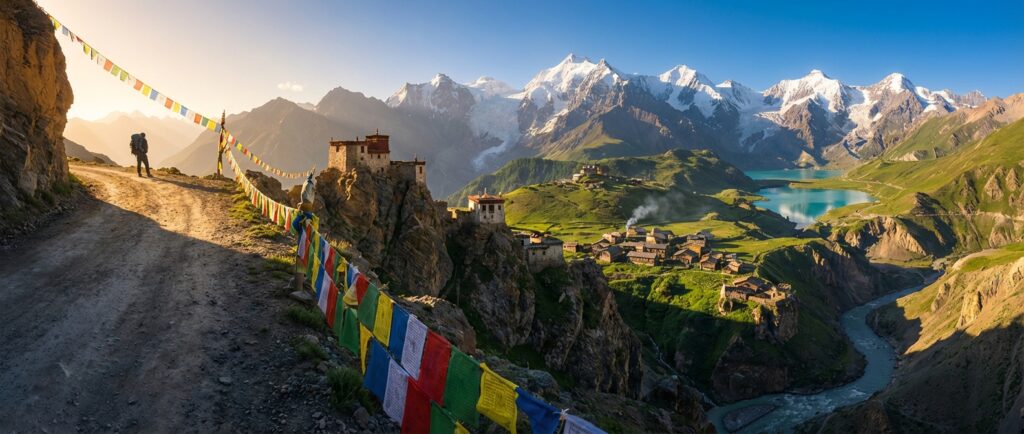
Leh-Ladakh has become synonymous with mountain adventures and breathtaking landscapes, but its growing popularity has transformed once-peaceful valleys into tourist hotspots. If you’re seeking the same dramatic scenery, cultural richness, and adventurous spirit without the overwhelming crowds, India offers remarkable alternatives that remain relatively undiscovered. These seven destinations promise equally stunning vistas, authentic experiences, and the solitude that makes mountain travel truly transformative. Whether you’re drawn to ancient monasteries, pristine lakes, challenging treks, or simply the silence of high-altitude deserts, these offbeat locations deliver everything Ladakh offers and more, with the added bonus of genuine exploration. As we move into 2026, these hidden gems are perfect for travelers who want to venture beyond the usual circuits and discover the roads less traveled across the Indian Himalayas and beyond.
Top 7 Offbeat Destinations to Visit
1. Spiti Valley, Himachal Pradesh
Often called “Little Tibet,” Spiti Valley offers the stark, cold desert landscape of Ladakh with even fewer tourists. This high-altitude region sits between Tibet and India, characterized by ancient monasteries perched on cliff edges, turquoise rivers cutting through barren mountains, and villages that seem frozen in time.
Things to Do
- Visit Key Monastery, a thousand-year-old Buddhist monastery that resembles a fortress
- Explore the mummy at Gue Village, naturally preserved for over 500 years
- Trek to Chandratal Lake, the “Moon Lake” surrounded by snow-capped peaks
- Experience village homestays in Kibber, Langza, and Komic
- Spot snow leopards on wildlife expeditions during winter months
- Stargaze in one of India’s darkest skies with minimal light pollution
Best Weather and Photo Spots
Visit between June and September when roads are accessible. The best photography locations include the Pin Valley at sunrise, Dhankar Lake with monastery reflections, Langza village with its giant Buddha statue and fossil-rich landscape, and Kunzum Pass offering 360-degree mountain panoramas. October brings snow but also stunning autumn colors and crystal-clear skies.
Suggested Itinerary
- Day 1-2: Shimla to Kalpa via Rampur, acclimatize at Kalpa
- Day 3: Kalpa to Tabo via Nako, visit Tabo Monastery
- Day 4: Tabo to Kaza, explore Pin Valley
- Day 5: Kaza local sightseeing – Key Monastery, Kibber, Chicham Bridge
- Day 6: Kaza to Chandratal Lake, overnight camping
- Day 7-8: Chandratal to Manali via Kunzum Pass and Rohtang
Travel Tips
Budget: Expect to spend around 15,000-25,000 INR per person for a week including accommodation, food, and local transport. Homestays cost 800-1,500 INR per night.
Best Time to Book: Book flights to Shimla or Chandigarh 2-3 months in advance for best rates (March-April for June travel). Hotels and homestays can be booked 1-2 months ahead.
Local Food: Try thukpa, momos, tingmo (steamed bread), chhang (local barley beer), and butter tea. Don’t miss the locally grown green peas and apricot products.
Festivals: Attend the Losar Festival (February-March) for Tibetan New Year celebrations, or the Ladarcha Fair in Kaza (August) celebrating local culture and trade.
2. Zanskar Valley, Jammu & Kashmir
Even more remote than Ladakh proper, Zanskar remains one of the last true wilderness areas in the Himalayas. Accessible only a few months each year by road, this valley offers pristine Buddhist culture, dramatic gorges, and some of India’s most challenging treks.
Things to Do
- Trek the frozen Chadar on the Zanskar River in winter
- Visit Phuktal Monastery, built into a cliffside cave
- Explore Zangla Palace and interact with the royal family
- River raft on the Zanskar River during summer
- Undertake the Padum to Lamayuru trek through high passes
- Photograph the confluence of Zanskar and Indus rivers at Nimmu
Best Weather and Photo Spots
Summer months from July to September offer road access via Kargil. Winter (January-February) is ideal for the Chadar Trek. Top photography locations include Stongdey Monastery at golden hour, the winding roads through Pensi La pass, Drang Drung glacier from various viewpoints, and the dramatic gorges near Phuktal.
Suggested Itinerary
- Day 1: Arrive Kargil, acclimatize and explore local market
- Day 2: Kargil to Padum via Rangdum and Pensi La
- Day 3: Padum to Phuktal Monastery trek (or drive partway)
- Day 4: Explore Zangla and Stongdey monasteries
- Day 5: Padum to Karsha Monastery, local exploration
- Day 6: Begin return journey to Kargil
- Day 7: Kargil to Leh or onward journey
Travel Tips
Budget: Budget 20,000-30,000 INR per person for a week. The Chadar Trek costs significantly more (35,000-50,000 INR for organized tours).
Best Time to Book: For summer visits, book Leh flights 3-4 months ahead. Winter Chadar treks should be booked 4-6 months in advance as permits are limited.
Local Food: Enjoy skyu (traditional pasta dish), khambir (local bread), and apricot jam. Tea houses serve simple but hearty Ladakhi cuisine.
Festivals: Witness the Karsha Gustor Festival (July) featuring mask dances and monastery celebrations, or Phyang Tsedup (July-August).
3. Kinnaur, Himachal Pradesh
Where the Himalayas meet the Tibetan plateau, Kinnaur offers a unique blend of Hindu and Buddhist cultures amidst apple orchards, ancient temples, and snow-covered peaks. Less commercialized than neighboring regions, Kinnaur provides authentic mountain experiences with comfortable accessibility.
Things to Do
- Drive the spectacular Hindustan-Tibet Road through dramatic gorges
- Visit the precarious Nako Monastery and its sacred lake
- Explore Kalpa village with views of Kinnaur Kailash range
- Trek to Raksham-Chitkul, India’s last inhabited village near China border
- Photograph the hanging village of Komic and suicide point views
- Sample local apple wine and taste fresh orchard produce
Best Weather and Photo Spots
April to June offers blooming orchards and clear skies, while September to October brings harvest season and golden landscapes. Prime photo locations include the Kinnaur Kailash view from Kalpa at sunrise, the Baspa River valley in autumn, Ribba village’s traditional architecture, and the Sutlej gorges near Rampur.
Suggested Itinerary
- Day 1: Shimla to Sarahan, visit Bhimakali Temple
- Day 2: Sarahan to Sangla via Jeori and Karcham
- Day 3: Sangla to Chitkul, explore the last village
- Day 4: Chitkul to Kalpa, evening at Reckong Peo
- Day 5: Kalpa local sightseeing and Kinnaur Kailash views
- Day 6: Kalpa to Nako, explore lake and monastery
- Day 7: Return journey to Shimla via Rampur
Travel Tips
Budget: A comfortable trip costs 12,000-20,000 INR per person weekly. Hotels range from 1,000-3,000 INR per night with good amenities.
Best Time to Book: Book accommodations 3-4 weeks ahead during peak season (May-June, September-October). Flights to Shimla or trains should be booked 6-8 weeks prior.
Local Food: Try sidu (local bread), thukpa variants, chilra (pancakes), and aktori (festival cake). The local apples and dried fruits are exceptional.
Festivals: Experience Fulaich Festival (September) celebrating flower deities, or Sazo Festival (April) marking the harvest with traditional dances and music.
4. Arunachal Pradesh – Tawang and Mechuka
India’s far northeastern frontier, Arunachal Pradesh offers pristine landscapes that rival any Himalayan destination. With deep Buddhist heritage, untouched valleys, and dramatic mountain scenery, this region remains wonderfully unexplored due to permit requirements that naturally limit tourist numbers.
Things to Do
- Explore Tawang Monastery, the largest in India and birthplace of the sixth Dalai Lama
- Visit Sela Pass at 13,700 feet with its sacred frozen lake
- Discover the hidden valley of Mechuka and its ancient monasteries
- Trek to Paradise Lake (Madhuri Lake) surrounded by snow peaks
- Experience the Monpa tribal culture and traditional crafts
- Witness the Indo-China border areas near Bum La Pass
Best Weather and Photo Spots
Visit between April and October, with May-June and September-October being ideal. Winter brings heavy snow and road closures. Essential photo spots include Sela Pass reflections in dawn light, Tawang Monastery from multiple angles, the Mechuka valley from surrounding hills, and Nuranang Waterfall with rainbow formations.
Suggested Itinerary
- Day 1-2: Guwahati to Tezpur, obtain ILP permits, drive to Bomdila
- Day 3: Bomdila to Tawang via Sela Pass, stop at Paradise Lake
- Day 4: Explore Tawang Monastery and town, visit war memorial
- Day 5: Day trip to Bum La Pass (weather and permits permitting)
- Day 6: Tawang to Dirang, visit hot springs and monasteries
- Day 7-8: Return to Tezpur or fly from Tezpur
- Alternative: Add 3-4 days for Mechuka circuit from Along
Travel Tips
Budget: Plan for 25,000-35,000 INR per person for 8-9 days including permits, transport, and accommodation. Hiring vehicles is mandatory and costs 8,000-12,000 INR per day.
Best Time to Book: Book Guwahati flights 2-3 months ahead. Arrange permits through tour operators 3-4 weeks before travel as they require advance processing. Hotels should be confirmed 4-6 weeks prior.
Local Food: Sample thukpa, momos, zan (millet-based porridge), gyapa khazi (spicy fish preparation), and butter tea. Try local bamboo shoot delicacies.
Festivals: Attend Torgya Festival (January) at Tawang Monastery with masked dances, or Losar celebrations (February-March) marking the Monpa New Year.
5. Lahaul Valley, Himachal Pradesh
Separated from Spiti by the Kunzum Pass, Lahaul remains quieter despite being on the Manali-Leh highway. This valley combines lush greenery near Manali with the stark beauty of high-altitude desert, offering diverse landscapes and ancient Buddhist culture without the tourist influx.
Things to Do
- Visit the unique Guru Ghantal Monastery with its wooden architecture
- Explore Jispa’s alpine meadows and camping grounds
- Drive to Baralacha La and Suraj Tal, one of the highest lakes
- Discover the confluence town of Keylong and its monasteries
- Trek to Chandrabhaga range base camps
- Experience the traditional lifestyle in Sissu and Gondla villages
Best Weather and Photo Spots
June to September offers full accessibility with pleasant weather. Late September brings autumn colors. Photography highlights include the Chandra River valley landscapes, Deepak Tal (lake) near Kunzum Pass, ancient monastery murals in Tayul Monastery, and sunrise at Baralacha La with surrounding peaks creating dramatic shadows.
Suggested Itinerary
- Day 1: Manali to Jispa via Rohtang Pass and Keylong
- Day 2: Jispa local exploration and acclimatization
- Day 3: Jispa to Baralacha La and back, visit Suraj Tal
- Day 4: Jispa to Keylong, explore monasteries
- Day 5: Keylong to Udaipur (Lahaul), visit Triloknath Temple
- Day 6: Explore Sissu and return toward Manali
- Day 7: Buffer day or onward journey
Travel Tips
Budget: Expect 15,000-22,000 INR per person for a week. Accommodation ranges from basic guesthouses (800 INR) to comfortable hotels (2,500 INR).
Best Time to Book: Book Manali hotels 4-6 weeks in advance for summer travel. Flights to Bhuntar should be booked 2-3 months ahead for better rates. Local guesthouses can be booked closer to travel dates.
Local Food: Enjoy chhang, traditional bread varieties, siddu, and rajma-chawal. Local potatoes and peas are exceptional. Try the apricot-based dishes and preserves.
Festivals: Witness the Lahaul Festival in Keylong (August) showcasing local culture, or the Pauri Festival celebrating the end of winter isolation.
6. Pangi Valley, Himachal Pradesh
Perhaps the most remote valley in Himachal, Pangi is accessible only via the treacherous Sach Pass or through Kishtwar. This isolation has preserved its unique culture where Sanskrit is still spoken, and ancient traditions remain intact. The journey itself is an adventure through some of India’s most challenging mountain roads.
Things to Do
- Conquer Sach Pass at 14,528 feet, one of India’s most dangerous roads
- Explore Killar, the valley headquarters with traditional architecture
- Visit Mindhal Mata Temple overlooking the Chenab gorge
- Interact with locals in villages where ancient customs prevail
- Trek to high-altitude lakes and alpine meadows
- Photograph the dramatic Chenab River cutting through mountains
Best Weather and Photo Spots
Sach Pass opens only from late June to early September. Visit in July-August for optimal conditions. Key photography locations include the hairpin bends of Sach Pass from various viewpoints, Killar valley panoramas, the Chenab gorge near Sansari Nala, and traditional Pangi house architecture in remote villages.
Suggested Itinerary
- Day 1: Dalhousie to Bairagarh, last settlement before Sach Pass
- Day 2: Early start over Sach Pass to Killar (long, challenging drive)
- Day 3: Rest and explore Killar town and surroundings
- Day 4: Killar to Hudan valley and back
- Day 5: Explore nearby villages and Mindhal Temple
- Day 6: Begin return journey or continue to Kishtwar
- Day 7: Complete return journey to Dalhousie
Travel Tips
Budget: Budget 18,000-28,000 INR per person for the week. Vehicle hire is essential and costs 10,000-15,000 INR for the circuit. Accommodation is basic (500-1,200 INR per night).
Best Time to Book: Book vehicles and experienced drivers 2-3 months in advance as Sach Pass requires skilled navigation. Accommodation in Killar should be confirmed 3-4 weeks ahead as options are limited.
Local Food: Try sepu badi (lentil cake), local mutton dishes, and madra (chickpea curry). Food is simple and hearty, reflecting the harsh climate.
Festivals: Experience the Minjar Fair (July-August) if timing coincides, or witness local deity festivals unique to Pangi’s villages throughout summer.
7. Nubra Valley via Unconventional Routes
While Nubra itself isn’t unknown, approaching it through lesser-traveled routes and exploring its remote corners offers the solitude missing from the main Diskit-Hunder circuit. The Wari La route, eastern Nubra villages, and extended stays in remote monasteries provide authentic experiences away from tourist crowds.
Things to Do
- Cross Wari La Pass, an alternative to overcrowded Khardung La
- Explore Turtuk, the last village near Pakistan border with Balti culture
- Visit Panamik hot springs and continue to Ensa Monastery
- Stay in remote villages like Sumur and Thangsey
- Trek from Hunder to Tirit village through sand dunes
- Photograph the unique landscape where desert meets glaciers
Best Weather and Photo Spots
June to September for road access, with July-August offering the warmest temperatures. September provides fewer tourists and excellent light. Top photo spots include Wari La’s serpentine road from above, Turtuk apricot orchards against mountain backdrop, Yarab Tso Lake’s pristine surroundings, and the Shyok River’s turquoise waters cutting through stark landscape.
Suggested Itinerary
- Day 1-2: Leh to Nubra via Wari La, stay in Sumur
- Day 3: Explore Sumur Monastery and Panamik hot springs
- Day 4: Drive to Turtuk, explore Balti culture and villages
- Day 5: Turtuk to Thangsey via Bogdang
- Day 6: Thangsey to Ensa Monastery trek or explore Saser region
- Day 7: Return to Leh via alternative route through Shyok
Travel Tips
Budget: Plan for 20,000-30,000 INR per person including vehicle, permits, and homestays. Permits cost extra for Turtuk and other restricted areas.
Best Time to Book: Book Leh flights 3-4 months ahead. Vehicle arrangements and homestays should be confirmed 4-6 weeks prior. Permits require advance processing through tour operators.
Local Food: In Turtuk, try Balti dishes like khambir with apricot jam, chutagi (handmade pasta), and local walnuts and apricots. Homestays serve authentic regional cuisine.
Festivals: Time your visit with Ladakh Festival (September) or explore village-specific celebrations in remote Nubra settlements during summer months.
Complete Road Trip Roadmap: The Ultimate Himalayan Circuit
For the ultimate alternative to Leh-Ladakh, combine multiple destinations into a comprehensive journey covering the western and eastern Himalayas over 20-25 days.
The Complete Route
- Start: Delhi/Chandigarh (Days 1-2) – Arrive and prepare, obtain necessary permits for Arunachal Pradesh
- Shimla to Kinnaur (Days 3-6) – Drive through Shimla to Kalpa, explore Chitkul and Nako, covering apple belt and ancient villages
- Kinnaur to Spiti Valley (Days 7-11) – Cross into Spiti via Nako, explore Tabo, Kaza, Pin Valley, and trek to Chandratal Lake
- Spiti to Lahaul (Days 12-14) – Cross Kunzum Pass into Lahaul, explore Jispa, Keylong, and surrounding monasteries
- Lahaul to Manali (Day 15) – Descend via Rohtang Pass, rest and resupply in Manali
- Optional: Pangi Valley Extension (Days 16-19) – For adventurous travelers, tackle Sach Pass and explore remote Pangi before returning to Manali
- Alternative: Fly to Northeast (Days 16-17) – From Chandigarh, fly to Guwahati for the Arunachal segment
- Arunachal Pradesh Circuit (Days 18-24) – Drive Guwahati to Tawang via Tezpur, explore Tawang and Mechuka, return via Dirang
- End: Guwahati (Day 25) – Conclude the epic journey and fly home
Alternative Shorter Circuits
Western Loop (12-14 days): Delhi – Kinnaur – Spiti – Lahaul – Manali – Delhi
Eastern Focus (10-12 days): Guwahati – Tawang – Mechuka – Guwahati
Adventure Circuit (15-17 days): Leh – Zanskar – Nubra (unconventional) – return to Leh
Also Consider: More Hidden Himalayan Gems
Sangla Valley, Himachal Pradesh
While technically part of Kinnaur, Sangla deserves special mention for its stunning Baspa River valley, traditional Kinnauri houses, and apple orchards. The village of Rakcham offers pristine trekking opportunities with minimal tourist presence.
Upper Mustang, Nepal
For those willing to cross international borders, Upper Mustang offers a Ladakh-like experience with even more remote Tibetan Buddhist culture. Restricted permits keep crowds minimal while preserving ancient traditions.
Changthang Plateau, Eastern Ladakh
Beyond Pangong Lake lies the vast Changthang region where nomadic herders still roam with pashmina goats. Villages like Hanle and Chushul offer pristine landscapes and world-class stargazing opportunities.
Pithoragarh District, Uttarakhand
Known as “Little Kashmir,” this district borders Nepal and Tibet. The villages of Munsiyari, Dharamghar, and Chaukori provide spectacular Himalayan views with virtually no tourist infrastructure, perfect for authentic experiences.
Kishtwar, Jammu & Kashmir
Often called the “Land of Saffron and Sapphires,” Kishtwar offers challenging treks, ancient temples, and untouched valleys. The approach to Pangi Valley through Kishtwar provides an alternative to Sach Pass.
Chamoli District, Uttarakhand
Home to the Valley of Flowers and Hemkund Sahib, Chamoli also has lesser-known gems like Niti Valley, Mana Village (last Indian village), and pristine alpine meadows accessible through challenging but rewarding treks.
Final Thoughts
As Leh-Ladakh continues to attract increasing numbers of travelers, these seven alternatives offer equally spectacular experiences without the environmental and cultural strain of overtourism. Each destination provides unique cultural encounters, breathtaking landscapes, and the kind of solitude that makes mountain travel truly memorable. Whether you choose the Buddhist heritage of Spiti and Zanskar, the unexplored valleys of Pangi and Kinnaur, or the frontier regions of Arunachal Pradesh, you’ll discover that India’s Himalayas hold countless secrets waiting to be explored. Plan carefully, respect local cultures and environments, and prepare for journeys that will challenge and inspire you in ways that crowded destinations simply cannot. The mountains are calling, and these offbeat paths promise the adventures you’ve been seeking beyond the well-trodden roads of Ladakh.
Leave a Reply