
February marks one of the most rewarding periods for exploring India’s diverse landscapes and cultural treasures. As winter begins to soften and temperatures become ideal for travel, this transitional month offers travelers the perfect balance between comfortable weather and exceptional experiences. With India attracting over 1 million international tourists in February alone and temperatures averaging between 20 to 30 degrees Celsius across most regions, the country presents an inviting destination for all types of travelers.
The tourism sector in India contributed approximately ₹20.9 trillion to the GDP in 2024, representing 6.6% of the national economy and supporting 46.5 million jobs. February stands out as one of the peak travel months, with historical data showing 1,003,000 foreign tourist arrivals during this period, driven by pleasant weather conditions and vibrant festivals. Understanding why February is exceptional for Indian tourism requires examining the unique characteristics of this month and the destinations that truly shine during this season.
Monthly Tourist Arrivals to India (Peak Season)
| Month | Foreign Tourist Arrivals | Key Attractions |
|---|---|---|
| December | 1,028,000 | Festive events, pleasant weather |
| February | 1,003,000 | Cultural fairs, end of winter |
| January | 959,000 | New Year celebrations, winter festivals |
| November | 890,000 | Post-monsoon freshness |
| March | 870,000 | Spring arrival, Holi festival |
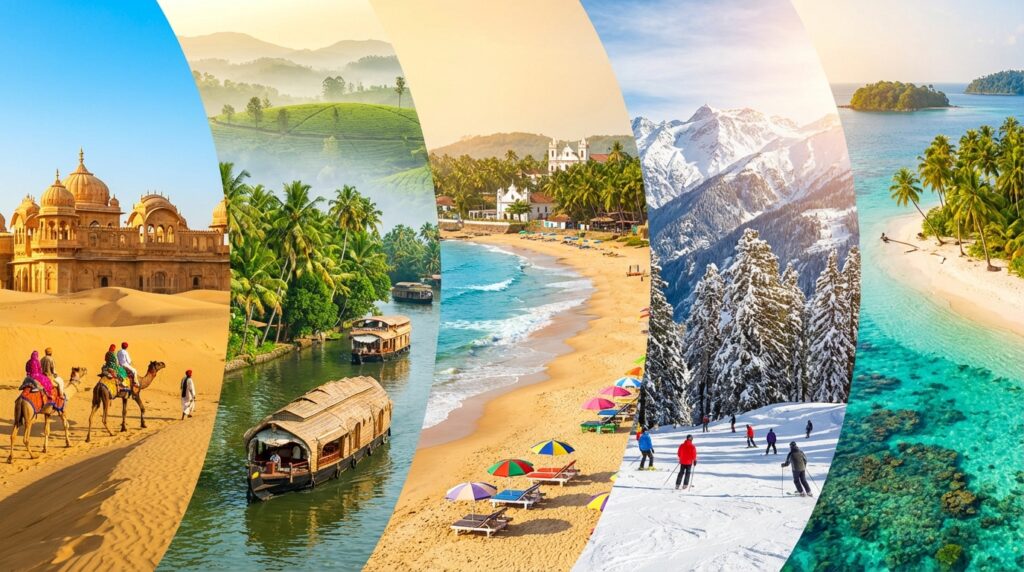
The distinct advantage of traveling in February lies in the climate stability across India. Northern regions experience temperatures between 10 to 25 degrees Celsius, while southern and coastal areas enjoy warm but comfortable conditions ranging from 22 to 30 degrees Celsius. This weather diversity allows travelers to choose between snow-capped mountains, golden beaches, verdant hill stations, or historic desert cities, all in their prime condition.
1. Rajasthan: The Golden Desert Experience
Rajasthan transforms into a traveler’s paradise during February, with the scorching desert heat giving way to pleasant daytime temperatures averaging 20 to 25 degrees Celsius. The state’s royal cities of Jaipur, Udaipur, Jaisalmer, and Jodhpur become ideal for exploration during this month, offering comfortable conditions for visiting magnificent forts, palaces, and vibrant bazaars.
The Jaisalmer Desert Festival, typically held in late February, showcases authentic Rajasthani culture through folk dances, camel races, and traditional performances against the backdrop of golden sand dunes. This cultural extravaganza attracts thousands of visitors annually and provides an immersive experience into desert life. Ranthambore National Park, one of India’s premier wildlife destinations, offers exceptional tiger sighting opportunities in February as reduced water sources draw animals into the open, with early morning safaris providing comfortable viewing temperatures.
Best Activities: Fort exploration, desert camping, wildlife safaris, cultural festivals
Ideal Duration: 5-7 days to cover major attractions
| City | Key Attractions | Special February Events |
|---|---|---|
| Jaipur | Amber Fort, Hawa Mahal, City Palace | Heritage walks, craft exhibitions |
| Jaisalmer | Golden Fort, Sam Sand Dunes | Desert Festival with camel races |
| Udaipur | Lake Pichola, City Palace | Romantic boat rides, cultural shows |
| Jodhpur | Mehrangarh Fort, Blue City | Folk music performances |
The architectural marvels of Rajasthan are best appreciated in February when tourists can comfortably spend hours exploring intricate palaces and massive fortresses. Udaipur, often called the Venice of the East, offers romantic sunset views over Lake Pichola, while Jodhpur’s imposing Mehrangarh Fort stands majestically against clear blue skies. The state’s hotel occupancy rates peak during this period, with luxury heritage hotels offering unique experiences of royal hospitality at relatively better rates compared to the December-January rush.
2. Kerala: God’s Own Country in Perfect Weather
Kerala emerges as one of the most enchanting destinations in February, with the state experiencing its driest and most pleasant weather period. The famous backwaters of Alleppey and Kumarakom reach their scenic peak during this month, with calm waters perfectly reflecting the lush palm-fringed landscapes and traditional houseboats gliding through the serene canals. The temperature hovers comfortably between 22 to 28 degrees Celsius, making it ideal for extended outdoor activities.
The hill station of Munnar presents a completely different facet of Kerala, with its rolling tea plantations stretching across misty valleys and temperatures providing a refreshing coolness ranging from 15 to 25 degrees Celsius. February allows visitors to witness the tea-picking season in full swing, with verdant estates creating picture-perfect landscapes. The coastal towns of Kovalam and Varkala offer pristine beaches with calm seas, perfect for swimming, sunbathing, and water sports without the humidity that characterizes other months.
Kerala Weather Comparison: February vs Other Months
| Aspect | February | June-September (Monsoon) | April-May (Summer) |
|---|---|---|---|
| Temperature | 22-28°C | 24-30°C | 28-35°C |
| Humidity | Low to Moderate | Very High | High |
| Rainfall | Minimal | Heavy | Occasional |
| Beach Activities | Excellent | Limited | Very Hot |
Kerala’s rich cultural heritage becomes accessible in February through traditional Kathakali performances, temple festivals, and Ayurvedic wellness retreats that operate in optimal conditions. The state’s cuisine, featuring coconut-based curries, fresh seafood, and traditional sadya meals, can be fully enjoyed in the comfortable climate. Medical tourism contributes significantly to Kerala’s visitor numbers, with 21% of international visitors choosing India for healthcare and wellness services, and Kerala’s Ayurvedic centers attracting a substantial portion of these wellness seekers during the pleasant February weather.
3. Goa: Beach Bliss Beyond the Peak Season
While many associate Goa with the December-January rush, February offers a more balanced and enjoyable experience. The state maintains its perfect beach weather with temperatures between 22 to 30 degrees Celsius, but with significantly reduced crowds as the peak holiday season winds down. This creates an ideal scenario where visitors enjoy sunny skies, calm seas, and pleasant evenings without the overcrowding that characterizes earlier months.
The famous Goa Carnival, typically held in mid-February, transforms the state into a vibrant celebration of Portuguese heritage with colorful parades, street dances, music performances, and elaborate floats. This four-day festival showcases Goa’s unique cultural fusion and attracts visitors from across India and abroad. The beaches of North Goa, including Baga, Calangute, and Anjuna, offer water sports activities in perfect conditions, while South Goa’s quieter stretches like Palolem and Agonda provide serene escapes.
| Region | Beach Type | Best For | Crowd Level in February |
|---|---|---|---|
| North Goa | Lively beaches | Water sports, nightlife, beach shacks | Moderate |
| South Goa | Quiet beaches | Relaxation, couples, peaceful retreats | Low to Moderate |
| Central Goa | Cultural sites | Churches, Portuguese heritage | Low |
Goa’s accommodation prices become more reasonable in February compared to the December-January peak, offering better value for luxury resorts and boutique properties. The state’s culinary scene remains vibrant with beach shacks serving fresh seafood, while inland areas offer authentic Goan cuisine in traditional settings. River cruises on the Mandovi and Zuari rivers provide scenic evening experiences, and the spice plantations of Ponda offer guided tours showcasing Goa’s agricultural heritage in comfortable walking weather.
4. Himachal Pradesh: Snow Adventures and Mountain Serenity
February represents the peak winter season in Himachal Pradesh, offering spectacular snow experiences across multiple destinations. Manali transforms into a winter wonderland with temperatures ranging from minus 2 to 12 degrees Celsius, providing perfect conditions for skiing, snowboarding, and snow trekking in Solang Valley. The town’s picturesque landscape, covered in fresh snow, creates postcard-worthy scenes with the Beas River flowing through snow-clad mountains.
Gulmarg in Kashmir earns its reputation as one of Asia’s premier skiing destinations during February, with powdery snow and the world’s second-highest gondola lift operating at full capacity. The destination attracts both amateur and experienced skiers, offering slopes suitable for various skill levels. The temperature ranges from minus 5 to 10 degrees Celsius, creating ideal snow conditions without extreme cold.
- Manali: Skiing in Solang Valley, snow activities in Rohtang Pass area
- Shimla: Colonial architecture against snowy backdrop, Ridge walks
- Dalhousie: Peaceful snow-covered landscapes, fewer crowds
- Auli: Skiing paradise with panoramic Himalayan views
For travelers seeking less adventure and more tranquility, destinations like Dharamshala and McLeodganj offer spiritual experiences combined with Himalayan beauty. The Dalai Lama’s temple complex becomes more accessible in February’s clear weather, and the surrounding monasteries provide peaceful retreats. The temperature here remains moderate at 5 to 15 degrees Celsius, comfortable for exploration and meditation.
| Destination | Altitude (meters) | Temperature Range | Primary Activities |
|---|---|---|---|
| Manali | 2,050 | -2°C to 12°C | Skiing, snow trekking, hot springs |
| Shimla | 2,200 | 0°C to 10°C | Heritage walks, snow viewing, shopping |
| Auli | 2,500-3,000 | -5°C to 8°C | Professional skiing, cable car rides |
| Dharamshala | 1,475 | 5°C to 15°C | Monastery visits, trekking, cultural exploration |
5. Andaman and Nicobar Islands: Tropical Paradise
The Andaman and Nicobar Islands present a completely different dimension to India’s February tourism landscape, offering tropical beach experiences with crystal-clear waters and pristine coral reefs. February marks one of the best periods for visiting these islands, with calm seas, excellent underwater visibility, and comfortable temperatures ranging from 24 to 30 degrees Celsius. The monsoons have long departed, and the water is at its clearest for snorkeling and scuba diving activities.
Havelock Island, now known as Swaraj Dweep, features the stunning Radhanagar Beach, consistently ranked among Asia’s best beaches. The island offers world-class diving sites at Elephant Beach and other locations, where visitors can explore vibrant coral formations and diverse marine life including sea turtles, colorful fish, and occasional manta rays. Neil Island provides a quieter alternative with equally beautiful beaches and natural rock formations.
Andaman Islands: Activities and Best Times
| Activity | Best Location | Visibility/Conditions in February | Experience Level |
|---|---|---|---|
| Scuba Diving | Havelock, Neil Island | 15-25 meters visibility, calm seas | Beginner to Advanced |
| Snorkeling | Elephant Beach, Jolly Buoy | Excellent clarity, vibrant coral | All levels |
| Sea Walking | North Bay Island | Perfect conditions, 8-12 meters depth | Beginners, non-swimmers |
| Island Hopping | Multiple islands | Calm seas, regular ferry services | All travelers |
Port Blair, the capital, serves as the gateway to the islands and houses the historic Cellular Jail, a powerful reminder of India’s freedom struggle. The Sound and Light Show at the jail provides an emotional journey through history. February’s pleasant evenings make this outdoor experience comfortable and memorable. Ross Island and North Bay offer additional historical and recreational attractions easily accessible by boat.
The Andamans attract adventure enthusiasts and nature lovers alike, with opportunities for kayaking through mangrove creeks, trekking through tropical rainforests, and witnessing bioluminescent plankton at certain beaches during moonless nights. The islands’ limited tourist infrastructure compared to mainland destinations means advance booking is essential, particularly for accommodation and diving activities during February’s peak season.
Planning Your February 2026 India Trip
February 2026 presents travelers with exceptional opportunities across India’s diverse regions. The month’s weather stability, with most destinations experiencing dry conditions and comfortable temperatures, makes it ideal for varied itineraries combining multiple regions. Tourist infrastructure operates at full capacity without the overwhelming crowds of December-January, offering better service quality and more authentic local experiences.
Transportation networks, including domestic flights, trains, and road connections, function optimally during February. Major cities like Delhi, Mumbai, and Bangalore maintain pleasant weather, serving as convenient hubs for connecting to various destinations. The Golden Triangle circuit connecting Delhi, Agra, and Jaipur attracts significant visitor numbers, with the Taj Mahal receiving hundreds of thousands of visitors during this month alone.
- Book accommodations 45-60 days in advance for best rates and availability
- Pack layers for northern regions; temperature variations between day and night exceed 10°C
- Carry sunscreen and sunglasses; February sun can be intense despite pleasant temperatures
- Reserve wildlife safari permits and special event tickets well in advance
- Consider shoulder dates around festivals for better pricing
The tourism sector’s contribution of ₹20.9 trillion to India’s GDP reflects the country’s growing importance as a global travel destination. With infrastructure improvements through initiatives like Swadesh Darshan 2.0 developing 110 projects across thematic circuits including Ramayana, Buddhist, Coastal, and Tribal routes, accessibility to diverse regions continues to improve. February capitalizes on this enhanced infrastructure while offering optimal weather conditions across most tourist destinations.
Cost considerations for February travel show moderate pricing compared to peak December-January rates. Hotels and resorts often offer promotional packages as the peak season concludes, providing value without compromising experience quality. Domestic airfares remain reasonable outside of specific festival dates, and train bookings made in advance ensure comfortable travel between major destinations.
| Budget Category | Daily Expenditure (per person) | Accommodation Type | Travel Style |
|---|---|---|---|
| Budget | ₹1,500 – ₹3,000 | Hostels, budget hotels | Public transport, street food |
| Mid-Range | ₹4,000 – ₹8,000 | 3-star hotels, boutique stays | Mix of transport, local restaurants |
| Luxury | ₹12,000 – ₹25,000+ | Heritage hotels, 5-star resorts | Private transport, fine dining |
February 2026 stands as an exceptional time to explore India’s remarkable diversity. Whether seeking adventure in snow-capped mountains, relaxation on tropical beaches, cultural immersion in historic cities, or wildlife encounters in national parks, this month offers ideal conditions across all categories. The combination of pleasant weather, vibrant festivals, reduced crowds compared to peak winter months, and improving infrastructure makes February an optimal choice for discovering the incredible experiences that India offers to travelers worldwide.
Leave a Reply