
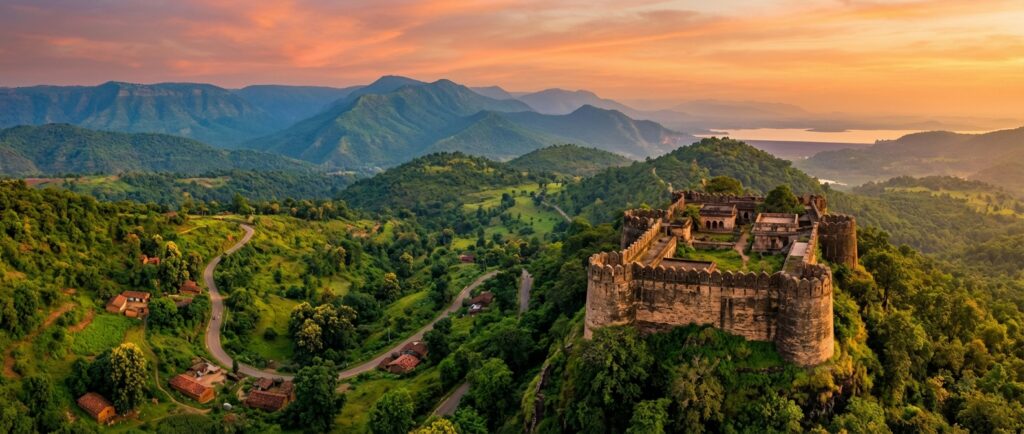
Nestled between the majestic Vindhya and Kaimur mountain ranges in southeastern Uttar Pradesh, Robertsganj stands as a unique gem in India’s tourism landscape. As the administrative headquarters of Sonbhadra district, this hill station offers an extraordinary blend of natural beauty, historical significance, and cultural richness. With an elevation of 318 meters above sea level, Robertsganj provides a refreshing escape from the plains while remaining easily accessible to travelers seeking offbeat destinations in 2026.
Often referred to as the “Switzerland of India” by former Prime Minister Jawaharlal Nehru, Robertsganj’s picturesque topology and serene environment make it a must-visit destination for nature enthusiasts and history buffs alike. The town, named after British Field Marshal Frederick Roberts, has evolved into a significant tourist hub recognized by the Uttar Pradesh Tourism Department, offering visitors an authentic experience away from crowded mainstream destinations.
Geographic Profile and Demographics
Robertsganj is strategically positioned at coordinates 24.7°N latitude and 83.07°E longitude, making it the southeasternmost city in Uttar Pradesh. The district was carved from Mirzapur on March 4, 1989, creating a unique administrative region known for its hilly terrain and mineral wealth. According to the 2011 Census, the Robertsganj Nagar Palika Parishad has a population of 36,689 residents, comprising 19,294 males and 17,395 females.
The literacy rate stands impressively at 84 percent, significantly higher than the state average of 67.68 percent. Male literacy reaches 89.32 percent while female literacy is recorded at 78.1 percent, demonstrating progressive educational development in this hill region.
Climate and Best Time to Visit
Understanding Robertsganj’s climate is crucial for planning your 2026 visit. The region experiences three distinct seasons, each offering unique experiences for travelers. Summer months from March to May see temperatures soaring to 45°C, accompanied by dry, hot winds. The monsoon season spans July through September, bringing heavy rainfall that transforms the landscape into lush greenery but can make travel challenging.
Optimal Visiting Period: October to February
The winter season from December to February offers the most pleasant weather conditions, with temperatures ranging between 12°C and 25°C. This period is ideal for exploring historical sites, trekking through the Kaimur hills, and enjoying outdoor activities without the discomfort of extreme heat or monsoon rains.
Major Tourist Attractions
Robertsganj and the surrounding Sonbhadra district boast an impressive array of tourist destinations that cater to diverse interests. The region’s unique positioning between two mountain ranges has created a landscape rich in natural wonders, ancient fortifications, and spiritual sites that date back centuries.
| Attraction | Distance from Robertsganj | Type | Historical Period |
|---|---|---|---|
| Vijaygarh Fort | 30 km | Historical Fort | 5th Century |
| Lorika Rock | 10 km | Natural Formation | Ancient |
| Shivdwar Temple | 40 km | Religious Site | 11th Century |
| Naugarh Fort | 40 km | Historical Fort | Medieval Era |
| Rihand Dam | 46 km | Engineering Marvel | 1961 |
| Chandra Prabha Wildlife Sanctuary | 50 km (approx) | Nature Reserve | Established 1957 |
Vijaygarh Fort: The Crown Jewel
Standing 400 feet tall, Vijaygarh Fort represents one of the oldest and most magnificent hill forts in Uttar Pradesh. Constructed by the Kol kings in the 5th century, this architectural marvel sits atop the Kaimur Range in Mau Kalan village. The fort gained literary fame through Devaki Nandan Khatri’s popular Hindi novel “Chandrakanta,” which features Princess Chandrakanta of Vijaygarh in its narrative.
The fort’s unique features include prehistoric cave paintings, intricate rock inscriptions, ancient statues, and four perennial ponds that remarkably never run dry. More than half the fort’s area is covered by steep, rugged hills that provide breathtaking panoramic views of the surrounding landscape. The site hosts an annual Urs (fair) every April at the tomb of Sufi saint Hazrat Meeran Shah Baba, drawing thousands of devotees from various faiths.
Connectivity and Accessibility
Despite its hilly terrain, Robertsganj maintains excellent connectivity with major cities across Uttar Pradesh and beyond. The town’s strategic location makes it accessible through multiple transportation modes, ensuring convenient travel for visitors in 2026.
Railway Connectivity
The Sonbhadra railway station, formerly known as Robertsganj station until its 2018 renaming, serves as the primary rail gateway. The station features two well-sheltered platforms with modern amenities including water facilities and sanitation. Direct train services connect Robertsganj to major cities including Delhi, Jammu, Amritsar, Kanpur, Prayagraj, Varanasi, Lucknow, and Bareilly. Current electrification work and survey projects aim to enhance connectivity to Varanasi Junction and Pandit Deen Dayal Upadhyay Junction, reducing passenger congestion.
Road Network
State highways and well-maintained roads connect Robertsganj to Lucknow, Allahabad, Varanasi, Mirzapur, Gorakhpur, and Faizabad. Regular bus services operate throughout the day from Varanasi, with the journey typically taking 2.5 hours. The highway connecting Varanasi to Waidhan passes through the district, facilitating access to commercial centers like Dalla, Renukoot, Anpara, and Shaktinagar.
Economic Significance: The Energy Capital
Beyond tourism, Sonbhadra district has earned the distinction of being India’s “Energy Capital” due to its concentration of power plants and industrial facilities. The region hosts multiple thermal power stations, cement factories at Churk and Dala, the Rihand Dam hydroelectric project, and aluminum production facilities operated by the Birla group at Renukoot.
| Year | Industry Established | Location | Significance |
|---|---|---|---|
| 1956 | First Cement Factory | Churk | Limestone Processing |
| 1961 | Rihand Dam | Pipri | Hydroelectric Power |
| 1967 | Renusagar Power Plant | Renusagar | Birla Group Initiative |
| 1971 | Second Cement Factory | Dala | Expanded Production |
| 1998 | Grasim Power Plant | Renukoot | Chemical Production |
Natural Wonders and Wildlife
The Chandra Prabha Wildlife Sanctuary, sprawling across 9,600 hectares on the hillocks of Vijaygarh and Naugarh, represents a biodiversity hotspot established in May 1957. The sanctuary initially housed Asiatic lions brought in 1958, which multiplied to eleven by 1969 before disappearing in 1970. Today, it serves as habitat for chital, nilgai, chinkara, blackbuck, sambhar, wild boar, hyena, and approximately 150 bird species, making it a paradise for ornithologists and wildlife photographers.
The Chandra Prabha and Karmnasha rivers flowing through the sanctuary support diverse fish populations and provide scenic beauty enhanced by medicinal plants and indigenous flora including saagun, amaltas, mahua, and tendu trees.
Cultural Heritage and Festivals
Robertsganj’s cultural calendar features vibrant celebrations that reflect its diverse religious heritage. The annual Urs at Vijaygarh Fort in April attracts devotees of all faiths, while the Kanwar Yatra during the Hindu month of Shravana sees pilgrims collecting water from Ram Sagar for their sacred journey to Shivdwar. These events offer visitors unique opportunities to witness authentic cultural practices and participate in traditional festivities.
Planning Your 2026 Visit
For travelers planning a trip to Robertsganj in 2026, a minimum three-day itinerary is recommended to experience the destination’s highlights. Day one should focus on exploring Vijaygarh Fort and its surroundings, including the perennial ponds and cave paintings. Day two can be dedicated to visiting Shivdwar Temple and Naugarh Fort, with time allocated for scenic photography. Day three should include the Rihand Dam and Chandra Prabha Wildlife Sanctuary for nature enthusiasts.
Essential Travel Tips for 2026
- Book accommodations in advance, especially during October to February peak season
- Carry comfortable trekking shoes for fort exploration and hill walks
- Hire local guides for detailed historical context at ancient sites
- Respect religious sentiments at temples and sacred sites
- Stay hydrated and carry sun protection during day trips
- Sample local cuisine, particularly traditional Uttar Pradesh dishes
Accommodation and Facilities
Robertsganj offers a range of accommodation options from budget guesthouses to mid-range hotels. The town’s infrastructure has improved significantly, with modern amenities available in most establishments. The Nagar Palika Parishad administers over 6,196 houses, ensuring basic amenities and services throughout the municipality.
Conclusion
As Uttar Pradesh’s only true hill station, Robertsganj represents an undiscovered treasure that combines natural beauty, historical significance, and cultural richness. The convergence of ancient fortifications, prehistoric cave art, spiritual temples, and stunning landscapes creates an experience unlike any other destination in the state. With improved connectivity, growing tourism infrastructure, and increasing recognition from state authorities, 2026 presents the perfect opportunity to explore this hidden gem before it becomes mainstream.
Whether you seek adventure in the Kaimur hills, spiritual solace at ancient temples, historical insights at 5th-century forts, or simply peaceful retreat from urban chaos, Robertsganj delivers authentically. Its designation as the “Switzerland of India” by Nehru continues to resonate as visitors discover its unique charm and untouched beauty. Plan your journey to this extraordinary hill station and create memories that will last a lifetime.
Leave a Reply