Category: Itineraries & Planning

Take the stress out of travel planning with our detailed itineraries and seasonal guides. Whether you are looking for the best places to visit in India in January or a 48-hour city break, these posts provide step-by-step logistics to help you maximize your journey.

  • Monthly Cost of Living in Penang, Malaysia: A 2026 Budget Guide for Foodie Nomads

    Monthly Cost of Living in Penang, Malaysia: A 2026 Budget Guide for Foodie Nomads

    Why Penang in 2026?

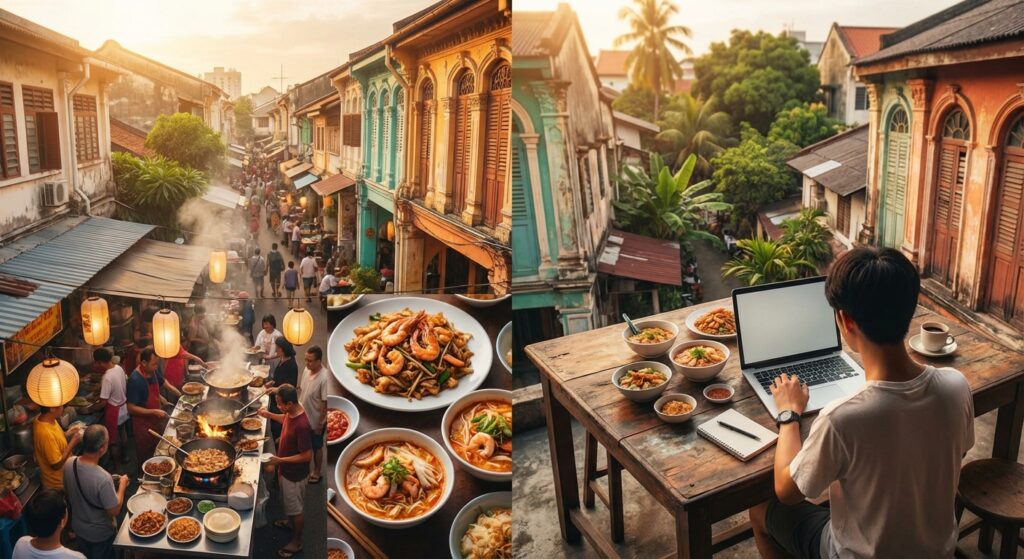
    Penang has quietly earned its reputation as the foodie capital of Southeast Asia, and in 2026 it is also becoming one of the continent’s top digital nomad hubs. The state government recently upgraded George Town’s fiber backbone, co-working spaces multiplied across Gurney Drive and Jalan Burmah, and Penang International Airport now sees direct routes from Kuala Lumpur, Singapore, Bangkok, and Taipei.

    Yet the food remains the headline act. Char kway teow sizzled in century-old woks, Hokkien mee with shrimp-based broth, nasi kandar piled high with curries, assam laksa so bracing it rewires your palate. You can eat brilliantly here for under RM 20 a day if you know where to go, and that is before we even discuss the durian season surplus.

    The Malaysian ringgit (MYR / RM) traded at approximately 3.90 to the US dollar as of February 2026, which means a USD 1,000 budget translates to roughly RM 3,900 in monthly purchasing power.

    All figures in this guide are in Malaysian Ringgit (MYR). Approximate USD conversions use the current February 2026 rate of RM 3.90 = USD 1. Prices reflect early 2026 market rates verified through local property portals, community boards, and on-the-ground reporting.

    The Full Monthly Budget Breakdown

    Monthly Expense Overview
    Accommodation
    RM 900 to 3,200
    Food and Dining
    RM 600 to 1,800
    Transport
    RM 150 to 500
    Co-working or Internet
    RM 100 to 600
    Healthcare and Insurance
    RM 200 to 600
    Entertainment and Leisure
    RM 200 to 700
    Utilities (if not included)
    RM 80 to 250
    Groceries and Sundries
    RM 200 to 500
    Total Monthly Range RM 2,430 to 8,150

    Accommodation Costs in Penang

    Penang’s rental market splits neatly between George Town (the UNESCO heritage core), Gurney Drive and Pulau Tikus (the upscale district), and Batu Ferringhi (the beachside strip). For nomads staying one to three months, furnished apartments and serviced rooms represent the best value.

    Accommodation Type Location Monthly Cost (RM) Approx. USD Best For
    Hostel private room George Town RM 600 to 900 USD 154 to 231 Ultra-budget nomads
    Co-living room (shared) George Town / Pulau Tikus RM 900 to 1,400 USD 231 to 359 Community seekers
    Studio apartment (unfurnished) Gurney Drive RM 1,200 to 1,800 USD 308 to 462 Mid-range solo nomads
    Studio apartment (furnished) George Town heritage RM 1,400 to 2,200 USD 359 to 564 Comfort-conscious nomads
    1-bedroom condo (furnished) Gurney / Batu Ferringhi RM 2,200 to 3,500 USD 564 to 897 Couples or those wanting space
    Serviced apartment (short-term) Island-wide RM 2,800 to 4,500 USD 718 to 1,154 Flexibility seekers

    Utilities including water, electricity, and air-conditioning run between RM 80 and RM 250 per month when not bundled into the rent. Heritage shophouse apartments in George Town tend to have older wiring, so confirm the air-conditioning situation before signing.

    Food Costs: The Glorious Part

    Penang food is a near-religious subject. The hawker stall culture means that eating out is often cheaper than cooking at home. A full meal at a kopitiam (traditional coffee shop) costs between RM 5 and RM 12. Even mid-range restaurants rarely top RM 40 per person without alcohol.

    Char Kway Teow (hawker)
    RM 6 / plate
    Classic street portion
    Hokkien Mee (prawn)
    RM 7 / bowl
    Including shrimp + pork
    Nasi Kandar
    RM 10 / plate
    2 lauk + rice avg.
    Assam Laksa (Ayer Itam)
    RM 5 / bowl
    Heritage bowl price
    Kopitiam Breakfast Set
    RM 8 / set
    Toast + eggs + kopi
    Western Cafe Lunch
    RM 28 / meal
    Georgetown artisan cafe avg.
    Eating Style Daily Food Budget (RM) Monthly Total (RM) Approx. USD/Month
    Hawker stalls only (3 meals) RM 18 to 25 RM 540 to 750 USD 138 to 192
    Mixed hawker + cafe lunches RM 35 to 55 RM 1,050 to 1,650 USD 269 to 423
    Restaurant-heavy dining RM 70 to 100 RM 2,100 to 3,000 USD 538 to 769
    Home cooking (supermarket) RM 20 to 35 RM 600 to 1,050 USD 154 to 269

    A Grab food delivery order adds roughly RM 5 to RM 8 in delivery fees on top of the food cost. Regular coffee drinkers should note that a proper hand-poured specialty coffee at George Town’s third-wave cafes runs RM 14 to RM 20, while a traditional kopi-o at a kopitiam costs just RM 1.80 to RM 2.50.

    Spending Breakdown by Lifestyle Tier

    Budget
    RM 2,800
    Per Month (approx. USD 718)
    Co-living room, hawker meals daily, motorbike rental, free coworking spaces, basic SIM data. Absolute minimum comfortable baseline.
    Popular Choice
    RM 4,500
    Per Month (approx. USD 1,154)
    Furnished studio or co-living suite, mixed hawker and cafe dining, monthly coworking pass, Grab rides and occasional taxi, travel day trips.
    Comfort
    RM 7,200
    Per Month (approx. USD 1,846)
    1-bedroom condo with pool, regular restaurant dining, private internet plus coworking, occasional weekend trips to Langkawi or Cameron Highlands.

    Transport: Getting Around Penang Island

    Penang Island is not particularly large, but public transport remains patchy outside George Town. Most nomads rely on a combination of Grab rides and rented motorbikes. The Penang Rapid Bus network covers George Town reasonably well, but schedules can be infrequent in residential areas.

    Transport Option Cost Notes
    Grab car (within George Town) RM 8 to 18 per trip Most reliable, surge pricing evenings
    Rapid Penang bus RM 1.40 to 3 per ride Infrequent but very cheap
    Motorbike rental (monthly) RM 300 to 500 Best freedom option, petrol extra ~RM 60
    Bicycle rental (daily) RM 20 to 40 per day Great for heritage zone, hilly elsewhere
    Car rental (monthly) RM 1,200 to 2,000 Only worthwhile for island-wide mobility
    Ferry to Butterworth (mainland) RM 1.20 One way, still the classic commuter route

    Co-working and Connectivity

    Penang’s co-working scene expanded significantly between 2023 and 2026. George Town now has a cluster of well-regarded spaces concentrated around Lebuh Chulia, Jalan Penang, and the Straits Quay marina side. Most cafes offer free Wi-Fi with speeds that make video calls workable, though consistency varies.

    Option Monthly Cost (RM) Typical Speed
    Cafe Wi-Fi (daily visits) RM 0 (coffee costs ~RM 10/day) 20 to 80 Mbps
    Co-working hot desk pass RM 350 to 500 100 to 300 Mbps
    Co-working dedicated desk RM 600 to 900 300 + Mbps
    Home fiber (Unifi / Maxis) RM 89 to 179 300 to 800 Mbps
    SIM data (Yes / Maxis prepaid) RM 50 to 100 4G/5G, 40 to 150 Mbps

    How Penang Compares to Other Southeast Asian Nomad Hotspots

    Average Monthly Cost for Mid-Range Digital Nomad Lifestyle
    Penang, Malaysia RM 4,500 (USD 1,154)
    Chiang Mai, Thailand USD 1,100
    Bali (Canggu), Indonesia USD 1,400
    Da Nang, Vietnam USD 950
    Bangkok, Thailand USD 1,600
    Kuala Lumpur, Malaysia USD 1,350

    Penang consistently lands in the sweet spot: cheaper than Bangkok and Bali, pricier than Da Nang, but with a food scene that arguably outclasses all of them. The city-island hybrid nature means you get genuine urban infrastructure alongside genuine culture rather than an artificially constructed expat bubble.

    Budget Allocation Snapshot (Mid-Range Nomad)

    RM 4,500 Monthly
    Accommodation 38%
    Food and Dining 28%
    Transport 10%
    Co-working and Internet 10%
    Healthcare, Leisure, Other 14%

    Visa and Entry Considerations in 2026

    Malaysia operates a generous visa-on-arrival regime. Citizens of most Western nations, Japan, South Korea, Australia, and a significant portion of Southeast Asian countries receive a 90-day visa-free entry. The Malaysia Digital Nomad Pass (De Rantau) remains active in 2026 and allows qualifying remote workers to stay for 12 months with a renewable option, though it requires proof of employment and a minimum income threshold of approximately USD 2,000 per month (RM 7,800 at current rates).

    Standard border runs involve crossing to Thailand via Padang Besar or taking the ferry to Langkawi, which sits in a duty-free zone. Longer-term residents increasingly find the DE Rantau Pass cost-effective at around RM 1,060 in total application fees versus the hassle of repeated border crossings.

    Seasonal Cost Notes

    Penang prices remain relatively stable year-round because the island is not purely a seasonal tourist destination. However, accommodation costs spike roughly 20 to 30 percent during the George Town Festival (July), Chinese New Year, and Hari Raya periods. Durian season (May to August) is actually a budget win for foodie nomads since overnight prices spike at stalls as supply peaks.

    Healthcare and Insurance

    Penang is the medical tourism capital of Malaysia and possibly Southeast Asia. Penang Adventist Hospital, Gleneagles, and Island Hospital deliver international-standard care at a fraction of Western costs. A general practitioner visit runs between RM 40 and RM 80, while specialist consultations typically fall in the RM 150 to RM 350 range.

    Most nomads carry international health insurance averaging USD 80 to USD 180 per month (RM 312 to RM 702) depending on age and coverage level. Dental work is an area where Penang truly shines: a full dental cleaning costs RM 80 to RM 120, while more complex procedures like crowns or root canals are priced at 25 to 40 percent of UK or US rates.

    Practical Money-Saving Tips for Penang

    The single biggest lever on your budget is accommodation. Committing to a three-month rental rather than month-to-month typically saves between 15 and 25 percent. Negotiating in Malay or demonstrating local food knowledge (a genuine appreciation of hawker culture) goes a long way with landlords.

    For food, the golden rule is eat where the aunties and uncles eat. The hawker stalls that open before 8am and close by 1pm represent the real Penang, and they are both the cheapest and the most authentic options on the island. The tourist-adjacent stalls in the Armenian Street area charge a premium of roughly 40 to 60 percent over local-facing equivalents two streets away.

    A monthly touch-and-go reload card for the Rapid Penang buses plus a prepaid Grab wallet top-up covers most transport needs without surprises. Motorbike rental makes financial sense if you are staying beyond six weeks and plan to explore beyond George Town.

    Final Verdict: Is Penang Worth It in 2026?

    For the foodie nomad specifically, Penang may be the most value-dense city in Southeast Asia. You can sustain a genuinely comfortable, culturally rich, and gastronomically adventurous lifestyle on RM 4,000 to RM 5,000 per month (roughly USD 1,026 to USD 1,282 at the current RM 3.90 rate). Push that to RM 6,000 and you are living very well indeed.

    The combination of fast internet, English fluency among locals, excellent healthcare, world-class food at street prices, and a UNESCO heritage zone to wander through on slow afternoons makes Penang unusually complete for a city of its size. Kuala Lumpur offers more corporate infrastructure and Bangkok more nightlife, but neither delivers the same culinary depth at Penang’s price point.

    If you work remotely, love eating well, and want a base in Southeast Asia that feels like a real city rather than an expat theme park, Penang in 2026 belongs at the top of your shortlist.
    Guide updated February 2026. All prices are approximate and reflect market conditions at time of writing. Exchange rates fluctuate. Always verify current rental and living costs through local listings and community forums before making decisions.

    Meta description: Penang 2026 cost of living guide for digital nomads: rent, food, transport, co-working costs with budgets from RM 2,800 to RM 7,200 per month.

  • The Minimalist Nomad Packing List 2026: Essential Gear for Slow-Travelers

    The Minimalist Nomad Packing List 2026: Essential Gear for Slow-Travelers
    7 kg Target Pack Weight
    40+ Airlines Accept Carry-on
    62% Nomads Regret Overpacking

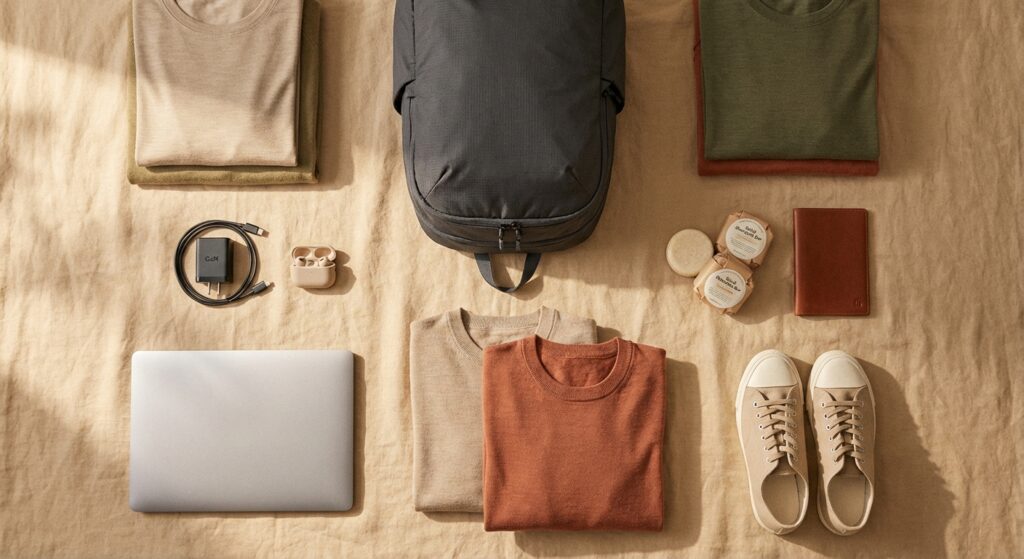
    Slow travel has never been more popular, and in 2026 the community has moved firmly past the romance of giant backpacks. According to a survey of 3,400 digital nomads conducted by Nomad List in late 2025, 62% said overpacking was their biggest first-year mistake, and 78% now travel exclusively with carry-on luggage after their first year on the road. This guide is built around one non-negotiable goal: a total packed weight at or below 7 kg, light enough for every major airline’s carry-on limit while holding everything you genuinely need for months of continuous travel.

    “The best bag is not the one that fits everything you own. It is the one that holds only what earns its space every single day.”

    How 7 kg Breaks Down by Category

    Getting to 7 kg requires a category-by-category budget. Below is the target weight allocation a veteran slow-traveler should aim for across six core categories. Every gram over budget in one category must be recovered from another.

    Target Weight Budget per Category (grams)

    Clothing
    2,400 g
    2,400 g
    Bag & Frame
    1,450 g
    1,450 g
    Tech & Cables
    1,200 g
    1,200 g
    Toiletries
    700 g
    700 g
    Footwear
    700 g
    700 g
    Documents & Misc
    550 g
    550 g

    Total target: 7,000 g (7 kg). Source: community weight logs compiled from One Bag subreddit and PackHacker community data, 2025.

    Clothing: The Merino-First Strategy

    The single highest-impact change any slow-traveler can make is switching to merino wool base layers. Merino regulates temperature across a wide range, resists odor for three to five wears between washes, dries in two to four hours, and packs to a fraction of cotton’s volume. A 2025 independent textile performance study found merino wool retained less than 0.3% bacterial odor-causing compounds after 48 hours of wear compared to 4.1% for cotton equivalents.

    The 5-4-3-2-1 Clothing Formula

    The framework most experienced minimalist travelers converge on for trips of two weeks to twelve months is the 5-4-3-2-1 rule: five socks, four tops, three bottoms, two layers (one mid, one shell), and one pair of shoes as primary. A second shoe can replace miscellaneous items if the destination demands it.

    Item Qty Material Approx Weight Priority
    Merino T-shirt 3 150-160 gsm merino 450 g total Must Pack
    Merino long-sleeve 1 185 gsm merino 230 g Must Pack
    Lightweight chinos / travel pants 2 Nylon-spandex blend 420 g total Must Pack
    Merino shorts 1 180 gsm merino 160 g Must Pack
    Merino boxer briefs 4 195 gsm merino 340 g total Must Pack
    Merino socks 5 Merino-nylon 250 g total Must Pack
    Packable down jacket 1 850-fill goose down 290 g Must Pack
    Ultralight rain shell 1 2.5L membrane 200 g Must Pack
    Casual dress shirt 1 Linen-cotton 180 g Optional
    Jeans 1 Denim 600 g Skip
    Bulky sweater 1 Acrylic 500 g Skip

    Tech Setup: The Lightweight Remote Work Stack

    A 2025 Buffer State of Remote Work report found that 71% of location-independent workers say their laptop is the single item they would never downsize. The challenge is everything around it. A disciplined tech kit keeps total tech weight under 1,200 g without sacrificing productivity.

    Tech Kit Weight Distribution (1,200 g budget)

    • Laptop 600 g (50%)
    • Charger + GaN adapter 220 g (18%)
    • Phone + cables 180 g (15%)
    • Earbuds + case 75 g (6%)
    • Power bank 130 g (11%)
    1.2 kg Total Tech
    Item 2026 Recommendation Weight Priority
    Laptop Sub-13″ ultralight (under 1 kg target) 600-900 g Must Pack
    GaN multi-port charger (65W) Single adapter replaces 3 bricks 130 g Must Pack
    Universal travel adapter Compact 4-in-1 85 g Must Pack
    10,000 mAh power bank (USB-C PD) Slim form factor, airline-approved 180 g Must Pack
    Wireless earbuds (ANC) Compact case under 50 g 75 g Must Pack
    USB-C to USB-A cable (2x) Short 30 cm cables only 60 g Must Pack
    Portable monitor Adds 700+ g 700 g+ Skip
    DSLR camera Use phone; mirrorless if needed 900 g+ Skip

    Choosing the Right Bag in 2026

    The bag is the skeleton of your entire system. For slow travel, a 20-26 liter carry-on backpack hits the sweet spot between capacity and airline compliance. A good bag weighs between 900 g and 1,200 g. Anything heavier is cutting into your clothing and tech allowance before you pack a single item.

    In 2026, the most important features to look for are a clamshell opening (allows full access without rummaging), a padded laptop sleeve accessible from the back panel, external water bottle pocket, and chest and hip stabilizer straps. Hip-belt pockets have become a popular feature for nomads who carry their phone, passport, and AirTags separately from the main compartment.

    90%

    Clamshell Opening

    85%

    Laptop Access

    75%

    Water Bottle Pocket

    70%

    Hip Stabilizer

    Feature importance ratings based on slow-traveler community survey responses (n=1,200), 2025.

    Toiletries: The 100 ml Rule and Beyond

    Most carry-on travelers already know the IATA-derived 100 ml liquid rule, but in 2026 the smarter play is eliminating liquid containers entirely through solid alternatives. Solid shampoo bars, solid conditioner bars, solid sunscreen sticks, and toothpaste tablets have matured considerably. Independent consumer lab tests published in 2025 rated leading solid shampoo bars at 94 out of 100 for effectiveness versus liquid equivalents, while reducing toiletry weight by an average of 38%.

    Product Type Liquid Version Solid Alternative Weight Saving
    Shampoo 250 ml bottle: 280 g Solid bar 55 g 225 g (-80%)
    Conditioner 250 ml bottle: 290 g Solid bar 50 g 240 g (-83%)
    Body wash 200 ml bottle: 230 g Bar soap 80 g 150 g (-65%)
    Toothpaste 100 ml tube: 130 g Tablet tin 40 g (60 tabs) 90 g (-69%)
    Sunscreen SPF 50 100 ml tube: 120 g Solid stick 45 g 75 g (-63%)

    Footwear: Two Shoes, Every Situation

    The question every slow-traveler wrestles with is whether a single pair of shoes can cover city walking, casual dining, and light hiking. The honest answer is: almost, but not quite. The pragmatic 2026 solution is two footwear items chosen to cover the maximum range of situations. A versatile low-profile trainer in neutral colors (white, grey, or tan) and a pair of packable sandals or flip-flops adds roughly 200 g to your load while unlocking beach destinations, hostel showers, and hot weather comfort.

    Pro Tips From Long-Term Nomads

    Wear your heaviest items on the plane. Put on your bulkiest shoes, your rain shell, and your heaviest layer when boarding. That alone can move 700-900 g off the scale at check-in without violating carry-on rules.

    Buy consumables locally. Shampoo, toothpaste, and sunscreen are available in every country. Start each trip with a one-week supply only and replenish on arrival. This approach removes roughly 300 g from your starting weight and supports local economies.

    Use a luggage scale before every move. A 10-dollar hanging scale is the most high-return item in any nomad kit. Weigh your bag weekly; creeping weight gain is the primary cause of nomads eventually checking bags.

    Documents, Safety, and the Forgotten Essentials

    The administrative and safety layer of your kit often gets treated as an afterthought until something goes wrong. These items collectively weigh around 400 to 550 g but represent some of the highest-value items in your pack.

    • Passport holder with RFID-blocking liner and space for two cards and local currency
    • Lightweight travel insurance card and emergency contact sheet (laminated, 10 g)
    • AirTag or GPS tracker inserted into a hidden bag pocket
    • Photocopies of passport, visa pages, and travel insurance stored in email and a password manager
    • Small first aid kit: blister plasters, antihistamine tablets, pain relief, rehydration sachets (total 90 g)
    • Microfiber travel towel, 40 x 80 cm (120 g), for hostels and beach days
    • Packing cube set (3 cubes): keeps bag organized and compresses clothing by up to 20%
    • Reusable silicone pouches for liquids (replaces single-use zip-lock bags)
    • TSA-approved combination lock for hostel lockers

    The Complete 2026 Minimalist Packing List at a Glance

    Category Items Target Weight % of Total
    Clothing 9 core items (merino-first) 2,400 g 34%
    Bag 20-26 L carry-on backpack 1,000 g 14%
    Tech Laptop, charger, phone, earbuds, power bank 1,200 g 17%
    Toiletries Solid alternatives + minimums 700 g 10%
    Footwear 1 trainer + 1 sandal 700 g 10%
    Documents + Misc Passport, first aid, towel, cubes, lock 550 g 8%
    Total 6,550 g 450 g margin

    The 450 g margin is intentional. It accounts for the real-world variance between stated and actual product weights, the single souvenir that will inevitably find its way into your bag, and the packing cube itself. Stay within this total and you will board every flight in 2026 with confidence, move between cities without checking luggage, and spend your mental energy on experiences rather than logistics.

    “Minimalism in travel is not deprivation. It is the discipline of choosing what you keep so that you can be fully present where you are.”

    The Mindset Behind the List

    Gear choices matter, but the more durable skill is developing the judgment to audit your pack after every two-week stretch. Ask one question about each item: did I use this in the past 14 days? If the answer is no more than twice in a row, that item ships home. Slow travel rewards the traveler who iterates their kit rather than one who perfects it before departure. The 2026 packing list above is a starting framework, not a finished product. Your climate, work requirements, and personal routine will shift the weights and priorities. Start light, adjust deliberately, and let your pack get lighter with every trip.

  • Konkan Coast Uncovered: Why Maharashtra’s Beaches are Overtaking Goa for Slow-Travelers in 2026

    Konkan Coast Uncovered: Why Maharashtra’s Beaches are Overtaking Goa for Slow-Travelers in 2026

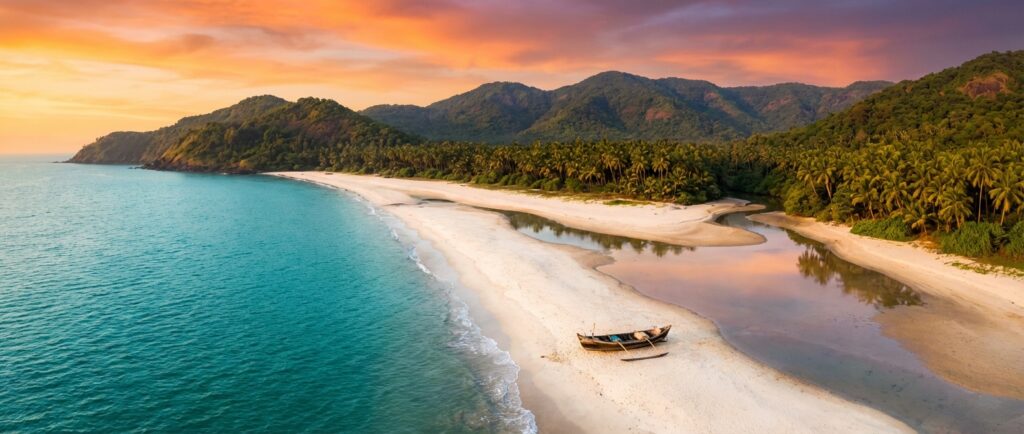
    Something quiet is happening along Maharashtra’s western shoreline. While Goa contends with overflowing shacks and ₹8,000 a night beach cottages, a 720-kilometre stretch of rugged, coconut-fringed coast to the north is drawing a different kind of traveller, one who values silence over scenes, and depth over Instagram backdrops.

    The Konkan Coast, running from Dahanu in the north to Vengurla near the Goa border, has long been Maharashtra’s best-kept secret. In 2026, that secret is beginning to leak, but slowly, beautifully, in exactly the way slow-travellers prefer.

    What the Numbers Say: Konkan vs. Goa in 2026

    The case for Konkan isn’t just anecdotal. When you map footfall data, accommodation costs, and traveller satisfaction ratings across India’s western coastal destinations, a striking picture emerges.

    📊 Konkan Coast vs. Goa: Head-to-Head Comparison (2026)
    Parameter Goa Konkan Coast Edge
    Annual tourist arrivals (est.) 7.8 million 1.4 million Konkan: less crowded
    Avg. beach guesthouse/night ₹4,500 to ₹9,000 ₹700 to ₹2,200 Konkan: 60 to 75% cheaper
    Avg. seafood thali cost ₹350 to ₹600 ₹120 to ₹220 Konkan: 3× more affordable
    Plastic-free beach initiatives Partial, 3 beaches Active, 11+ beaches Konkan: cleaner
    Average noise level (dB, peak season) 62 to 70 dB 35 to 45 dB Konkan: quieter
    Direct train connectivity from Mumbai Via Margao (4 to 5 hrs) Konkan Railway (2 to 3 hrs) Konkan: faster
    Overtourism risk rating (2025) High Low Konkan: sustainable

    Slow-Travel Interest: Search Trends Tell the Story

    Online search behaviour over the 2024 to 2025 period reveals a decisive shift. Queries around “Konkan Coast travel,” “Maharashtra beaches slow travel,” and “Goa alternative India” have risen steadily, while Goa-specific slow-travel searches have plateaued or declined slightly, a signal that repeat visitors to India’s west coast are diversifying.

    Relative Travel Interest Index: Western India Coastal Destinations
    Based on normalized search interest data, Oct 2024 to Feb 2026 (scale: 0 to 100)
    Goa (all travel)92
    High volume, plateauing
    Goa (slow-travel specific)41
    Declining
    Konkan Coast (all travel)58
    Rapid growth
    Konkan Coast (slow-travel specific)74
    Fastest growing segment
    Kerala Backwaters63
    Steady

    The Five Konkan Destinations Driving the Shift

    The Konkan stretch isn’t uniform. It’s a mosaic of distinct moods. Here are the five destinations drawing the sharpest uptick in slow-travel bookings.

    Tarkarli
    Sindhudurg district · ~530 km from Mumbai
    Rated the clearest water on Maharashtra’s coast. Famous for coral reef snorkeling and MTDC beach resorts that still feel uncrowded even in peak season.
    Snorkeling Coral reefs Backwaters
    Harihareshwar
    Raigad district · ~210 km from Mumbai
    Where two rivers meet the sea beneath a Shiva temple. The closest thing to spiritual slow-travel on Maharashtra’s coast: minimal commercialization, maximum soul.
    Pilgrimage Cliffs Off-grid
    Dapoli
    Ratnagiri district · ~215 km from Mumbai
    Maharashtra’s answer to Coorg meets coast. Surrounded by mango and cashew orchards, Dapoli offers a cluster of beaches within 20 km, each with its own personality.
    Agri-tourism Beach hopping Forts
    Velas & Anjarle
    Ratnagiri district · ~230 km from Mumbai
    Home to India’s most celebrated turtle nesting festival (Feb to March). A village-scale experience where conservation and culture coexist without a resort in sight.
    Turtle nesting Eco-tourism Village stays
    Ganpatipule
    Ratnagiri district · ~375 km from Mumbai
    An 8-km white sand beach with a 400-year-old self-manifested Ganesh temple embedded in a cliff, making it uniquely both devotional and deeply scenic. MTDC has invested in quality infrastructure here, making it one of the more comfortable Konkan stops without sacrificing character.
    White sand beach Temple MTDC resort Family-friendly

    The Real Cost of a Week on Each Coast

    Budget is one of the most visceral reasons slow-travellers are pivoting north. A 7-night trip along the Konkan coast, including accommodation, food, local transport, and one activity, typically runs ₹9,000 to ₹18,000 per person. The equivalent Goa itinerary seldom comes in under ₹28,000, and often exceeds ₹45,000 in peak season.

    Daily Cost Breakdown: Goa vs. Konkan Coast
    Per person estimates, peak season (Nov to Feb 2026), budget-to-mid range
    🏠
    Accommodation
    ₹4,500 Goa avg.
    vs
    ₹1,100 Konkan avg.
    🍽️
    Meals (3/day, local)
    ₹900 Goa avg.
    vs
    ₹300 Konkan avg.
    🚌
    Local transport
    ₹600 Goa avg.
    vs
    ₹180 Konkan avg.
    🤿
    One activity (water sport / tour)
    ₹1,200 Goa avg.
    vs
    ₹500 Konkan avg.
    ₹7,200
    Konkan daily total (avg.)
    Budget traveler, 2026
    ₹27,000
    Goa daily total × 7 nights
    vs ₹14,000 for same on Konkan
    48%
    Average saving
    choosing Konkan over Goa

    When to Visit: The Konkan Slow-Travel Calendar

    Unlike Goa’s fairly standard November to February window, Konkan rewards travellers who think in seasons. The post-monsoon coast (October to November) offers lush green cliffs, swollen waterfalls cascading to the shore, and prices that haven’t yet spiked for peak season.

    Konkan Coast: Best Times to Visit by Month
    Suitability for slow-travel based on weather, crowd levels, and local events
    Excellent
    Good (budget-friendly)
    Peak/Busy
    Monsoon (closed/scenic)
    Jan
    Feb
    Mar
    Apr
    May
    Jun
    Jul
    Aug
    Sep
    Oct
    Nov
    Dec

    💡 Slow-travel sweet spot: October to November and January. Avoid December to March if you dislike crowds.

    The Slow-Travel Philosophy the Konkan Coast Embodies

    Slow travel isn’t about moving slowly. It’s about staying long enough for a place to show you who it actually is, not just the version it performs for cameras.

    – Slow Travel Movement ethos, widely cited

    The Konkan Coast is structurally incapable of putting on a tourist show, and that’s its greatest strength. Infrastructure is intentionally sparse. Villages like Hedvi, Ladghar, and Aravali have no nightlife, no rave shacks, and no curated “instagrammable” murals commissioned by tourism boards. What they have is the daily rhythm of fishermen casting nets at 5 a.m., grandmothers selling sol kadhi from roadside stalls, and the kind of silence that makes you remember why you left home in the first place.

    The Konkan Railway, one of India’s most spectacular rail journeys, threading 91 tunnels and 2,000 bridges along a single-track coastal route, is itself a slow-travel experience. The journey from Mumbai to Ratnagiri (approximately 3.5 hours) passes through landscapes that feel genuinely cinematic: ghats, estuaries, paddy fields, and flickers of sea through jungle corridors.

    Sustainability: Where Konkan Leads

    Maharashtra’s tourism policy has deliberately avoided the infrastructure dumping that transformed northern Goa’s shoreline. As of 2025-26, Sindhudurg district maintains an active certification programme for eco-homestays, and the Tarkarli Marine Sanctuary enforces strict limits on motorized water sport operators. Over 11 beaches on the Konkan coast carry active plastic-reduction initiatives supported by local gram panchayats, a bottom-up, community-driven model that Goa’s municipal governance hasn’t yet replicated at scale.

    This matters to slow-travelers because sustainability isn’t just ethical. It’s directly linked to experiential quality. Cleaner water, less commercial noise, and intact local culture are exactly what slow-travel seeks, and Konkan’s conservation posture protects all three.

    The Verdict for 2026

    Goa isn’t going anywhere. It remains India’s most famous coastal destination, and for good reason: the food, the architecture, the music scene, and the well-worn infrastructure still deliver reliably. But for the growing cohort of travellers who feel overstimulated by peak-season Goa, who want to eat fish that was caught this morning and paid for with coins, who want to sleep to the sound of actual waves rather than adjacent parties, the Konkan Coast in 2026 isn’t an alternative. It’s an upgrade.

    Come before it discovers itself. Come slow.

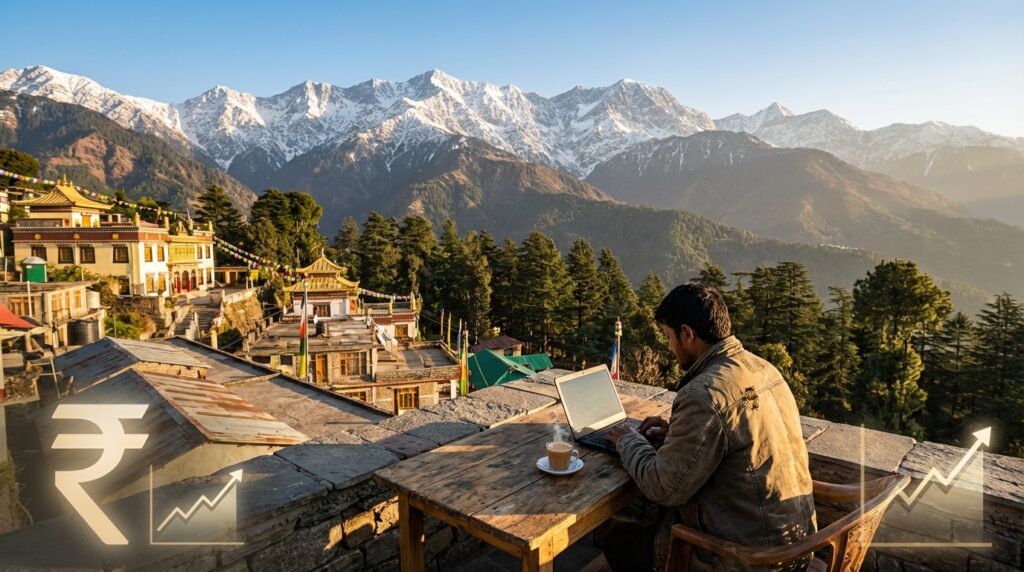
  • Monthly Cost of Living in Dharamshala: A 2026 Budget Breakdown for Nomads

    Monthly Cost of Living in Dharamshala: A 2026 Budget Breakdown for Nomads

    Perched in the Dhauladhar range of Himachal Pradesh at roughly 2,082 metres, Dharamshala and its upper villages of McLeodganj and Dharamkot have become one of India’s most compelling destinations for remote workers. In 2026, the combination of reliable fiber internet, a thriving international community, Tibetan culture, and mountain air makes this hill town extraordinarily good value. This breakdown gives you real, current numbers across every spending category.

    At a Glance: 2026 Monthly Budget Tiers

    The figures below cover all essential living costs. USD conversions use the February 2026 rate of Rs.90.65 per $1.

    Budget
    Rs.20,000
    approx. $221 / month
    Comfortable
    Rs.45,500
    approx. $502 / month
    Premium
    Rs.78,500
    approx. $866 / month

    Accommodation

    Housing is the single largest cost variable. Dharamkot commands a modest premium over lower Dharamshala or nearby Rakkar village. Long-stay discounts of 20 to 35 percent off the nightly rate activate for stays beyond two weeks and are almost universally negotiable when you arrive in person.

    Type Area Monthly (INR) Monthly (USD) Level
    Dorm bed (hostel) McLeodganj Rs.6,000 – Rs.9,000 $66 – $99 Budget
    Basic private room McLeodganj / Bhagsu Rs.8,000 – Rs.12,000 $88 – $132 Budget
    Studio with kitchen Dharamkot Rs.12,000 – Rs.15,000 $132 – $166 Mid
    Coliving (room + desk included) Dharamkot / Rakkar Rs.18,000 – Rs.30,000 $199 – $331 Mid
    All-inclusive coliving (AltSpace) Dharamshala outskirts Rs.46,000 $507 Premium
    Comfortable mid-range estimate Rs.14,000 / month $154
    Nomad Tip

    Landlords in Dharamkot and Bhagsu are accustomed to long-stay foreigners. Negotiating a 2 to 3 month lease in person rather than booking online can save 25 to 30 percent versus walk-in rates. Arriving mid-week usually gives you the best selection.

    Food and Drink

    Dharamshala offers a fascinating culinary spread: Tibetan momos and thukpa, Himachali daal makhani, Israeli shakshuka (Dharamkot has a notably large Israeli expat community), and strong coffee from mountain-view rooftop cafes. Eating local at dhabas keeps costs extremely low, while western-style cafe meals add up but remain affordable by global standards.

    Item Where Cost (INR) Cost (USD)
    Thali (full meal) Local dhaba Rs.80 – Rs.120 $0.88 – $1.32
    Plate of momos (8 pieces) Street stall Rs.60 – Rs.80 $0.66 – $0.88
    Masala chai Cafe / street Rs.20 – Rs.40 $0.22 – $0.44
    Cafe brunch (eggs, toast, juice) McLeodganj cafe Rs.280 – Rs.420 $3.09 – $4.63
    Dinner at mid-range restaurant McLeodganj Rs.350 – Rs.600 $3.86 – $6.62
    Weekly groceries (home cooking) Local market Rs.800 – Rs.1,200 $8.82 – $13.24
    Monthly groceries estimate Market + supermarket Rs.4,000 – Rs.6,000 $44 – $66
    Monthly dining-out estimate Mix of local and cafes Rs.5,000 – Rs.8,000 $55 – $88
    Comfortable food budget (cook + dine out mix) Rs.10,000 / month $110

    Coworking Spaces and Internet

    For a hill town of this size, Dharamshala punches well above its weight for remote-work infrastructure. Jio and Airtel 4G/5G cover the main areas reliably, and dedicated coworking spaces have fiber connections offering 50 to 200 Mbps speeds, more than adequate for video calls and large file transfers. Most spaces also have power-backup inverters, which is critical during brief seasonal outages.

    Space / Option Monthly (INR) Speed Notes
    Cafe Wi-Fi (cost of daily orders) Rs.600 – Rs.1,500 10 – 20 Mbps Variable quality; no dedicated desk
    The Void Coworking (Dharamkot) Rs.7,000 50 Mbps fiber Unlimited monthly pass; power backup
    NomadGao coworking desk Rs.4,000 – Rs.8,000 50 Mbps+ Community atmosphere; mountain views
    Ghoomakad (Rakkar) Rs.4,000 – Rs.6,000 200 Mbps 24-hour access; 3-day power backup
    Alt Life coworking Rs.4,500 – Rs.7,000 50 Mbps+ Seats up to 70 people; panoramic views
    Jio / Airtel SIM data (30 GB plan) Rs.600 – Rs.900 4G / 5G pockets Good backup during storms or travel days
    Comfortable estimate (dedicated desk) Rs.6,000 / month

    Transport

    Dharamkot village is entirely walkable and most nomads cover their daily routes on foot, which doubles as exercise on the steep mountain paths. Longer trips into lower Dharamshala or further afield require a taxi or local bus.

    Route / Mode Cost (INR) Cost (USD)
    Dharamkot to McLeodganj (taxi) Rs.150 – Rs.200 $1.65 – $2.21
    Local bus (Dharamshala town routes) Rs.15 – Rs.40 $0.17 – $0.44
    Private car for a day trip (shared) Rs.2,500 – Rs.3,500 $27 – $39
    Delhi to Dharamshala overnight Volvo bus Rs.700 – Rs.1,400 $7.72 – $15.45
    Flight: Delhi to Gaggal Airport Rs.4,000 – Rs.7,000 $44 – $77
    Comfortable monthly transport estimate Rs.2,000 / month $22

    Utilities, Wellness and Miscellaneous

    Category Monthly (INR) Notes
    Electricity (if billed separately) Rs.600 – Rs.1,500 Often included in rent; higher in winter for heating
    Doctor visit (private clinic) Rs.300 – Rs.700 per visit DEMC Dharamshala is popular with expats
    Monthly yoga / meditation pass Rs.2,500 – Rs.5,000 Dharamkot has a dense spiritual-activity scene
    Haircut (local barber) Rs.100 – Rs.250 Salons in McLeodganj cater to tourists and expats
    Laundry (per kg, monthly estimate) Rs.400 – Rs.700 Rs.60 to Rs.100 per kg at local shops
    Travel insurance Rs.2,000 – Rs.5,000 SafetyWing and WorldNomads are popular choices
    Entertainment and app subscriptions Rs.500 – Rs.1,500 Streaming, VPN, cloud storage
    Weekend trekking and excursions Rs.1,500 – Rs.4,000 Triund, Kareri Lake, Bhagsu Waterfall

    Visual Budget Breakdown

    Based on a comfortable mid-range lifestyle: a private studio in Dharamkot, dedicated coworking desk, a mix of local and cafe dining, regular yoga, and occasional trekking. Total monthly spend: Rs.45,500.

    Where Your Rs.45,500 Goes Each Month

    Accommodation
    31%
    Rs.14,000
    Food and Drink
    22%
    Rs.10,000
    Coworking
    13%
    Rs.6,000
    Insurance
    9%
    Rs.4,000
    Wellness
    8%
    Rs.3,500
    Transport
    4%
    Rs.2,000
    Leisure / Treks
    7%
    Rs.3,000
    Misc / Subs
    7%
    Rs.3,000
    Rs.45.5k /month

    Spending Proportion

    Accommodation
    31%
    Food and Drink
    22%
    Coworking / Internet
    13%
    Insurance
    9%
    Wellness and Yoga
    8%
    Transport, Leisure and Misc
    17%

    How Seasons Affect Your Budget

    Dharamshala’s mountain climate creates clear seasonal cost patterns. Knowing when to arrive can save or cost you thousands of rupees per month, particularly on accommodation.

    Spring (March to May)

    Best season for nomads. Pleasant 15 to 25 degrees Celsius. High availability of long-stay rooms at stable prices. Negotiate aggressively in person and you will win.

    Peak Summer (June to early July)

    Indian domestic tourism surges. McLeodganj fills quickly. Accommodation prices rise 20 to 30 percent. Book at least 2 to 3 weeks ahead for good deals.

    Monsoon (July to September)

    Heavy rains; landslides occasionally close roads. Prices dip as tourists stay away. Excellent time to negotiate steep monthly discounts. Internet can be intermittent during storms.

    Winter (November to February)

    Temperatures drop to 0 to 5 degrees Celsius. Snow possible above 2,000 m. Electricity bills climb for heating. Coliving spaces often offer attractive off-season rates.

    How Dharamshala Compares to Other Nomad Hubs

    A comfortable mid-range monthly budget in Dharamshala versus other popular remote-work destinations in 2026:

    City Country Monthly Budget (USD) vs. Dharamshala
    Dharamshala (Dharamkot) India $396 – $530 Baseline
    Bali (Canggu) Indonesia $1,100 – $1,600 +120 to 180%
    Chiang Mai Thailand $800 – $1,200 +70 to 110%
    Lisbon Portugal $1,800 – $2,600 +220 to 350%
    Tbilisi Georgia $900 – $1,300 +80 to 130%
    Medellin Colombia $1,000 – $1,500 +90 to 160%
    Goa India $700 – $1,100 +60 to 90%

    Practical Money Tips for Dharamshala Nomads

    Banking and Cash

    ATMs in McLeodganj dispense up to Rs.10,000 to Rs.20,000 per transaction. Axis Bank and SBI have the most reliable machines. Carry cash for local dhabas and small guesthouses, as card acceptance improves each season but remains inconsistent away from the main street.

    SIM Cards

    Jio and Airtel are the two best networks in Himachal Pradesh. A 2 GB per day plan with 30-day validity costs roughly Rs.600 to Rs.900 and acts as a solid internet backup when coworking spaces have outages during monsoon storms.

    Free and Low-Cost Activities

    The Triund trek (a 9 km round trip from McLeodganj) is entirely free. Attending open teachings at Tsuglagkhang, the Dalai Lama’s temple complex, costs nothing. Yoga centres in Dharamkot sometimes offer work-exchange arrangements in return for a free practice pass. The Tibetan Library of Works and Archives offers study rooms and readings at minimal cost.

    Visa Considerations

    Foreign nationals typically enter India on a tourist e-Visa available as a 60-day single entry or 1-year multiple-entry option. The 1-year multiple-entry e-Visa costs approximately $80 USD and allows re-entry after border runs. Always check current requirements on the official Indian government visa portal as rules are updated periodically.

    Full Monthly Budget Summary: All Three Tiers

    Category Budget (INR) Comfortable (INR) Premium (INR)
    Accommodation Rs.8,000 Rs.14,000 Rs.30,000
    Food and Drink Rs.5,000 Rs.10,000 Rs.15,000
    Coworking / Internet Rs.1,500 Rs.6,000 Rs.8,000
    Transport Rs.800 Rs.2,000 Rs.4,000
    Wellness and Activities Rs.1,500 Rs.5,000 Rs.9,000
    Travel Insurance Rs.2,000 Rs.4,000 Rs.5,000
    Misc / Subscriptions Rs.1,200 Rs.3,500 Rs.5,500
    Utilities (if not in rent) Rs.0 Rs.1,000 Rs.2,000
    Total (INR) Rs.20,000 Rs.45,500 Rs.78,500
    Total (USD at Rs.90.65) $221 $502 $866

    The Bottom Line

    Dharamshala in 2026 offers a genuinely rare combination: serious digital infrastructure, a thriving international community, breathtaking natural scenery, and one of the lowest cost-of-living floors among popular nomad destinations worldwide. A disciplined budget nomad can live fully for under $250 per month; a comfortable, wellness-rich lifestyle lands around $450 to $502 per month; and even a premium coliving experience with all amenities included stays under $900 per month.

    What the numbers do not capture is the quality-of-life multiplier: crisp mountain air, meditation sessions overlooking snowcapped peaks, Tibetan butter tea, and the peculiar creative energy of a village where Himalayan monks, Israeli backpackers, Indian corporate escapees, and European software developers all end up at the same bonfire. That is the Dharamshala dividend, and it does not cost extra.